


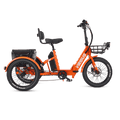


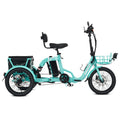





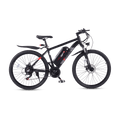




If your 13-year-old has been begging for an electric bicycle to ride to school or meet up with friends, they aren’t alone. These high-tech rides offer incredible freedom, but for parents, they also spark a wave of anxiety. Before you hand over the keys or the credit card, you need to know the rules of the road. Can a 13-year-old legally ride an electric bike in the U.S.?
Can a 13-Year-Old Ride an Electric Bike?

Yes, a 13-year-old can ride an electric bike, but it depends on the class of e-bike and the state you live in. In the U.S., e-bikes are split into a standard 3-class system based on speed and throttle capability.
Most states allow a 13-year-old to legally ride Class 1 (pedal-assist up to 20 mph) and often Class 2 (throttle-assist up to 20 mph) e-bikes. However, Class 3 e-bikes, which can reach speeds of 28 mph, almost universally require the rider to be at least 16 years old.
Class 1 or Class 2 E-bike? Which Should You Choose?
State-by-State Minimum Age Requirements

Geography changes everything, as state and local laws vary wildly. For instance, in California, a 13-year-old can freely ride a Class 1 or 2 e-bike, whereas New York sets a strict statewide minimum age of 16 for all e-bikes on public roads.
The table below breaks down the minimum age rules for several notable states across the country, highlighting how restrictions shift based on the bike's speed and capabilities:
|
State |
Class 1 Minimum Age(Pedal-Assist, Max 20 mph) |
Class 2 Minimum Age(Throttle-Assist, Max 20 mph) |
Class 3 Minimum Age(Pedal-Assist, Max 28 mph) |
Note |
|
California |
No minimum age |
No minimum age |
16 |
Helmets are mandatory for everyone on Class 3, and for all minors under 18. |
|
Texas |
No minimum age |
No minimum age |
15 |
Helmets are required for all riders under 18 years old. |
|
Florida |
No minimum age |
No minimum age |
No minimum age |
One of the most relaxed states; helmets are legally required only under 16. |
|
New York |
16 |
16 |
16 |
Rigid statewide rule: No person under 16 may operate any class of e-bike on public roads. |
|
Oregon |
16 |
16 |
16 |
Strict age baseline of 16 for all e-bikes; throttle-driven Class 3 bikes are prohibited. |
|
Michigan |
No minimum age |
No minimum age |
14 |
Class 3 riders must be at least 14 and wear a helmet if under 18. |
|
Utah |
14 |
14 |
14 |
No one under 14 may operate an e-bike unless supervised by a parent or guardian. |
|
Georgia |
No minimum age |
No minimum age |
15 |
Class 3 operators must be 15 or older and wear a helmet if under 16. |
|
New Jersey |
No minimum age |
No minimum age |
15 |
Reclassified Class 3 as a motorized bicycle; riders must be 15 and hold a basic moped license. |
- Electric Bike Laws in Ohio
- Electric Bike Laws in Texas
- Michigan Electric Bike Laws
- Arizona Electric Bike Laws
- Massachusetts Electric Bike Laws
Additionally, local city ordinances or school districts often enforce their own bans on sidewalks or school properties, and virtually every state legally requires riders under 18 to wear a helmet. Larger electric dirt bikes (like Sur-Rons) are classified as mopeds or motorcycles and are completely illegal for a 13-year-old on any public street.
License, Registration, and Insurance Rules

In roughly 40+ states across the country, if your electric bicycle strictly complies with the standard 3-class system (featuring a motor under 750W, fully operational pedals, and a capped top speed between 20 and 28 mph), it is legally treated exactly like a traditional bicycle. This means you do not need a driver’s license, vehicle registration, or special insurance to ride on public roads and paths.
However, a few notable states do enforce paperwork requirements. For example, Hawaii requires a one-time registration fee for all e-bikes, while states like Alaska legally define e-bikes as "motor-driven cycles" and require riders to hold an operator's license. Furthermore, if you modify an e-bike to bypass its factory speed limits or ride a high-powered electric dirt bike, it crosses the line into a moped or motorcycle category—subjecting the rider to full licensing, registration, and insurance mandates.
Learn More:
Do You Need a License For an Electric Bike? A State-by-State Guide
Are Ebikes Safe for Kids?
E-bikes are generally considered safe for adolescents aged 12 and older, provided they have a foundational knowledge of road safety, adhere to strict helmet rules, and stick to Class 1 or Class 2 models that legally cap motor assistance at 20 mph.
5 Essential Safety Rules for Parents

If your family decides that your teenager is ready for an e-bike, implementing strict safety boundaries is non-negotiable. Experts from Rady Children's recommend the following five rules:
1. No Helmet, No Ride
Only about half of the children treated at Rady Children’s for e-bike injuries were wearing a helmet at the time of their crash. In California and many other states, anyone under 18 is legally required to wear a helmet. Ensure the helmet is securely buckled with the chin strap—an unfastened helmet will fly off before impact. For higher-speed e-bikes, look for heavy-duty helmets with NTA 8776 or ASTM F1952 certifications.
Bike Helmet Laws by State: A Guide to Staying Safe and Legal
2. One Bike, One Rider
E-bikes are balanced for a single operator. Allowing a friend to "ride passenger" changes the center of gravity, slows down braking reaction times, and dramatically increases the risk of a severe fall.
3. Keep Speed to a Minimum
Data shows that pediatric injuries become significantly worse when speeds exceed 20 mph. Check the settings on your child’s e-bike to ensure the motor cuts off assistance precisely at 20 mph (Class 1 or 2 limits).
4. Build Foundation Road Safety Skills
Driving an e-bike on public roads requires an understanding of traffic laws. Before letting your child ride solo, make sure they know hand signals, how to navigate intersections, and how to anticipate blind spots. Consider enrolling them in a hands-on e-bike safety course hosted by local law enforcement or utilizing online training platforms like RideReadySD.
5. Prioritize Visibility
Riders should always assume that cars cannot see them. To combat this, California law requires all e-bikes to be equipped with a rear red reflector or a flashing red light visible from 500 feet at all times. Keep both front and rear lights turned on during daytime rides, and consider investing in aftermarket rearview radar devices that alert young riders when cars are approaching them from behind.
How Fast Can a 13 Year Old Go On an Ebike?
On a legally compliant e-bike, a 13-year-old can go a maximum assisted speed of 20 mph (32 km/h). Under U.S. law, this speed limit covers Class 1 (pedal-assist) and Class 2 (throttle) e-bikes, which are the only classes a 13-year-old can legally ride in states that allow minors on electric bikes.
While Class 3 e-bikes can reach motor-assisted speeds of 28 mph, nearly every state restricts their use to riders who are 16 or older. Furthermore, strictly enforced safety laws (such as Assembly Bill 875) allow police to immediately impound a Class 3 e-bike if the rider is under 16, and parents can face steep fines or legal liability for providing them.
Keep in mind that a 13-year-old can technically exceed 20 mph using their own muscle power or gravity (like coasting down a hill), but the e-bike's motor is legally required to cut off all assistance the moment the bike hits 20 mph.
Top E-Bikes for 13-Year-Old Boys & Girls Under $500

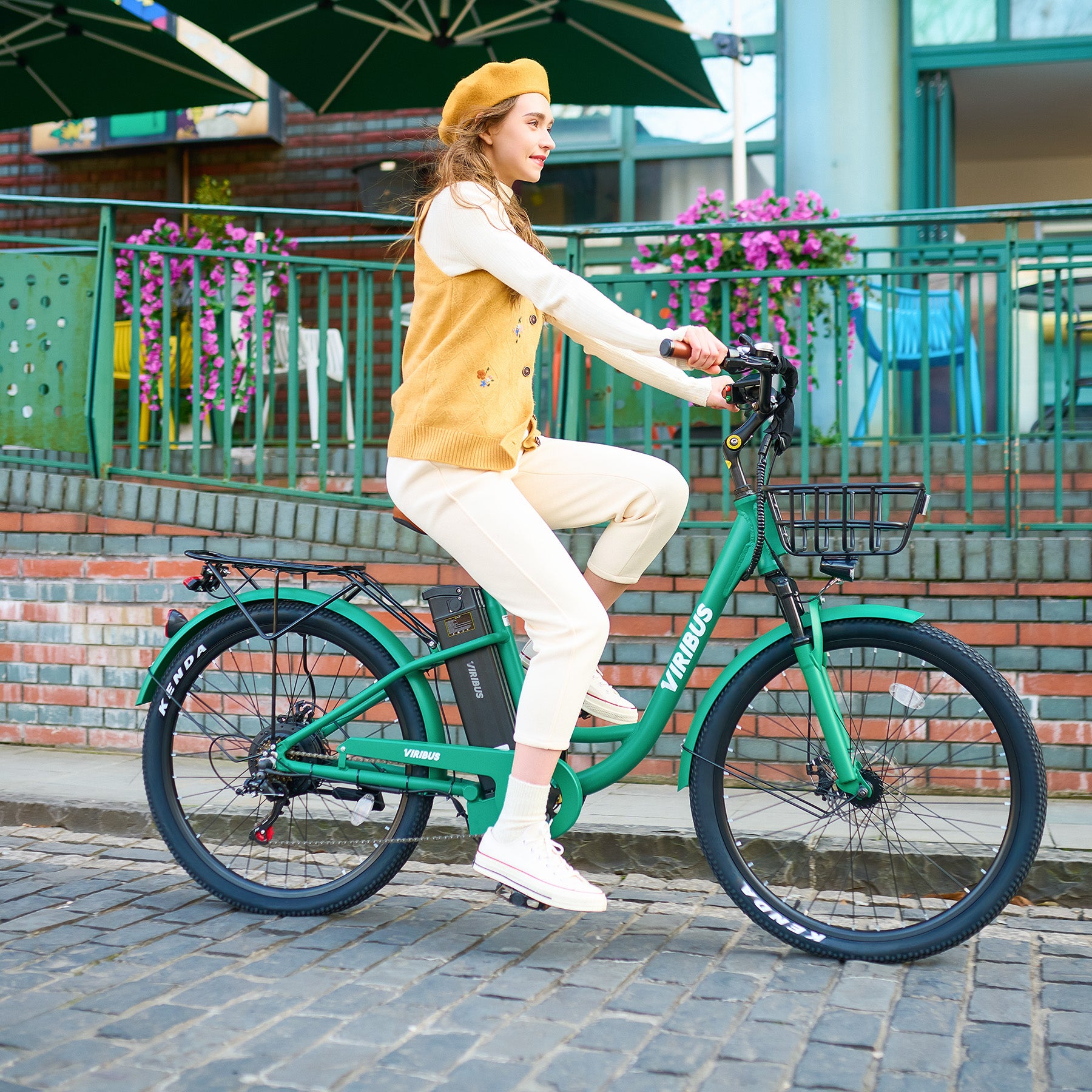
Viribus BZ1 Step-Thru Electric Bike
| Motor: 500W | Battery: 48V 13AH |
| Top Speed: 20 MPH | Range: 25+ Miles |
| Fork: Front Suspension | Derailleur: Shimano, 7-Speed |
FAQ
Can an 11-year-old have an e-bike?
Yes, an 11-year-old can own and ride an e-bike in most parts of the country, but their options are strictly legally limited to Class 1 or Class 2 models (which cap motor-assisted speeds at 20 mph).
While the vast majority of U.S. states do not have a statewide minimum age for these lower-speed classes, some states—such as Michigan and Alaska—do enforce a minimum age of 14, and safety experts generally recommend holding off on any e-bike until a child turns 12.
If an 11-year-old does ride, wearing a properly fastened, Consumer Product Safety Commission (CPSC) certified helmet is legally mandatory in nearly all jurisdictions.
What e-bike can I ride at 14?
At 14 years old, you can legally ride Class 1 (pedal-assist up to 20 mph) and Class 2 (throttle-assist up to 20 mph) e-bikes in almost every state, as you finally meet the minimum age threshold for the few states that restrict them.
However, you are still legally barred from riding high-speed Class 3 e-bikes, which can reach 28 mph and require operators to be at least 16 years old.
You must also keep your speed under 20 mph and wear a helmet at all times, as anyone under 18 faces steep fines for riding without one.
Can a 14-year-old ride an electric bike on the road?
Yes, a 14-year-old can ride a Class 1 or Class 2 e-bike on public roads, provided they ride in designated bike lanes or on streets with lower posted speed limits (usually 25 mph or less) and follow all standard traffic laws.
They cannot, however, take a Class 3 e-bike on the road, as those high-speed models require the rider to be 16 or older. Furthermore, state exceptions exist; for example, in New York, the statewide minimum age to operate any e-bike on a public road is strictly set at 16.
Can a 12-year-old ride an electric bike on the road?
In most U.S. states, a 12-year-old is legally allowed to ride a Class 1 or Class 2 e-bike on the road, but they must strictly obey the same traffic rules as standard bicycles, stick to bike lanes when available, and wear a buckled helmet.
Additionally, a 12-year-old cannot legally ride on the road in states with higher age baselines, such as Texas (age 15) or New York and New Jersey (age 16).
Can a 10-year-old ride an electric bike on the road?
While most states do not explicitly pass a statutory minimum age for low-speed Class 1 and Class 2 e-bikes, a 10-year-old should generally not ride an e-bike on public roads.
At age 10, children typically lack the situational awareness, peripheral judgment, and reaction times required to safely manage a heavy motorized vehicle alongside moving car traffic.
If a 10-year-old uses an e-bike, it should strictly be a low-powered model restricted to private property or quiet, vehicle-free recreational paths under direct parental supervision.
Can a 13-year-old ride an electric scooter?
No, a 13-year-old cannot legally ride a motorized electric scooter (the stand-up kind with handlebars and a floorboard) on public roads or bike lanes in states like California.
Under strict state vehicle codes, standing e-scooters are legally classified similarly to mopeds, meaning riders must be at least 16 years old and possess a valid driver’s license or learner’s permit to operate them.
While many young teens ride them anyway, doing so on public property is illegal, can result in a police citation or a $250 fine, and leaves parents vulnerable to negligent supervision liability.
Can a 13-year-old ride a Class 2 electric bike?
Yes, a 13-year-old can legally ride a Class 2 e-bike in the vast majority of states, as long as the bike features fully functional pedals and the motor completely stops providing assistance once it reaches 20 mph.
Because Class 2 e-bikes feature a throttle that allows the bike to move without pedaling, parents should ensure their teen feels comfortable with the rapid acceleration and handles the extra weight safely.
They must also wear a fastened helmet and avoid carrying passengers, which is illegal and dangerously disrupts the bike’s balance.
Can a 13-year-old ride an electric dirt bike?
No, a 13-year-old cannot legally ride an electric dirt bike or "e-moto" (such as a Sur-Ron or Talaria) on public streets, sidewalks, or bike paths anywhere in the United States.
Because these vehicles lack pedals, are designed for off-highway use, and easily exceed 28 mph, they are legally classified as off-highway motor vehicles or motorcycles rather than e-bikes.
To operate one legally, a rider must be at least 16 years old, have a valid M1/M2 motorcycle license, register the vehicle with the DMV, and ride exclusively on private property or designated off-highway vehicle (OHV) parks.













Leave a comment
All comments are moderated before being published.
This site is protected by hCaptcha and the hCaptcha Privacy Policy and Terms of Service apply.