


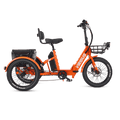


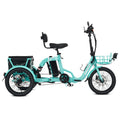

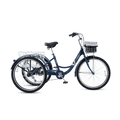


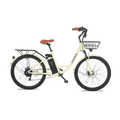





Electric Mountain Bikes for Adults
Step beyond the ordinary and discover a new level of adventure with our collection of mountain bikes for sale. From high-performance full suspension mountain bikes to electric mountain bikes for adults, Viribus offers the best mountain bikes designed to push your limits and bring a thrilling, fresh experience. Whether you’re exploring rugged trails or enjoying a weekend ride, our adult mountain bikes and electric mountain bikes deliver power, comfort, and excitement in every journey.
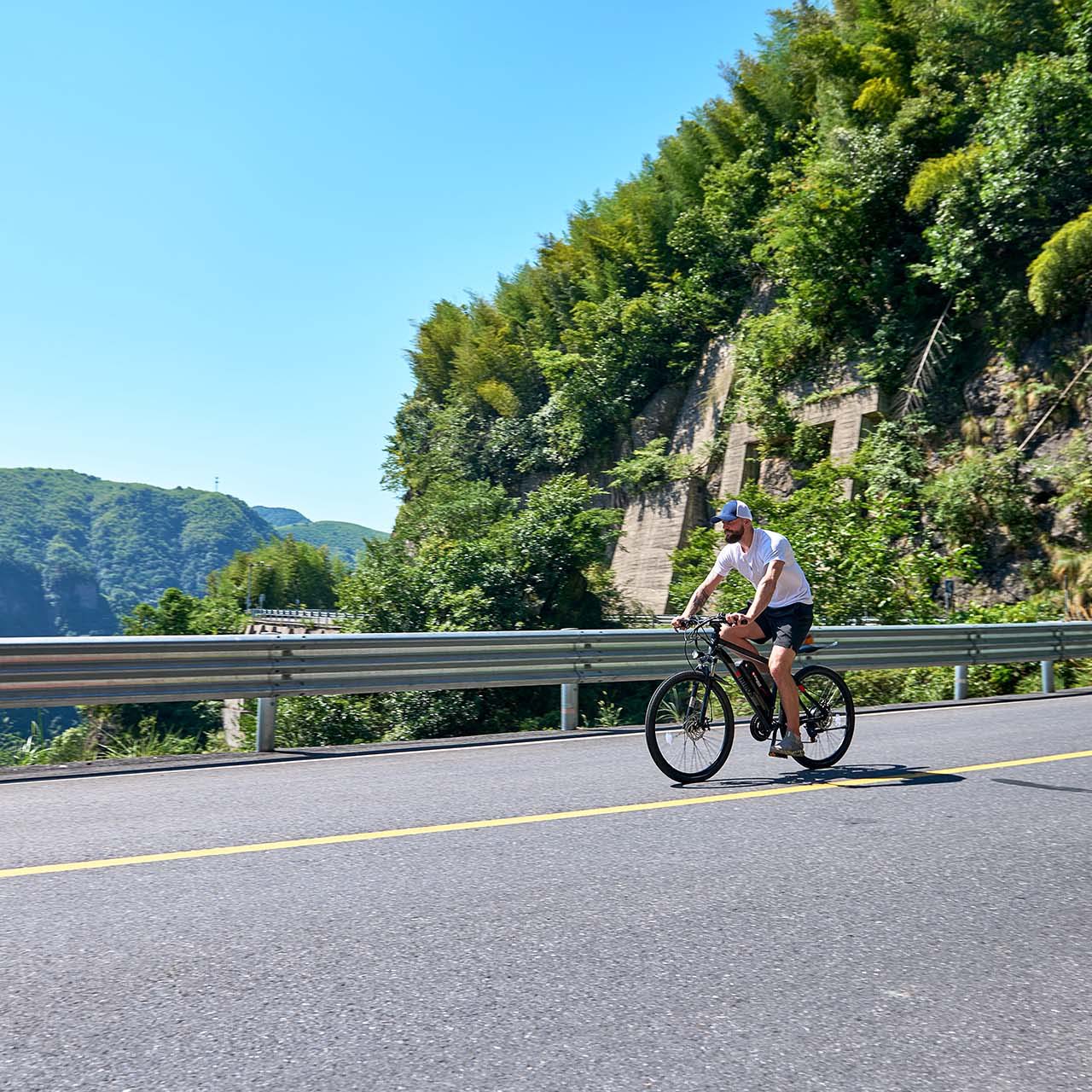
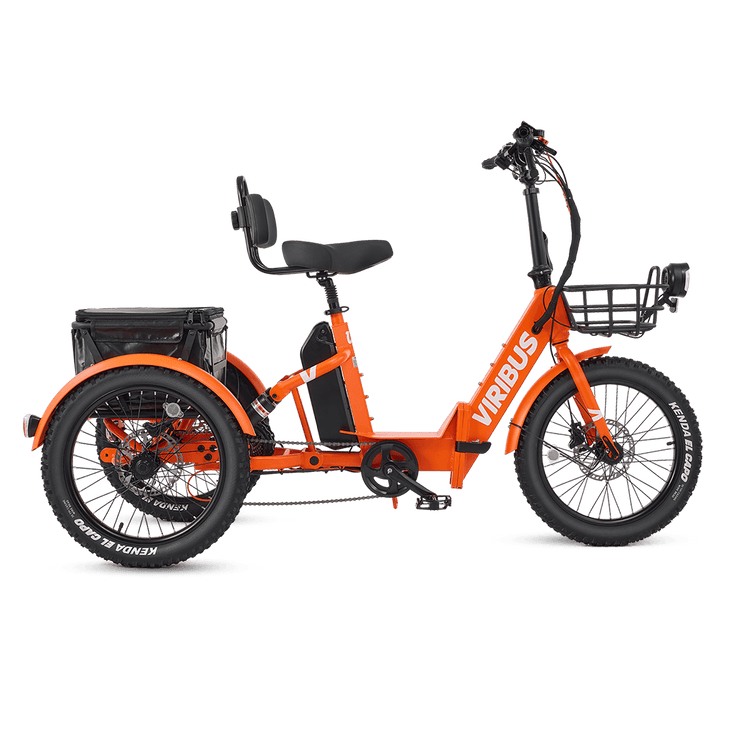
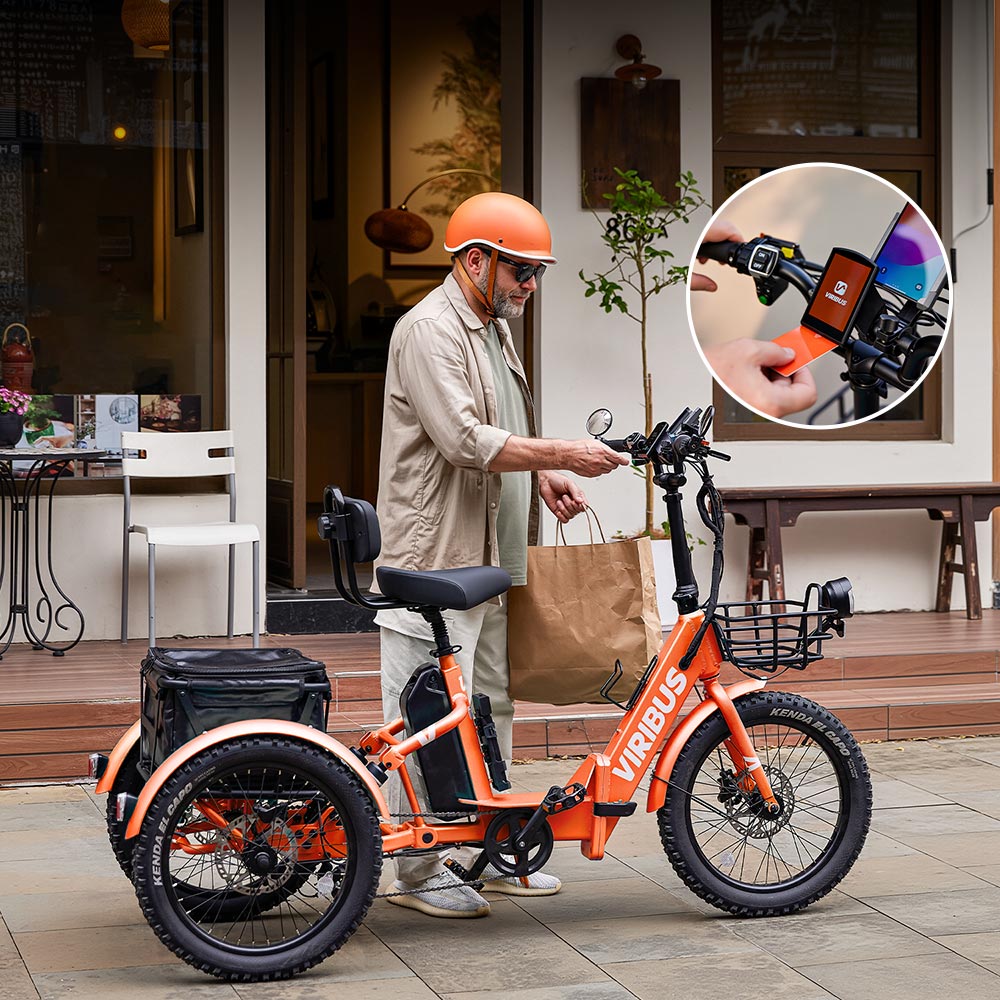
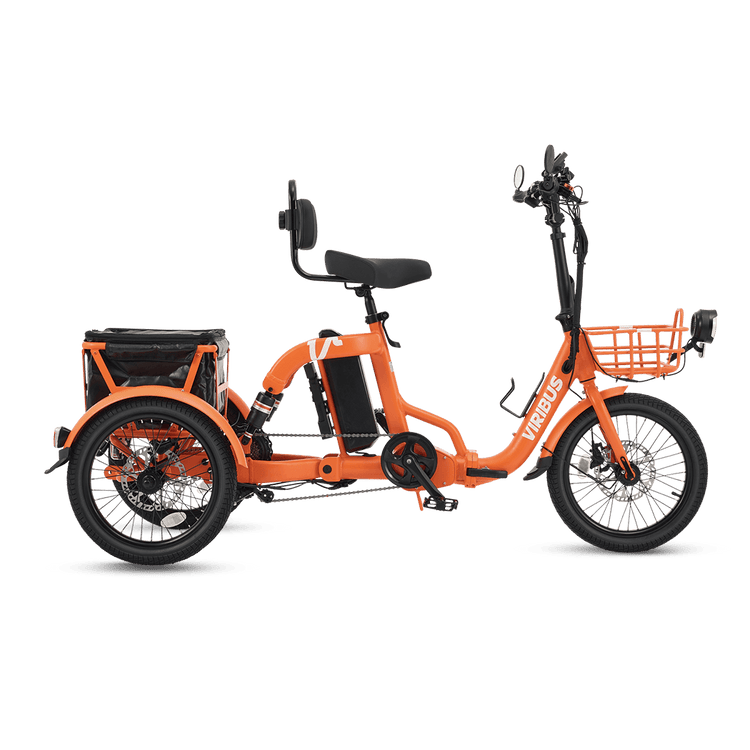
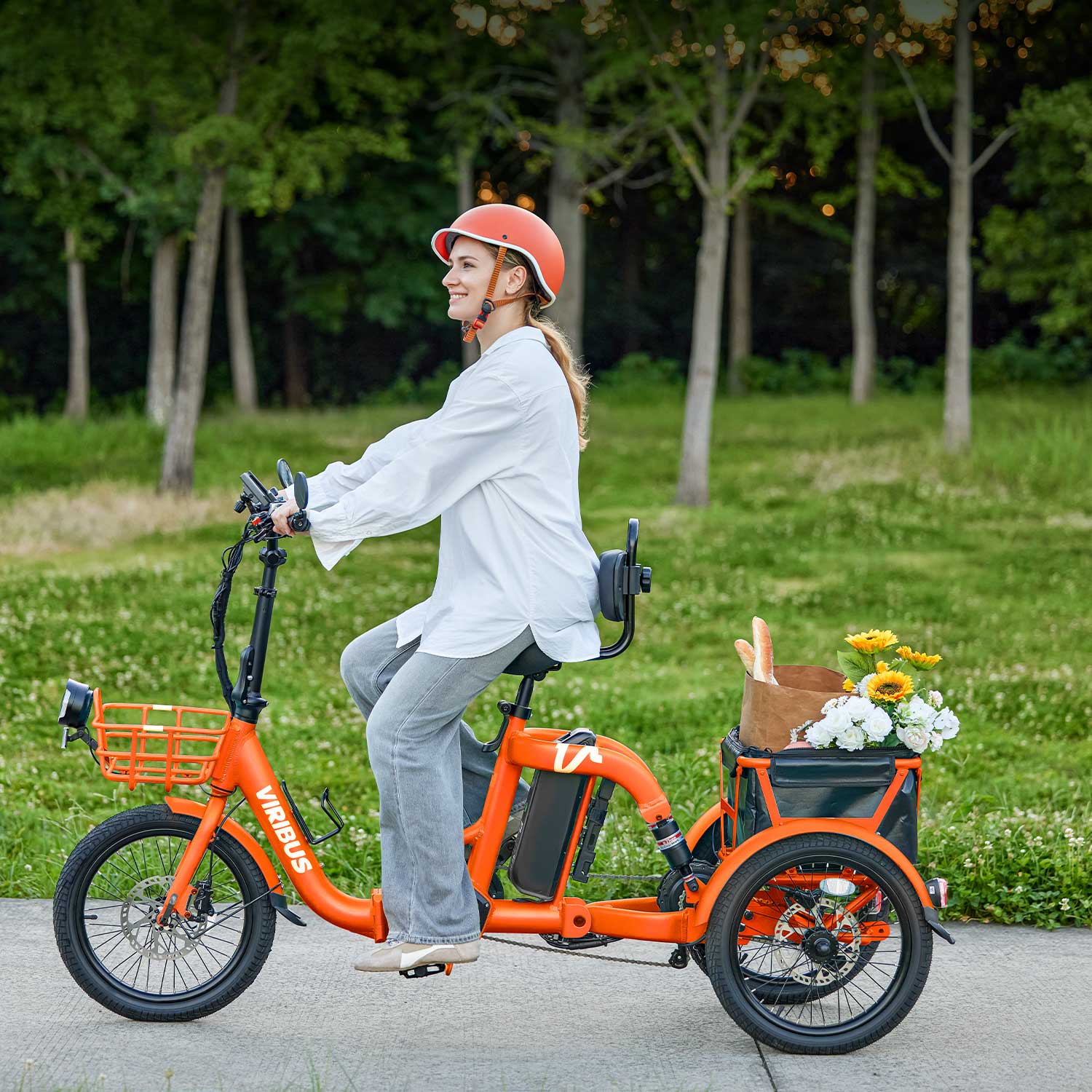
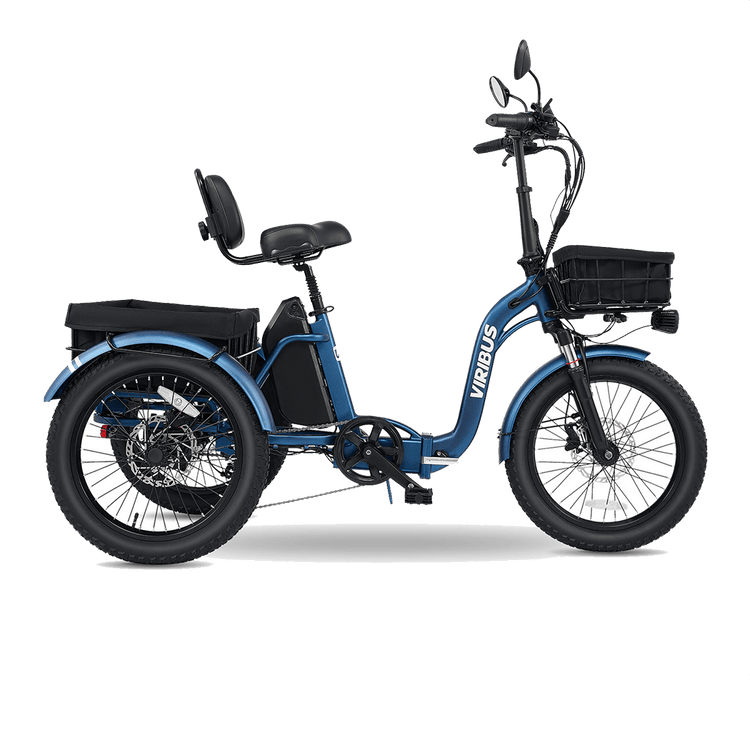
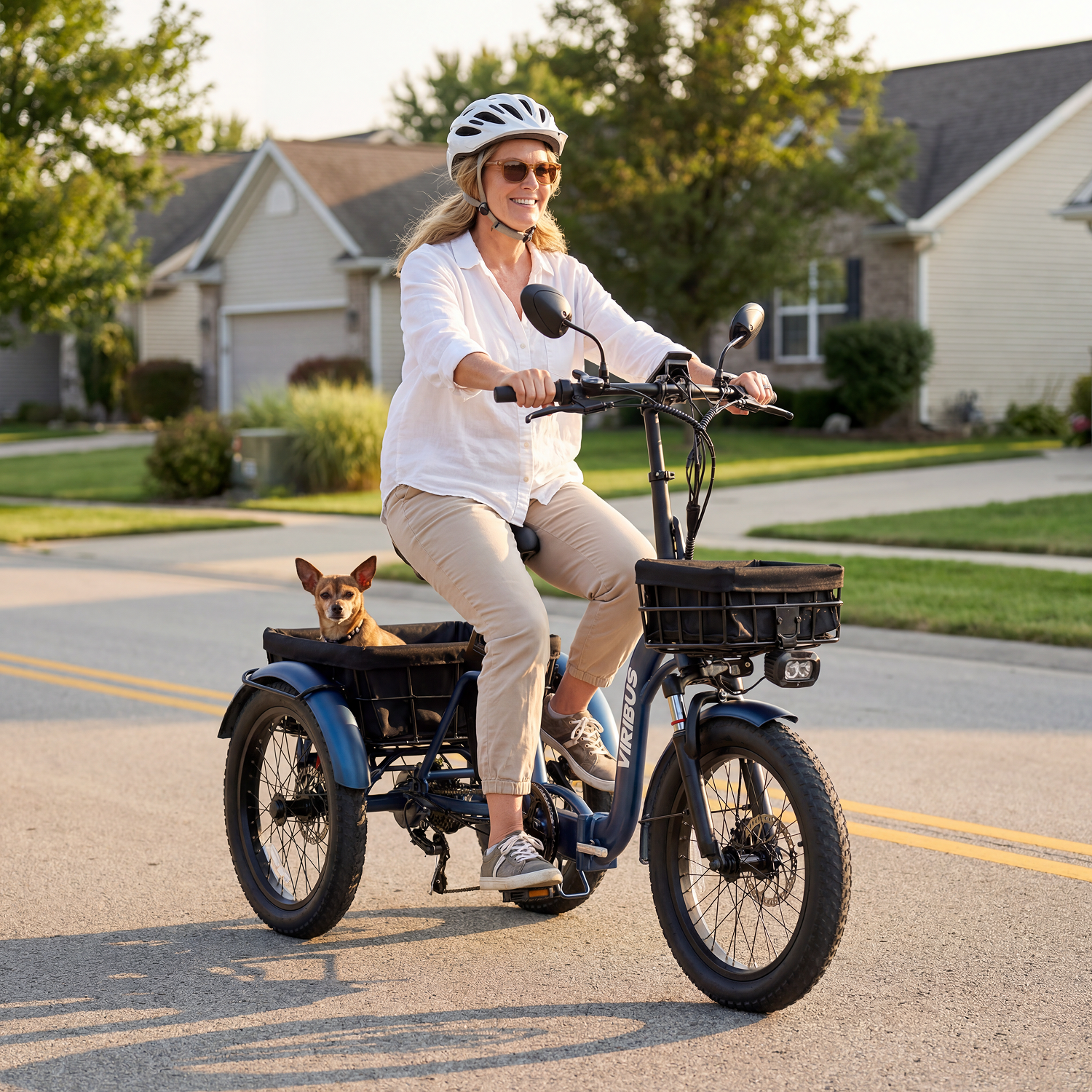
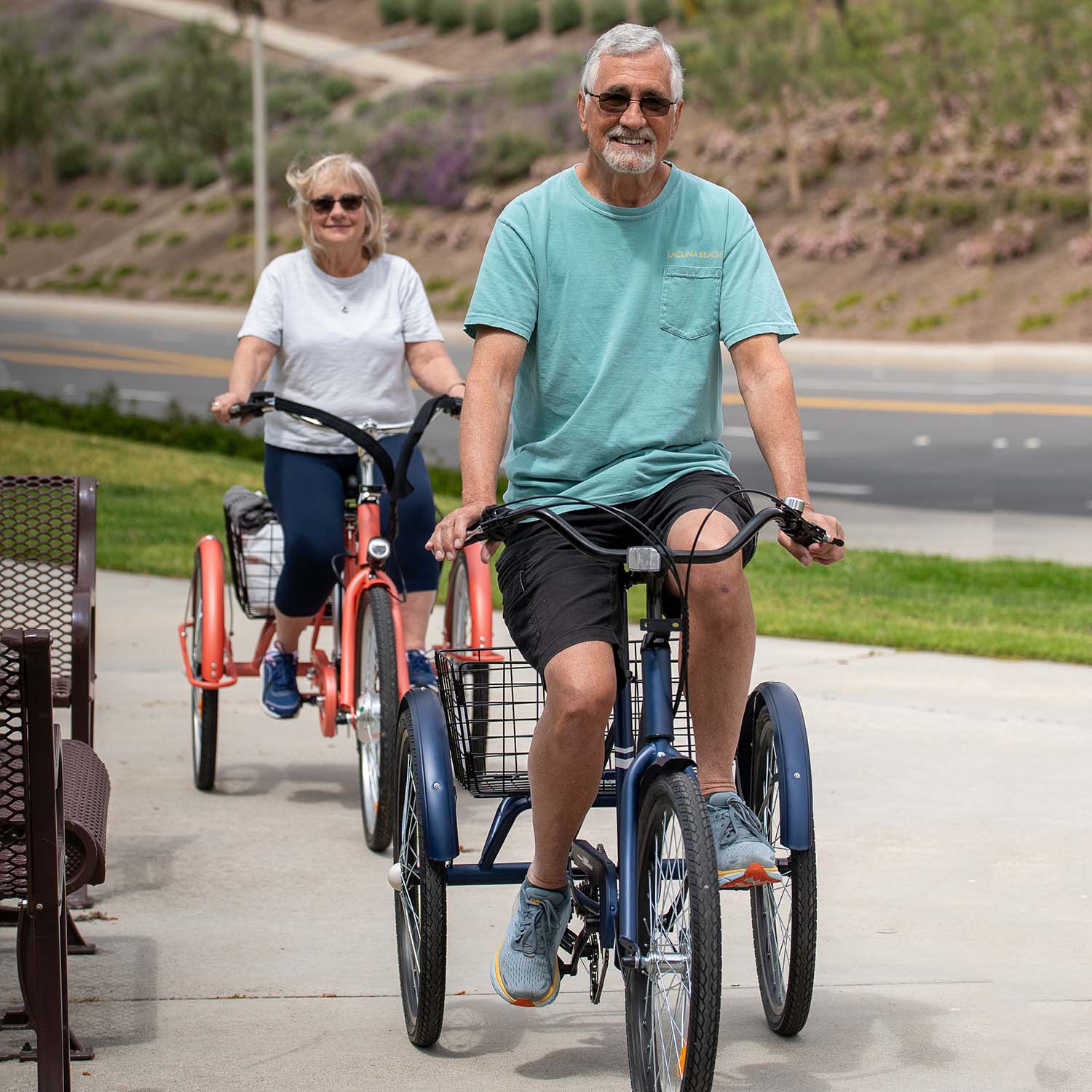
Find the Perfect Electric Bike for Your Lifestyle
At Viribus, we understand that every rider has unique needs. That’s why our electric bikes and trikes come in a variety of styles to fit your lifestyle. For those needing a compact solution, our electric folding bikes are perfect for adults—they easily fit into RVs, car trunks, or small apartments, making storage and travel simple. Our city and commuter eBikes are designed to make urban commuting easy, helping you save on gas and reduce your carbon footprint.
For the adventure-seekers, our all-terrain and off-road electric bikes are ideal for camping, hunting, fishing, or even light mountain biking. We also offer step-through eBike models, which make mounting and dismounting hassle-free and provide enhanced accessibility for all riders.
With a Viribus electric bike, you can conquer hills, cover long distances, and haul cargo with ease—all without breaking a sweat. Find the model that matches your lifestyle at Viribus Electric Bikes.
Compare Electric Mountain Bike
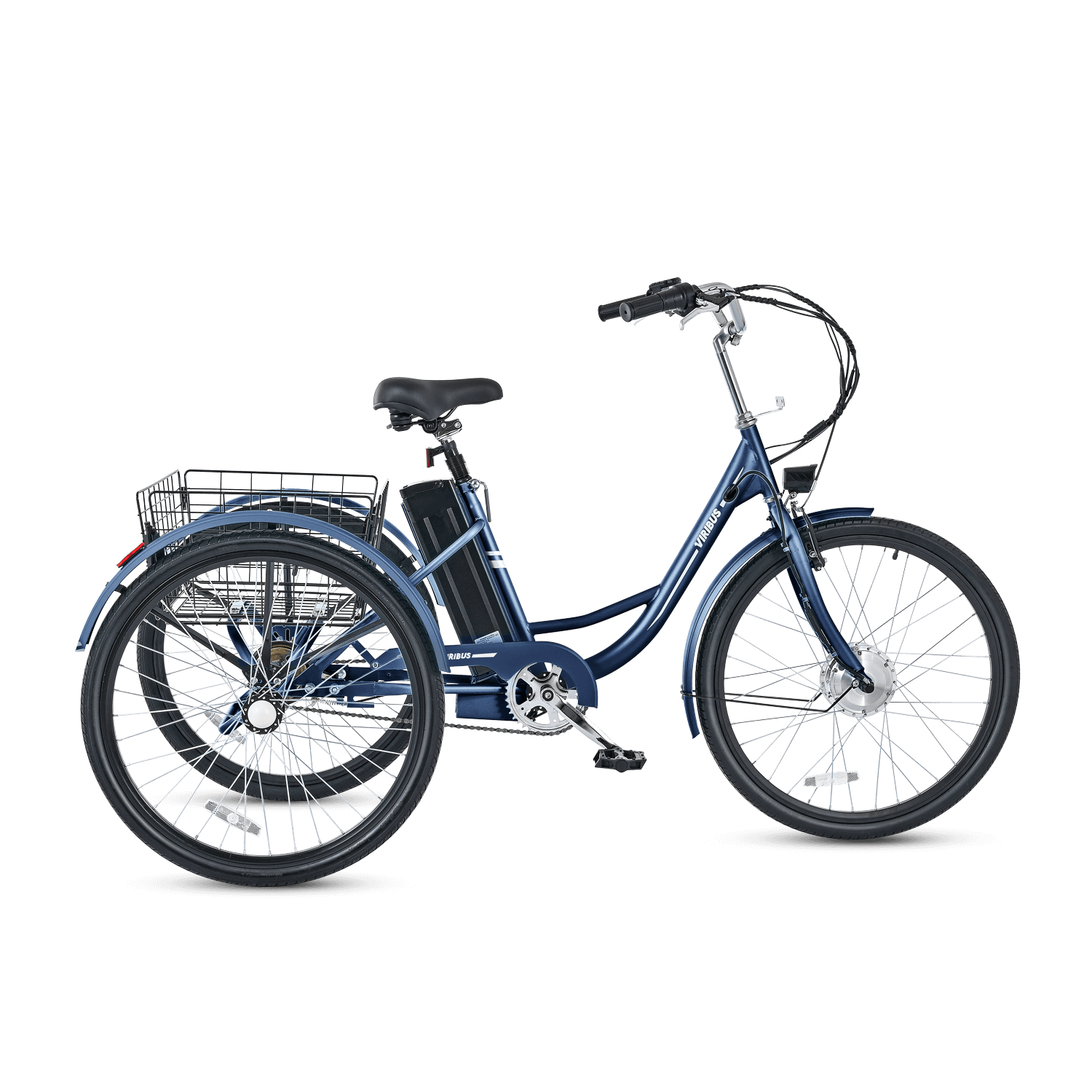
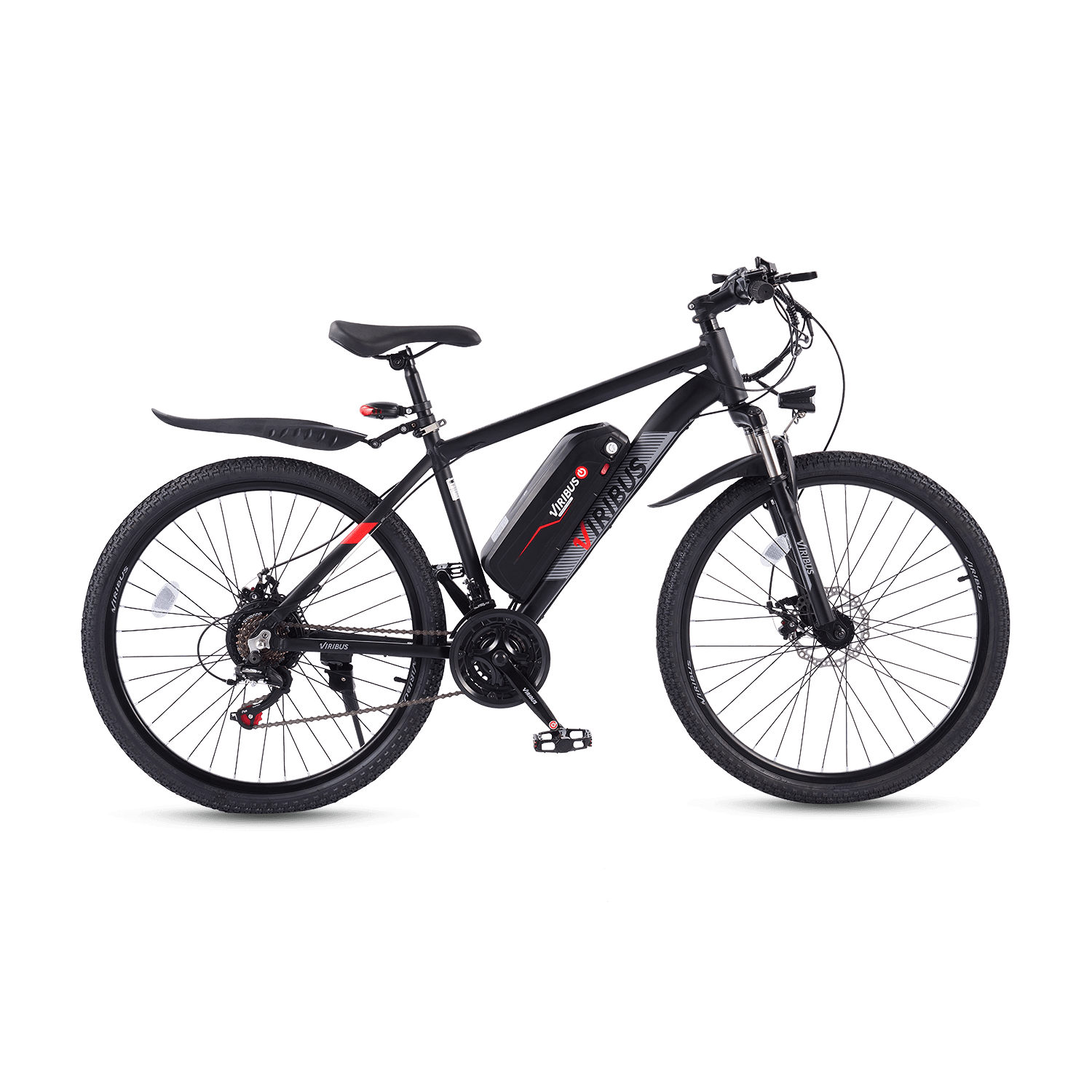
250/350W
500W
350W
36V 13Ah / 48V 13 Ah - certified per UL standards
48V 15A, automotive-grade large battery cell
48V 10.4Ah high-tech lithium battery
33 - 38.5 mi.
38+ mi.
20 - 40 Miles
1 / 7 Speed
7 speed
Shimano, 21-speed
UL 2271 2289
No
No
15.5 mph
20 Mph with throttle, 24 Mph with pedal
20 Mph with throttle, 24 Mph with pedal
w/o
w/
w/
w/
w/
w/o
FAQ
You'll find answers to the most common questions on Viribus tricycles.
Are electric mountain bikes good on trails?
Yes—electric mountain bikes are very good on trails, and in many cases they actually enhance the trail riding experience.
E-MTBs are specifically designed for off-road use, with features like suspension, wide tires, and durable frames that allow them to handle rocks, roots, and uneven terrain just as well as traditional mountain bikes.
The added motor assistance makes a big difference on climbs, helping riders tackle steep hills and longer routes with less fatigue while still maintaining control on technical sections.
Is a 27.5 or 29 inch electric fat tire mountain bike better for downhill?
For downhill riding, 29-inch wheels are generally considered better because they roll over rocks, roots, and rough terrain more smoothly, maintain speed more easily, and provide greater stability at high speeds, which is crucial on fast, steep descents.
However, 27.5-inch wheels still have advantages, offering quicker acceleration, sharper handling, and better maneuverability in tight corners or more technical sections.
Many riders now prefer a mullet setup (29” front, 27.5” rear) to combine the stability and rollover of a larger front wheel with the agility of a smaller rear wheel.
Overall, if your priority is maximum speed and stability on rough downhill terrain, 29” is usually the better choice, while 27.5” suits riders who prefer a more playful and responsive feel.
Which is better, 48V or 52v electric fat tire mountain bike battery?
The choice between a 48V and 52V electric fat tire mountain bike battery comes down to performance versus practicality.
A 52V battery provides slightly more power, stronger acceleration, better hill-climbing ability, and can offer around 8–15% more range if the capacity (Ah) is the same, while also maintaining more consistent performance as the battery drains.
However, a 48V battery is more common, affordable, and widely compatible, and still delivers enough power for most riders, including commuting and moderate off-road use.
So while 52V is technically better for performance and demanding riding, 48V is often the more balanced and cost-effective choice for everyday use.
Is there a big difference between a 500w and 750W ebike?
Yes, there is a noticeable difference between a 500W and 750W electric fat tire mountain bike, mainly in power and performance rather than top speed.
A 750W motor delivers stronger acceleration, better hill-climbing ability, and handles heavier loads or rough terrain more easily, making it ideal for off-road riding or steep areas, while a 500W motor is typically sufficient for flat terrain, casual riding, and commuting, offering smoother power delivery and better battery efficiency.
Can you commute on an electric mountain bike?
Yes, you can absolutely commute on an electric mountain bike, and for many riders it works quite well—especially if your route includes rough roads, potholes, gravel, or mixed terrain. The suspension, wider tires, and upright geometry make e-MTBs more comfortable and stable than standard commuter e-bikes on uneven surfaces, while the motor assistance helps you tackle hills and longer distances without arriving exhausted.
What size eMTB do I need?
Choosing the right electric mountain bike size mainly depends on your height, inseam length, and riding style, and most brands use frame sizes like XS, S, M, L, and XL. As a general guide, riders around 5'3"–5'7" usually fit a Small (15–16"), 5'7"–5'11" fit a Medium (17–18"), and 5'11"–6'2" fit a Large (19–20"), though exact sizing can vary by brand and geometry, so checking the manufacturer’s chart is always best.
How fast do electric mountain bikes go?
Electric mountain bikes typically go 20–28 mph (32–45 km/h) when using motor assistance, depending on their class and setup. Most Class 1 and Class 2 e-MTBs are limited to 20 mph (32 km/h) with motor support, while Class 3 models can assist up to 28 mph (45 km/h) when you are pedaling.
Do I need a full suspension ebike?
You don’t necessarily need a full suspension electric mountain bike, but whether it’s worth it depends on your riding style and terrain.
If you mostly ride smooth trails, gravel paths, or light off-road routes, a hardtail e-MTB is usually enough because it’s lighter, more affordable, and more efficient for climbing and general riding, while still giving solid performance
However, if you plan to ride rough, technical terrain with rocks, roots, steep descents, or want more comfort and control at higher speeds, a full suspension e-MTB becomes much more valuable because the rear shock absorbs impacts, improves traction, and reduces rider fatigue, making the electric fat tire mountain bike safer and more stable in challenging conditions.
So in short, hardtails are better for casual and entry-level riding, while full suspension bikes are best for aggressive, technical, or high-comfort trail riding.
What is the best Budget electric mountain bike?
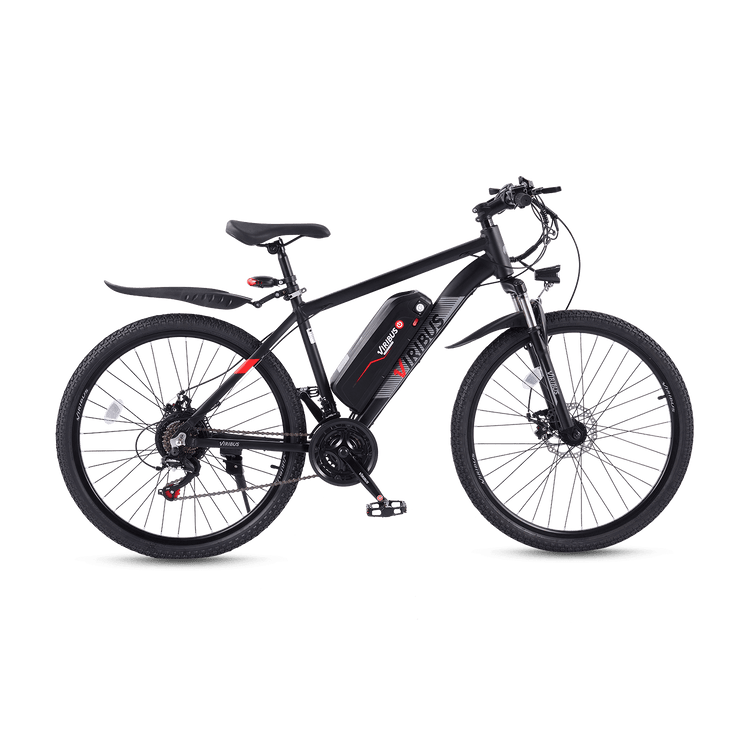
The Viribus Panther Electric Mountain Bike is one of the strongest budget e-MTB options, and it already sits at a very low price point, around $500 for what it offers. It comes with a 350W motor, 48V 10.4Ah battery, 20–40 mile range, 20 mph throttle speed (24 mph pedal assist), Shimano 21-speed gearing, front suspension, and mechanical disc brakes, making it a solid entry-level choice for casual off-road and light trail riding.
What are the benefits of a tricycle over a traditional bike?
Tricycles provide increased stability and balance over two-wheeled bikes, making them ideal for seniors or those with mobility limitations. The three-wheel design also means you can stop and sit upright on the trike without tipping over.
What size adult trike should I get based on my height?
Use the following as a general height guide for our adult trikes electric tricycle:
- 4'10" to 5'2" = 15-24" compact frame
- 5'3" to 6'0" = 20-26" mid-size frame
- Over 6' = 26-29" large frame
How much assembly is required for trikes upon delivery?
Our electric tricycle for adults come 35-40% assembled. You'll just need to straighten and secure the handlebars, attach the seat, and inflate the tires. Full instructions and tools are included. Plan for 90-150 minutes for assembly.
Is the tricycle suitable for individuals who haven't learned to ride a bicycle?
Certainly! Tricycles are an excellent choice for those who haven't mastered riding a bike, offering enhanced stability and balance through their three-wheel design.
What is the difference between an electric trike and a regular tricycle?
An electric trike comes with a motor-assisted system that reduces pedaling effort, making long rides and uphill climbs easier. A regular 3 wheel bike for adults relies entirely on manual
How far can an electric 3 wheel bike travel on a single charge?
Range varies by model and battery capacity, but most electric tricycles can travel between 20-50 miles on a full charge, depending on terrain, rider weight, and level of pedal assist used.
Can I use a mountain bike on the road
Of course! Mountain bikes are designed for all kinds of terrain, so they're great for tackling trails, but they're also smooth on city streets and flat roads.
Is it illegal to ride a bike without a helmet
Different states in the US have different regulations regarding the age of cyclists, helmet use, and the use of electric bicycles. For example, some states require cyclists under a certain age to wear helmets, while certain regions have specific requirements for the classification and speed limits of electric bicycles. If you wish to learn more about the detailed regulations and specific rules in each state, you can visit our Blog, where we provide comprehensive guides and practical advice to help you ride safely and legally.
Is it worth getting an electric mountain bike?
Yes—for most people, an electric mountain bike is worth it, but it depends on what you want from your riding.
An e-MTB is especially worth it if you want to ride farther, climb hills more easily, or spend more time on trails instead of struggling on climbs.
The motor helps reduce fatigue, which means you can do longer rides, repeat more laps, and explore tougher terrain that might otherwise feel out of reach.
Many riders also find it makes mountain biking more enjoyable because it removes the “burnout” from steep climbs and lets them focus on the fun parts like descents and flow trails.
Choosing the right electric mountain bike for adults can make a big difference in how enjoyable, efficient, and capable your rides are on different types of terrain. With so many options available, from lightweight electric mountain bikes to powerful electric mountain bikes, understanding the key components and features is essential before making a purchase.
Factors such as battery size, motor performance, wheel size, suspension type, and frame design all play an important role in how the e-bike handles, how far it can go, and how comfortable it feels on the trail.
Battery Size (Wh)
When buying an electric mountain bike, battery size (measured in Wh) is a key factor because it determines how far and how long you can ride before recharging; smaller batteries (around 400–500Wh) are lighter and better for short, agile trail rides, while mid-range options (600–750Wh) offer the best balance of range and weight for most riders, and larger batteries (800Wh+) are ideal for long-distance rides or steep, demanding terrain but add extra weight that can affect handling; you should also consider your riding style, terrain, rider weight, and how often you use high-assist modes, since these can significantly reduce real-world range compared to manufacturer claims.
Wheel size (inches)
Wheel size (in inches) on an electric mountain bike affects handling, stability, and how the bike feels on different terrain: 27.5-inch wheels are more agile, easier to accelerate, and better for tight, technical trails with lots of turns, while 29-inch wheels roll over obstacles more smoothly, provide better traction, and maintain speed more easily on rough or long-distance trails.
Some riders also choose a “mullet” setup (29-inch front and 27.5-inch rear) to combine stability with maneuverability.
In general, smaller wheels feel more playful and responsive, while larger wheels feel more stable and efficient, so the best choice depends on whether you prioritize agility on technical terrain or comfort and speed on varied or rocky trails.
Motor System
When choosing an electric mountain bike, the motor system is crucial and includes several key factors:
Position
Most quality e-MTBs use a mid-drive motor, which sits at the crank area. This placement keeps the weight centered, improving balance and handling on technical trails. It also allows the motor to work through the bike’s gears, making climbs more efficient and natural-feeling compared to hub motors in the wheel.
Watts
Motor power is usually described in watts (W), but this can be misleading if taken alone. Many e-MTBs are rated at around 250W nominal power, which is common for trail-legal bikes in many regions. However, motors can deliver higher peak power when needed for short bursts like steep climbs or quick acceleration. Instead of focusing only on watts, it’s better to consider how the motor performs under real trail conditions.
Torque
Torque, measured in Newton-meters (Nm), is actually more important than watts for mountain biking performance. Torque determines how strongly the motor can push you uphill or through rough terrain. Entry-level e-MTBs may offer around 40–60 Nm, while higher-performance models range from 70–100+ Nm. Higher torque generally means better climbing ability, especially on steep, loose, or technical trails where extra pulling power matters most.
Motor assist modes
The motor assist modes control how much help you get from the system. Most e-MTBs offer multiple levels such as Eco, Trail, and Turbo (or similar names). Eco mode conserves battery and provides light assistance for longer rides, Trail mode balances power and efficiency for mixed terrain, and Turbo mode delivers maximum support for steep climbs or demanding sections. These modes let you adjust performance based on terrain and battery needs.
Electric mountain bike classes
Electric mountain bikes are commonly classified into three main classes (Class 1, 2, and 3) in the United States. These classes are based on how the motor assists the rider, the maximum assisted speed, and whether a throttle is included.
Class 1 e-MTBs are the most widely accepted for mountain biking trails. They provide pedal assistance only (no throttle) and the motor helps you up to 20 mph (32 km/h). Once you reach that speed, the motor stops assisting. Because they still require pedaling and feel closest to a traditional mountain bike, Class 1 e-MTBs are generally allowed on most bike trails and are the preferred choice for off-road riding.
Class 2 e-bikes also have a maximum assisted speed of 20 mph, but they include a throttle, meaning you can ride without pedaling. While this can be useful for casual riding or commuting, Class 2 bikes are often restricted from many mountain bike trails because the throttle gives them more of a “motorized vehicle” classification in some areas.
Class 3 e-bikes provide pedal assist up to 28 mph (45 km/h) and do not typically include a throttle (or it is restricted). These are designed more for fast commuting and road use rather than technical off-road trails. Because of their higher speed capability, Class 3 bikes are often not allowed on singletrack mountain bike trails.
In general, if your main focus is trail riding or mountain biking, Class 1 is the best and most widely accepted option, offering the right balance of natural riding feel, trail access, and electric assistance.
Electric Mountain Bike Controller
The electric mountain bike controller is the central “brain” of the system that manages how power flows from the battery to the motor, ensuring smooth and controlled assistance based on rider input such as pedaling force, speed, and selected assist mode.
It works with sensors like the pedal assist or torque sensor to determine how much support the motor should provide, creating either a more basic or highly natural riding feel depending on the system, while also protecting the bike by regulating voltage and current to prevent overheating or damage during demanding climbs or long rides, and it controls different ride modes such as Eco, Trail, and Turbo to balance performance and battery life, with some advanced controllers even allowing customization through displays or smartphone apps, making it a key component that directly affects ride quality, efficiency, and overall e-MTB performance.
Electric Mountain Bike Display
The electric mountain bike display is the rider’s main interface with the e-bike system, showing important real-time information such as speed, battery level, assist mode, distance traveled, and sometimes navigation or ride data, allowing you to monitor performance and manage your ride more effectively on the trail.
It also lets you switch between different assist levels like Eco, Trail, or Turbo, so you can adjust power output depending on terrain and conserve battery power when needed.
Many modern displays are either handlebar-mounted LCD units or compact integrated screens, and some higher-end systems connect to smartphone apps for advanced features like ride tracking, diagnostics, and customization of motor settings.
Full suspension vs hardtail electric mountain bike
When comparing full suspension vs hardtail electric mountain bikes, the main difference is how much shock absorption the electric assist mountain bike has.
A hardtail e-MTB has suspension only on the front fork, while the rear triangle is rigid. This makes it lighter, more efficient when pedaling, and usually more affordable. Hardtails are best suited for smoother trails, fire roads, and riders who prioritize simplicity, lower maintenance, and better battery efficiency.
A full suspension e-MTB has both front and rear suspension, which significantly improves comfort and control on rough or technical terrain. The rear shock absorbs impacts from rocks, roots, and drops, helping the rear wheel stay in contact with the ground for better traction and stability. This makes full suspension electric assist mountain bikes ideal for aggressive trail riding, downhill sections, and more challenging mountain terrain.
In terms of performance, hardtails tend to transfer more pedaling energy directly into forward motion, which can make them feel faster and more efficient on climbs or smooth surfaces. However, they can feel harsh and less forgiving on rough trails. Full suspension electric assist mountain bikes, on the other hand, offer superior control and confidence at higher speeds over uneven terrain, but they are usually heavier and slightly less efficient when pedaling on smooth climbs.
Maintenance and cost are also important considerations. Hardtails generally require less maintenance because they have fewer moving suspension parts, and they are typically cheaper to buy.
Full suspension e bikes involve more components, such as rear shocks and linkage systems, which require regular servicing but deliver a much more comfortable ride experience in return.
Overall, the choice depends on where and how you ride: choose a hardtail if you want efficiency, simplicity, and lighter weight for moderate trails, and choose a full suspension e-MTB if you want maximum comfort, control, and performance on technical, rough, or aggressive mountain terrain.
Design and material
Frame design and material are key factors in an electric mountain bike because they directly affect strength, weight, ride feel, and durability on rough terrain.
Most e-MTB frames are made from either aluminum alloy or carbon fiber, with aluminum being more common due to its lower cost, high durability, and good balance of strength and weight, while carbon fiber is lighter, stiffer, and better at absorbing vibrations but significantly more expensive and sometimes less impact-resistant in extreme crashes.
Frame design also plays a major role in handling and stability. Modern e-MTB frames are typically built around a low center of gravity, with the battery integrated into the down tube and the motor positioned near the bottom bracket. This layout improves balance, especially on technical climbs and descents, making the electric assist mountain bike feel more stable and controlled even with the added weight of the electric system.
A folding design on an electric mountain bike focuses on portability and storage convenience, allowing the bike frame to fold (usually at the center hinge and sometimes the handlebars) so it can fit into car trunks, apartments, or small spaces. This makes folding e-MTBs ideal for commuters, RV travelers, or anyone with limited storage, since they are much easier to transport compared to full-size bikes.
Geometry is another important aspect of frame design. Longer wheelbases and slacker head tube angles are common in electric fat tire mountain bikes because they increase stability at high speeds and on steep descents. At the same time, seat tube angles are often steeper to improve climbing efficiency and keep the rider in a strong pedaling position on uphill sections.
The frame must also be designed to handle extra stress because e-MTBs carry more weight and produce more torque than traditional mountain bikes. Reinforced joints, stronger tubing, and integrated motor/battery mounts are used to ensure durability and reduce flex under load. Some premium models also include internal cable routing and modular battery systems for cleaner design and easier maintenance.
Dropper post
A dropper post is a height-adjustable seat post that lets you quickly raise or lower your saddle while riding using a handlebar lever. It allows you to switch between a high saddle position for efficient pedaling on climbs and flat sections, and a low saddle position for better control, stability, and maneuverability on descents and technical terrain.
Most dropper posts use either cable or hydraulic systems and are designed for quick, smooth adjustments without stopping, helping riders maintain balance and confidence as trail conditions change, and overall they improve both safety and performance by allowing more freedom of movement and better bike handling on challenging mountain terrain.
Drivetrain
The drivetrain on an electric mountain bike is the system that transfers power from your legs (and the motor assistance) to the rear wheel, and it includes components such as the chain, cassette, crankset, derailleur, and shifters;
It plays a crucial role in determining how efficiently you can pedal, how well the electric fat tire mountain bike climbs, and how smoothly gear changes feel on different terrain.
Most e-MTBs use wide-range gearing or 1x (single front chainring) setups to simplify shifting and handle the extra torque from the motor, allowing riders to maintain a comfortable cadence whether climbing steep hills or riding fast descents.
A strong, durable drivetrain is especially important on electric fat tire mountain bikes because the motor adds extra force, which can increase wear on components, so higher-quality parts designed for e-bike use help improve reliability, reduce maintenance, and ensure smoother performance on demanding trails.
Brakes
Brakes on an electric mountain bike are a critical safety and performance component because e-MTBs are heavier and faster than regular mountain bikes, requiring more powerful stopping ability and better heat management;
Most quality e-MTBs use hydraulic disc brakes, which provide strong, consistent braking power with less hand effort compared to mechanical systems, making them ideal for steep descents and technical terrain.
They typically feature larger rotors (often 180mm–220mm) to improve heat dissipation and maintain braking performance during long downhill sections where repeated braking can cause fade.
Good brakes also offer better modulation, allowing riders to control how much stopping force is applied, which is essential for maintaining traction on loose or rocky trails.
Your Riding Style
Your riding style is one of the most important factors when choosing an electric mountain bike because it determines the ideal balance of motor power, suspension, weight, and geometry.
Off-road riding e-MTBs
Casual off-road riding e-MTBs are designed for relaxed trails, forest paths, and light terrain, typically featuring moderate motor power, comfortable geometry, and either hardtail or light suspension setups for efficiency and ease of use.
XC (cross-country) e-MTBs
XC (cross-country) e-MTBs focus on efficiency, climbing ability, and long-distance riding. They are usually lighter, with smaller batteries or optimized power systems, efficient pedaling geometry, and often hardtail or short-travel full suspension designs to maximize speed and endurance over varied terrain.
Technical trail e-MTBs
Technical trail e-MTBs are built for more challenging terrain with rocks, roots, and steep climbs, so they typically feature full suspension, stronger mid-drive motors with higher torque, and more aggressive geometry to improve control, traction, and stability on difficult sections of trail.
Downhill e-MTBs
Downhill e-MTBs prioritize maximum control and durability at high speeds on steep descents. These electric fat tire mountain bikes are heavily reinforced, use long-travel suspension, powerful brakes, and very stable geometry, with motor assistance mainly used for climbing back up rather than performance on the descent itself.

