


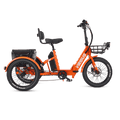


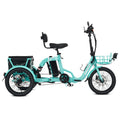







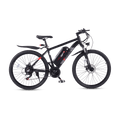




Imagine skipping the morning gridlock, gliding up steep hills without breaking a sweat, and completely forgetting about parking hassles—all while getting a bit of fresh air. It’s no wonder electric bikes have taken over U.S. streets.
But as e-bikes grow faster, heavier, and more advanced, they’ve also caught the attention of lawmakers. If you’ve ever wondered whether your high-speed ride is going to get you pulled over, or if you actually need a license to cruise down the street, you aren't alone. The rules of the road are changing fast.
In this guide, we are breaking down everything you need to know about the U.S. three-class system, unexpected local restrictions, and how to make sure your e-bike is 100% street legal before you twist that throttle.
Are Electric Bikes Street Legal?
Yes, electric bikes (e-bikes) are street legal in the United States, but with a few important catches.
While federal law regulates how e-bikes are manufactured and sold, individual state and local laws control where and how you can actually ride them on public roads, bike lanes, and paths.
- Electric Bike Laws in Ohio
- Electric Bike Laws in Texas
- Michigan Electric Bike Laws
- Arizona Electric Bike Laws
- Massachusetts Electric Bike Laws
To keep things uniform, the vast majority of U.S. states use a standard three-class system to define legal e-bikes. If your bike fits into one of these three classes, it is generally treated just like a regular bicycle—meaning you can legally ride it on the street without a driver's license, license plate, or vehicle insurance.
The Three-Class System
To be considered a street-legal e-bike in most states, the motor must be 750 watts (1 horsepower) or less, and the bike must fit into one of these categories:
|
Class |
How it Works |
Top Motor-Assisted Speed |
Where It's Usually Allowed |
|
Class 1 |
Pedal-assist only. The motor only kicks in when you are actively pedaling. |
20 mph |
Streets, bike lanes, and most paved multi-use bike paths. |
|
Class 2 |
Throttle-assist. The bike has a throttle (like a scooter) that can propel you without pedaling. |
20 mph |
Streets, bike lanes, and most multi-use paths. |
|
Class 3 |
High-speed pedal-assist. Pedal-assist only, but with a speedometer required. |
28 mph |
Public roads and road-adjacent bike lanes; usually banned from recreational bike paths and sidewalks. |
Rider's Guide to Legally Riding E-Bikes in the U.S.
Riding an e-bike legally in the U.S. comes down to understanding how your bike is classified. The federal government sets the guidelines for what can be sold as an e-bike, while individual states and cities regulate how you ride them.
The essential rules for the five areas you mentioned break down as follows:
Motor Power Limits
To legally be considered an e-bike—and not a moped or motorcycle—the electric motor must be 750 watts or less (which is roughly equal to 1 horsepower).
If your e-bike has a 1000W, 1500W, or higher motor, it completely bypasses standard e-bike laws. In the eyes of the law, these are unregisterable motor vehicles, making them illegal to ride on public streets, bike paths, or sidewalks.
Speed Limits
Your e-bike’s top speed determines where you can legally ride it. The absolute legal limit for any e-bike motor assistance is 28 mph.
- Class 1 & 2 Speed Limit: The motor is legally required to stop assisting you the moment the bike reaches 20 mph.
- Class 3 Speed Limit: The motor can assist you all the way up to 28 mph.
- Note: You can technically pedal faster than these speeds using your own leg muscle power, but the motor itself must shut off assistance at these precise cut-offs.
Pedal Assist vs. Throttle
The way your bike generates power dictates its legal "Class," which heavily impacts where you can ride.
- Pedal Assist (Class 1 & 3): The motor only amplifies your natural pedaling. Class 1 (20 mph max) is highly accepted and can go almost anywhere a regular bicycle can go, including paved bike paths and multi-use trails. Class 3 (28 mph max) is usually restricted to roads and dedicated on-street bike lanes due to its speed.
- Throttle (Class 2): You can twist a grip or push a button to move without pedaling at all (up to 20 mph). Class 2 bikes are legal on regular streets, but certain local jurisdictions or park trails specifically ban throttle-powered bikes from dirt trails or narrow paths to prevent erosion and speed issues.
Helmet and Age Requirements
These rules scale up based on how fast the bike can go and vary strictly by state:
- For Class 1 & 2 (Under 20 mph): Most states do not enforce a minimum age requirement. However, nearly all states mandate that minors under 18 (or under 16 in some places) must wear a helmet.
-
For Class 3 (Under 28 mph): Because of the higher speeds, the rules stiffen up. Most states require Class 3 riders to be at least 16 years old, and many states mandate that all riders, regardless of age, must wear a helmet on a Class 3 bike.
Bike Helmet Laws by State: A Guide to Staying Safe and Legal
License and Registration
In about 40+ states, if your bike perfectly matches the 3-class system (under 750W, max 20-28 mph, and functional pedals), no driver's license, vehicle registration, or insurance is required. It is legally treated exactly like a standard bicycle.
Learn More:
Do You Need a License For an Electric Bike? A State-by-State Guide
The Exceptions:
A few states have unique laws. For instance, Hawaii requires a one-time e-bike registration fee. Alaska treats e-bikes as motor-driven cycles requiring a standard license. Most notably, New Jersey passed a law reclassifying e-bikes as motorized bicycles, requiring riders to hold a license, register the bike, and carry insurance.
How to Check Whether Your eBike is Street Legal?
Every street-legal e-bike sold in the U.S. is required by law to have a permanent, visible classification sticker directly on the frame. It will clearly display its Class (1, 2, or 3), motor wattage, and top assisted speed.
If your bike doesn't have this sticker, or if you've modified the software to override the speed governor, you risk being fined for riding an illegal vehicle.
Class 1 or Class 2 E-bike? Which Should You Choose?
Where Can You Legally Ride an E-bike?
Where you can legally ride an e-bike in the United States depends completely on the bike's class and who manages the land you are riding on.
Public spaces are split into roads, paved bike paths, natural mountain bike trails, and federal land. The specific rules for each environment are detailed below.
|
Location |
Class 1 (20 mph Pedal) |
Class 2 (20 mph Throttle) |
Class 3 (28 mph Pedal) |
|
City Streets & Road Lanes |
Legal |
Legal |
Legal |
|
Paved Park Paths |
Legal |
Legal |
Usually Banned |
|
City Sidewalks |
Banned |
Banned |
Banned |
|
National Parks (Bike Areas) |
Legal |
Legal |
Legal |
|
Dirt Mountain Bike Trails |
Check Trail Signs |
Usually Banned |
Banned |
1. Public Roads and Standard Street Bike Lanes
If a road or an on-street painted bike lane is open to traditional bicycles, it is almost universally open to all three classes of e-bikes.
- Class 1 & 2: Can ride safely on any city street, country road, or standard roadside bike lane.
- Class 3 (28 mph): These are specifically designed for the road to help riders keep pace with urban traffic. Because they are fast, you should stick strictly to the street or designated on-street bike lanes.
2. Paved Multi-Use Bike Paths
These are the paved, car-free paths often found winding through city parks or running parallel to rivers and highways.
- Allowed (Class 1 & 2): Because their motors top out at 20 mph, Class 1 and Class 2 e-bikes are generally allowed on all paved bike paths across the U.S.
- Banned (Class 3): Class 3 bikes are usually prohibited from these paths because traveling at 28 mph creates a safety hazard for pedestrians, children, and traditional cyclists. If you must use one of these paths on a Class 3 bike, you are expected to turn off the motor or keep your speed under 20 mph.
Where Can You Ride Class 3 E-Bikes?
3. Sidewalks
As a general rule across the United States, do not ride e-bikes on the sidewalk.
- Even if your state technically allows regular bicycles on sidewalks, local city ordinances almost always ban motorized vehicles of any kind from pedestrian walkways.
- The only exception is if you turn the motor completely off and pedal purely by foot—or get off the bike and walk it.
4. Natural Surface Trails (Mountain Biking)
Riding an electric mountain bike (e-MTB) on dirt trails is heavily regulated to prevent trail erosion and conflicts with hikers or horses.
- Motorized Trails: Any dirt trail or fire road explicitly marked as open to motorized vehicles (like OHVs, dirt bikes, or ATVs) is 100% legal for all e-bikes.
- Non-Motorized Trails: On standard dirt trails meant only for hiking and traditional mountain biking, Class 2 (throttle) and Class 3 bikes are almost universally banned.
- Class 1 Acceptance: Many states allow Class 1 (pedal-assist only) mountain bikes on standard single-track bike trails, but local land managers have the ultimate say. Look for "No E-Bikes" signs at the trailhead before unloading.
5. Federal Lands (National Parks & BLM Land)
The federal government unifies e-bike access across National Parks, the Bureau of Land Management (BLM), and the U.S. Fish and Wildlife Service.
Are Electric Bicycles Allowed in National Parks?
- The Policy: E-bikes are legally allowed to go anywhere a traditional, human-powered bicycle can go. This includes paved park roads, gravel administrative roads, and designated bike paths.
- The Core Exception: E-bikes of any class are strictly prohibited from entering federally designated Wilderness Areas, where all mechanical transport is banned.
- National Forests: The U.S. Forest Service operates under slightly different rules; they still classify e-bikes as motorized vehicles, meaning they are restricted to designated motorized roads and trails unless a local Ranger District has specifically signed off on a trail for e-bike use.
FAQ
What is the federal law for e-bikes?
Under U.S. federal law (specifically Public Law 107-217), an electric bicycle is legally defined as a two- or three-wheeled vehicle with fully operable pedals and an electric motor of 750 watts (1 horsepower) or less that ceases to provide assistance when the bike reaches 20 mph under motor power alone. This law primarily regulates how manufacturers build and sell e-bikes, ensuring they are safety-regulated as consumer products (bicycles) by the Consumer Product Safety Commission rather than as motor vehicles.
Where are e-bikes not allowed in Colorado?
In Colorado, e-bikes are strictly prohibited from all sidewalks (unless expressly permitted by local city ordinances, such as in certain residential areas) and are universally banned from federally designated Wilderness Areas.
Furthermore, higher-speed Class 3 e-bikes (which assist up to 28 mph) are banned from most recreational multi-use bike paths, single-track mountain bike trails, and open space parks, limiting them strictly to public roads and dedicated on-street bike lanes.
What is the new law for eBikes in Florida?
Florida's updated regulations (via Senate Bill 382) focus heavily on pedestrian safety in shared public spaces by introducing a strict 10 mph speed limit for e-bikes when riding within 50 feet of a pedestrian on shared-use paths or sidewalks.
Additionally, the law explicitly mandates that e-bike riders provide an audible signal (like a bell or verbal warning) before passing pedestrians, and establishes a state task force to strictly monitor and track e-bike crash data.
What is the new ebike law in New Jersey?
New Jersey has completely upended the standard three-class framework by passing a law that treats any e-bike featuring a throttle or capable of exceeding 20 mph (the old Class 2 and Class 3 brackets) as a "Motorized Bicycle."
Under this regulation, riders of these bikes are legally required to hold a valid driver's license (or a specialized motorized bicycle license), register the bike through the NJMVC, and carry mandatory liability insurance.
Furthermore, all online sales of high-powered e-bikes over 750W are banned in the state, and anyone under the age of 15 is completely prohibited from operating any class of e-bike.
How fast can ebikes legally go?
In the United States, the maximum legal speed limit for an e-bike's motor-assisted propulsion is 20 mph for Class 1 (pedal-assist) and Class 2 (throttle) e-bikes, and 28 mph for Class 3 (high-speed pedal-assist) e-bikes.
While a rider can technically use physical muscle power or gravity to coast down a hill at faster speeds, the electric motor itself is required by law to automatically cut off all assistance the moment the bike reaches these precise 20 mph or 28 mph speed thresholds.
Can you ride an electric bike on the sidewalk in Georgia?
No, Georgia state law generally prohibits riding electric bikes on sidewalks, particularly within business and commercial districts, in order to protect pedestrian safety.
While some local municipalities allow standard bicycles on residential sidewalks, e-bikes are highly restricted due to their heavier weight and speed, meaning riders must dismount and walk their e-bikes on sidewalks unless a local city ordinance specifically states otherwise.
Do you need a permit for an electric bike?
In the vast majority of U.S. states, no permit, driver's license, registration, or vehicle insurance is required to operate a standard Class 1, 2, or 3 e-bike under 750 watts.
However, you will need a permit or license if you live in New Jersey (which requires licensing for all e-bikes, and registration/insurance for throttle or high-speed models), Alaska (which treats e-bikes as motor-driven cycles), or if you operate an "out-of-class" e-bike that exceeds 750W or 28 mph.
What e-bikes are street legal in Georgia?
To be street legal in Georgia, an e-bike must feature fully operable pedals, a motor capacity of 750 watts or less, and strictly fit into the standard three-class system topping out at 20 mph or 28 mph.
Additionally, to legally ride a Class 3 e-bike on Georgia public roads, the operator must be at least 15 years old, and any rider under the age of 16 is legally required to wear a helmet regardless of which class of e-bike they are operating.











Leave a comment
All comments are moderated before being published.
This site is protected by hCaptcha and the hCaptcha Privacy Policy and Terms of Service apply.