


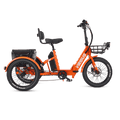


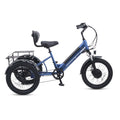

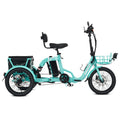

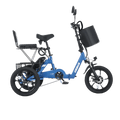









Class 3 e-bikes are designed for faster commuting and road travel, with pedal assistance up to 28 mph. Because of their speed, they are treated differently from traditional bikes and slower e-bike classes, which means where you can ride them is more regulated. Since rules can vary by state, city, and even individual trail systems, riders should always check local regulations before heading out.
Where Can You Ride Class 3 E-Bikes?
Class 3 e-bikes are among the fastest electric bicycles legally available in many parts of the United States, providing pedal assistance up to 28 mph. Because of their higher speed and commuter-focused design, the rules governing where they can be ridden are often stricter than those for Class 1 or Class 2 e-bikes. While regulations vary by state and local authority, there are several general guidelines that riders should understand before heading out.
|
Riding Location |
Class 3 ebikes Access |
Details |
|
Public Roads & Streets |
✅ Generally Allowed |
Class 3 e-bikes are commonly permitted on public roads alongside cars and traditional bicycles. |
|
On-Road Bike Lanes |
✅ Generally Allowed |
Painted bike lanes located next to vehicle traffic are usually open to Class 3 e-bikes. |
|
Roadside Cycling Infrastructure |
✅ Generally Allowed |
Many commuter bike corridors and bicycle transportation networks allow Class 3 riding. |
|
Protected Bike Lanes (Street-Connected) |
⚠️ Depends on Local Rules |
Some protected bike lanes permit Class 3 e-bikes, while others may impose restrictions. |
|
Motorised Trails / OHV Routes |
⚠️ Sometimes Allowed |
Certain motorised off-road trails and OHV routes may permit Class 3 e-bikes depending on local regulations. |
|
Public Dirt Roads |
⚠️ Often Allowed |
On some federal and public lands, Class 3 e-bikes may be allowed on roads open to motor vehicles. |
On Public Roads
Class 3 e-bikes are commonly permitted on public roads and streets alongside conventional vehicles and traditional bicycles. Since these bikes are designed for faster travel and commuting, they integrate well with normal traffic flow and are often treated similarly to standard bicycles under state e-bike laws.
Riders can typically use Class 3 e-bikes on city streets, suburban roads, and many local roadways without requiring a driver’s licence, registration, or insurance, although local laws may impose age or helmet requirements. Their ability to reach higher assisted speeds makes them particularly popular for commuting, reducing travel time while still providing the flexibility and convenience of cycling.
On-Road Bike Lanes
Class 3 e-bikes are also widely allowed in traditional bike lanes located directly beside road traffic, often called on-road or curb-to-curb bike lanes. These painted lanes are considered part of the roadway and are generally intended to accommodate faster-moving cyclists.
Protected bike lanes that remain connected to the street network may also permit Class 3 e-bikes, though riders should verify local regulations. Because Class 3 bikes travel faster than many recreational cyclists, riders should maintain safe passing distances and moderate their speed when sharing bike lanes with slower users.
Common places where Class 3 e-bikes are usually allowed include:
- Public streets and roadways
- Painted roadside bike lanes
- Many commuter cycling corridors
- Urban transportation networks designed for bicycles
Where Are Class 3 E-Bikes Not Allowed?
While they are widely accepted on public roads and many roadside bike lanes, they face more riding restrictions than Class 1 or Class 2 e-bikes. Because of their higher assisted speed, many areas limit or prohibit Class 3 e-bikes in places designed for slower recreational use or pedestrian traffic.
|
Riding Location |
Class 3 Access |
Why Restrictions Exist |
|
Sidewalks |
❌ |
High speeds create safety risks for pedestrians and crowded areas. |
|
Paved Multi-Use Paths |
❌ |
Shared with walkers, joggers, and slower cyclists, making speed conflicts more likely. |
|
Greenways & Recreational Trails |
❌ |
Many parks reserve these paths for pedestrians and slower bikes or Class 1/2 e-bikes. |
|
Rail-Trails & Linear Park Trails |
❌ |
Separated recreational paths commonly limit higher-speed e-bikes. |
|
Separated Bike Paths Away from Roads |
❌ |
These paths may only permit traditional bicycles or lower-speed e-bikes. |
|
Mountain Bike Singletrack |
❌ |
Narrow trails and blind corners create safety and trail management concerns. |
|
Natural Surface Trails |
❌ |
Many trail systems only allow Class 1 pedal-assist e-bikes. |
|
Hiking & Equestrian Trails |
❌ |
These trails are designed for non-motorised recreation and pedestrian use. |
|
Wilderness Areas |
❌ |
Federal wilderness rules typically prohibit motor-assisted transportation. |
|
Non-Motorised Federal Trails |
❌ |
On federal lands, Class 3 e-bikes are commonly limited to motorised routes or roads. |
Paved Multi-Use Paths
One of the most common misconceptions about Class 3 e-bikes is that they can be ridden anywhere a regular bicycle is allowed. In reality, many separated multi-use paths prohibit Class 3 models.
These paths are often shared with pedestrians, joggers, dog walkers, skaters, and casual cyclists. Because Class 3 e-bikes can assist up to 28 mph, many state and local agencies consider them too fast for these recreational environments.
As a result, Class 3 e-bikes are frequently restricted from:
- Greenways and recreational trails
- Rail-trails and converted railway corridors
- Waterfront paths and park trails
- Fully separated bike paths away from roads
These routes are commonly reserved for pedestrians, traditional bicycles, and slower Class 1 and Class 2 e-bikes, which typically have a maximum assisted speed of 20 mph.
Class 1 or Class 2 E-bike? Which Should You Choose?
However, exceptions do exist. Some cities and regional trail authorities explicitly allow Class 3 e-bikes on certain paved paths, particularly if the route serves as an important commuter connection. Always check posted signs or local regulations before riding.
Sidewalk Restrictions
Class 3 e-bikes are almost universally prohibited on sidewalks. Their higher operating speed creates significant safety concerns for pedestrians, especially in busy urban areas.
Even in places where standard bicycles may occasionally be allowed on sidewalks, Class 3 e-bikes are often specifically excluded. Riding on sidewalks can lead to fines and increases the risk of collisions with pedestrians exiting buildings, crossing driveways, or walking pets.
For this reason, riders should remain on roads or approved cycling infrastructure rather than attempting to use pedestrian walkways.
Natural Surface and Singletrack Trails
Rules for Class 3 e-bikes become even more restrictive when it comes to off-road riding. Most natural-surface trails and mountain ebike systems prohibit Class 3 e-bikes, especially narrow singletrack routes intended for non-motorised recreation.
Many trail networks that welcome e-bikes only permit Class 1 pedal-assist ebikes, as they are considered more compatible with traditional mountain biking and trail etiquette.
Trail managers often restrict Class 3 bikes due to concerns including:
- Higher riding speeds
- Increased interaction conflicts
- Trail safety and visibility limitations
- Potential environmental and erosion impacts
- Preserving non-motorised recreation experiences
As a result, riders should not assume that a mountain bike trail allows Class 3 e-bikes simply because bicycles are permitted.
Federal and Public Lands
Rules on public lands depend heavily on the managing agency and local land-use policies.
On lands managed by agencies such as the Bureau of Land Management (BLM), US Forest Service, and National Park Service, e-bike access is often governed separately from standard bicycle access.
In many cases, Class 3 e-bikes are limited to:
- Public dirt roads
- Motorised OHV (Off-Highway Vehicle) routes
- Designated motor-vehicle trails
- Approved access roads and service routes
They are often prohibited from:
- Non-motorised hiking trails
- Wilderness areas
- Backcountry footpaths
- Traditional mountain biking singletrack
Because federal land policies can vary by forest, park, or district, riders should check local land management websites or trail signage before planning an off-road trip.
What States Allow Class 3 Ebikes?
Class 3 e-bikes are legal in many U.S. states, but not all states regulate e-bikes the same way. Most states now use the three-class e-bike system, which recognises Class 3 e-bikes as pedal-assist bicycles with assistance up to 28 mph and a motor of 750W or less.
As of 2026, 36 states and Washington, D.C. follow the three-class system and therefore allow Class 3 e-bikes, although riding rules, helmet laws, age limits, and trail access vary by state.
States That Allow Class 3 E-Bikes (Three-Class System)
|
State |
Class 3 E-Bikes Legal? |
Notes |
|
Alabama |
Yes |
Three-class system |
|
Arizona |
Yes |
Three-class system |
|
Arkansas |
Yes |
Three-class system |
|
California |
Yes |
Helmet + age requirements for Class 3 |
|
Colorado |
Yes |
Trail restrictions may apply |
|
Connecticut |
Yes |
Three-class system |
|
Delaware |
Yes |
Three-class system |
|
Florida |
Yes |
Generally road legal |
|
Georgia |
Yes |
Three-class system |
|
Idaho |
Yes |
Three-class system |
|
Illinois |
Yes |
Three-class system |
|
Indiana |
Yes |
Three-class system |
|
Iowa |
Yes |
Three-class system |
|
Louisiana |
Yes |
Three-class system |
|
Maine |
Yes |
Three-class system |
|
Maryland |
Yes |
Three-class system |
|
Michigan |
Yes |
Three-class system |
|
Minnesota |
Yes |
More permissive path access than many states |
|
Mississippi |
Yes |
Three-class system |
|
Missouri |
Yes |
Three-class system |
|
Nevada |
Yes |
Three-class system |
|
New Hampshire |
Yes |
Three-class system |
|
New York |
Yes |
Class 3 capped at 25 mph statewide |
|
North Dakota |
Yes |
Three-class system |
|
Ohio |
Yes |
Three-class system |
|
Oklahoma |
Yes |
Three-class system |
|
Oregon |
Yes |
Three-class system |
|
South Dakota |
Yes |
Three-class system |
|
Tennessee |
Yes |
Three-class system |
|
Texas |
Yes |
Minimum age rules for Class 3 |
|
Utah |
Yes |
Three-class system |
|
Vermont |
Yes |
Three-class system |
|
Virginia |
Yes |
Three-class system |
|
Washington |
Yes |
Shared-path restrictions |
|
West Virginia |
Yes |
Three-class system |
|
Wisconsin |
Yes |
Three-class system |
|
Wyoming |
Yes |
Three-class system |
|
Washington, D.C. |
Yes |
Three-class framework |
States With Different or Limited Class 3 Rules
Some states do not officially recognise Class 3 e-bikes or regulate them differently.
New Jersey: Recently updated its laws to classify e-bikes as "motorized bicycles." To ride a Class 3 e-bike here, you must hold a valid operator's license and register the bike. Massachusetts, Alaska, Hawaii, & New Mexico: These states generally treat high-speed e-bikes similarly to mopeds or motorized vehicles. You may be required to have a valid driver's license, clear a minimum age requirement (usually 15 or 16), or register the bike with the DMV.
|
State |
Class 3 Status |
Notes |
|
Pennsylvania |
❌ Not officially recognised |
Uses a 20-mph "electric assist pedalcycle" definition instead of Class 1/2/3 |
|
New Jersey |
⚠️ Different framework |
Reclassified e-bike regulations and no longer follows the standard three-class model in 2026 |
|
Some remaining states |
⚠️ Varies |
May use moped or motorised bicycle definitions instead of Class 3 terminology |
Age and Helmet Requirements for Class 3 E-Bikes
Class 3 e-bikes can reach 28 mph with pedal assist, so many states apply stricter age and helmet laws compared with Class 1 and Class 2 e-bikes. While exact regulations vary by state, there are several common rules riders should know.
|
State |
Minimum Rider Age |
Helmet Required For... |
|
California |
16 years old |
Everyone (Drivers & Passengers) |
|
Texas |
15 years old |
Under 18 only |
|
New York |
16 years old |
Everyone |
|
Florida |
No age limit |
Under 16 only (Note: Florida is an outlier with no age limit for Class 3) |
|
Colorado |
16 years old |
Under 18 only |
Age Restrictions for Class 3 E-Bikes
Because Class 3 e-bikes can provide pedal assistance up to 28 mph, many states apply stricter age rules than they do for Class 1 and Class 2 e-bikes. In most parts of the United States, children and young teenagers cannot legally operate a Class 3 e-bike.
The most common rule nationwide is a minimum operating age of 16 for Class 3 e-bikes. States that follow this approach include places such as California, Colorado, Illinois, Michigan, Ohio, and Tennessee. This higher age requirement reflects the faster speeds and greater safety responsibilities associated with Class 3 riding.
Not every state uses the same minimum age. A few states lower the requirement slightly. Texas, for example, permits riders to operate a Class 3 e-bike at 15 years old rather than 16. State law also specifically states that riders under 15 cannot operate a Class 3 e-bike themselves.
Helmet Requirements for Class 3 E-Bikes
Because Class 3 e-bikes can reach pedal-assist speeds of up to 28 mph, many states impose stricter helmet requirements than they do for standard bicycles or slower e-bike classes. While adults may legally ride traditional bicycles or Class 1 and Class 2 e-bikes without helmets in some states, Class 3 e-bikes often trigger mandatory helmet laws.
|
Helmet Requirement |
Typical Rule |
Details |
|
Universal Helmet Laws |
Required for all riders |
Some states require helmets for every Class 3 rider and passenger, regardless of age. |
|
Youth Helmet Laws |
Common nationwide |
States without adult helmet laws still often require helmets for minors. |
|
Passengers |
Usually Included |
Helmet requirements frequently apply to passengers as well as operators. |
|
Helmet Standards |
CPSC Approved |
Most states require helmets meeting recognised bicycle safety standards. |
Universal Helmet Mandate (All Ages)
Several states require every person on a Class 3 e-bike to wear a helmet, regardless of age or riding role.
In states such as California, Georgia, New York, Virginia, and Delaware, helmet laws apply broadly to both:
- Operators (drivers)
- Passengers
This means a rider who is 16 or 60 years old is subject to the same legal helmet requirement when using a Class 3 e-bike.
These universal rules are based on the increased speed and crash potential associated with Class 3 e-bikes compared with lower-speed bicycles and e-bike classes.
Helmet Requirements for Passengers
Helmet rules frequently extend beyond the operator to include passengers.
If a Class 3 e-bike is designed with:
- A passenger seat
- Rear rack seating
- Child carrier or cargo seating
then helmet laws often require the passenger to wear one as well, especially if they are a minor.
Some states specifically state that both rider and passenger must be helmeted when using a Class 3 e-bike.
What Type of Helmet Is Required?
Most states consider a standard bicycle helmet meeting CPSC (Consumer Product Safety Commission) safety standards to be legally sufficient for Class 3 e-bike use.
Common Helmet Standards
|
Helmet Type |
Legally Acceptable? |
Notes |
|
CPSC-Certified Bicycle Helmet |
Yes |
Meets U.S. legal bicycle safety requirements. |
|
ASTM / Snell Bicycle Helmet |
Sometimes |
Additional recognised safety standards. |
|
NTA-8776 E-Bike Helmet |
Optional |
Designed specifically for higher-speed e-bike impacts. |
Although a regular CPSC-certified bicycle helmet satisfies legal requirements in most states, many experienced Class 3 riders prefer NTA-8776-certified helmets.
These helmets are specifically designed and tested for higher-speed e-bike impacts, including crashes occurring around 28 mph, providing additional head and temple coverage compared with standard cycling helmets.
Bike Helmet Laws by State: A Guide to Staying Safe and Legal
Do I Need a License to Drive a Class 3 E-Bike?
In most U.S. states, you do not need a driver’s license to ride a Class 3 e-bike. Class 3 e-bikes are generally treated as bicycles rather than motor vehicles, meaning they usually do not require a driver's licence, vehicle registration, licence plate, or insurance.
Learn More:
Do You Need a License For an Electric Bike? A State-by-State Guide
|
Requirement |
Class 3 E-Bike Rule |
|
Driver’s license |
Not required |
|
Vehicle registration |
Not required |
|
Insurance |
Not required |
|
Legal classification |
Treated as a bicycle |
Where a License May Be Required
A small number of states do not fully align with the standard Class 3 framework and may impose licensing or registration rules.
|
State |
Rule |
Notes |
|
|
New Jersey |
License + registration required in some cases |
Class 3 e-bikes may be regulated similarly to mopeds under MVC rules. |
|
|
Massachusetts |
May require license depending on classification |
Some higher-speed e-bikes may fall under “motorized bicycle” rules. |
|
|
Alaska |
Possible licensing requirement |
Certain e-bikes may be treated more like motorized vehicles. |
|
|
New Mexico |
Possible mopeds classification |
Higher-speed e-bikes may require licensing depending on setup. |
When Might You Need a License?
In states that follow the standard three-class e-bike system, Class 3 e-bikes are legally treated as bicycles as long as they meet federal limits (≤750W motor, pedal-assist up to 28 mph). This is why no driver’s license is usually needed.
Although uncommon, some states regulate faster or differently classified e-bikes more strictly. You may need a licence or additional paperwork if:
- The bike exceeds 750W
- Motor power pushes the bike above 28 mph
- The bike is modified beyond Class 3 limits
- Your state classifies it as a moped, motorised bicycle, or motorcycle instead of an e-bike.
|
Situation |
License Needed? |
|
Legal Class 3 e-bike (≤750W, 28 mph) |
❌ Usually No |
|
Modified high-speed e-bike |
⚠️ Possibly |
|
E-bike over 750W |
⚠️ Often Yes |
|
E-bike over 28 mph assist |
⚠️ Often Yes |
|
Moped / e-motorcycle classification |
✅ Usually Yes |
Final Thoughts
Class 3 e-bikes sit in a unique space between traditional bicycles and motorized transportation. They are fast, efficient, and ideal for commuting, but that higher performance also means more regulations compared to Class 1 and Class 2 e-bikes.
Before riding, it’s always worth checking local state laws and trail regulations, especially if you plan to use bike paths, parks, or federal land.



![Massachusetts Electric Bike Laws Explained [The Ultimate Guide]](http://viribusbikes.com/cdn/shop/articles/pedal_ebike_33_1_31bb6219-6f24-46b3-9b1f-e2880fa67e8f.jpg?v=1779938040&width=1280)

Leave a comment
All comments are moderated before being published.
This site is protected by hCaptcha and the hCaptcha Privacy Policy and Terms of Service apply.