















If you scroll through internet history forums or social media sites like Reddit, you’ll occasionally run across a viral post showering praise on Matthew A. Cherry. The claim? He invented the tricycle in 1888, single-handedly saving millions of children from scraped knees.
It is a heartwarming sentiment, but it gets a major piece of history sideways.
While Matthew A. Cherry was a brilliant African American inventor who made incredible contributions to transportation, he didn't actually invent the tricycle. The true history of the three-wheeled wonder is a global, centuries-long journey of trial, error, and adaptive engineering.
The Real Timeline of the Tricycle
Based on the historical record provided, here is the real timeline of the tricycle, charting its evolution from a hand-cranked mobility aid to a high-society craze and its eventual transition into the modern configuration we recognize today.

Phase 1: The Early Prototypes (17th & 18th Century)
- 1680: The very first tricycle was built near Nuremberg for a German paraplegic watchmaker named Stephan Farffler. Utilizing his watchmaking expertise, he builds a three-wheeled machine equipped with gears and hand cranks so he can propel himself.
- 1789: Two Frenchmen named Blanchard and Maguier invent a new tricycle design. Their creation prompted the Journal de Paris to publish the words "bicycle" and "tricycle" for the very first time on July 27th to help the public differentiate between the two types of machines.
- 1818–1819: Denis Johnson patents a tricycle in England in 1818, followed shortly by the introduction of a three-wheeled "swiftwalker" vehicle in 1819.
Phase 2: First-Generation Trikes & The Great Boom (Late 1870s–1884)
- November 18, 1876: James Starley introduces the Coventry Lever Tricycle in Great Britain. It features a unique, side-driven layout with two small steering wheels on the right and one large drive wheel on the left. This design effectively kicks off a massive tricycling craze across Great Britain.
- 1877: H.J. Lawson adapts Starley’s design to a chain drive, creating a famous first-generation model known as the Coventry Rotary.
- 1878–1879: Tricycles explode in popularity and become highly fashionable, especially in circles like Brighton. By 1879, manufacturers in Coventry alone are producing 20 different types of tricycles and multi-wheel cycles.
- 1881: Queen Victoria purchases a pair of tricycles, driving their popularity sky-high among the upper classes and women, who prefer them because they can be ridden comfortably in long dresses. From 1881 to 1886, more tricycles are built in Great Britain than bicycles.
- 1882: To prove the tricycle's practicality as a touring machine, a rider named Mr. A. Bird rides a Humber tricycle from Birmingham to Cambridge (a 222-mile journey) in just 24 hours.
- 1884: The commercial market peaks with over 120 different tricycle models being produced by 20 different manufacturers.
Phase 3: Second & Third Generation Evolution (1885–1900)
- 1885: The second generation of tricycles emerges, typified by the Humber Cripper (named after racer Robert Cripps). This model abandons side-steering and introduces the modern arrangement: a single front wheel that bisects the track of two rear wheels. These heavy machines typically weigh around 75 pounds.
- 1892: The third generation begins to surface with models like the Starley Psycho. Moving away from mismatched wheel sizes, this design features three wheels of completely equal size (28 inches)—making it look just like the tricycles of today.
- 1900: The invention of the pneumatic-tired "safety bicycle" (like the Rover Safety displayed in 1885) offers enough stability for the general public at a cheaper, faster, and lighter standard. The safety bicycle takes away most of the tricycle business, locking the tricycle into its final structural form.
Source: https://en.wikipedia.org/wiki/Tricycle
Setting the Record Straight: What Did Matthew A. Cherry Do?
It is easy to see how internet telephone changes history. On May 8, 1888, Matthew A. Cherry was granted a U.S. patent for a new design of a velocipede—an early umbrella term for human-powered land vehicles.
By the late 1880s, basic tricycles and bicycles were already rolling down streets. However, early models were notoriously unstable, uncomfortable, and difficult to steer. Cherry looked at the existing designs and saw room for significant improvement.
Cherry's Real Innovation: He engineered modifications to the frame and wheel structure that drastically increased stability, improved the rider's posture, and enhanced forward visibility. His version layout helped transition the vehicle from a niche hobby into a highly practical tool for daily transportation.
Furthermore, Cherry was far from a one-hit wonder. In 1895, he patented the streetcar fender, a metal shock-absorbing device placed on the front of streetcars to minimize damage during collisions. If you look at the bumper on your car today, you are looking at the direct evolution of Cherry’s 1895 genius.
Different Types of Modern Tricycles
Tricycles come in a remarkable variety of designs, far beyond the classic three-wheeled toy found on a suburban driveway. Depending on the rider's age, physical needs, and intended environment, tricycles can be categorized into several distinct types:
1. Traditional Upright Tricycles
These are the most recognizable trikes on the market and feature a rider position similar to a standard upright bicycle.
- Children’s Tricycles: Built with a low center of gravity, these often feature direct-drive pedals attached straight to the front wheel. They are highly stable and designed to help toddlers develop coordination and leg strength.
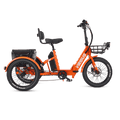
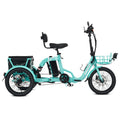
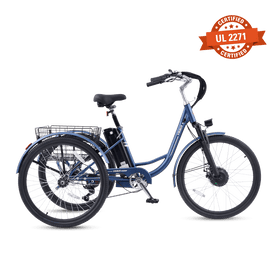
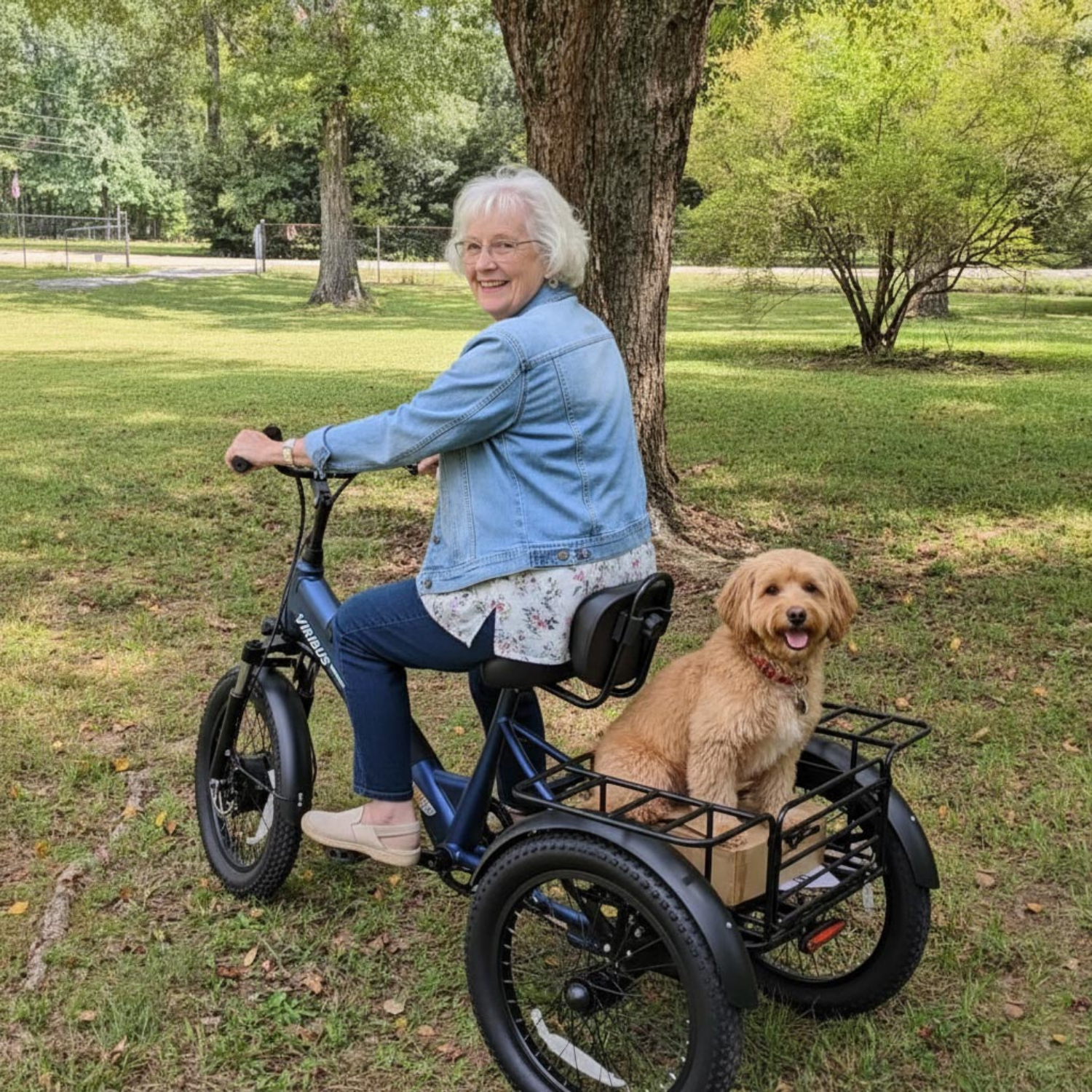
- Adult Trikes: Featuring a conventional bicycle seat and handlebars, these models split into a wide two-wheel rear axle. They are exceptionally popular among seniors or individuals with balance challenges. They almost universally feature a large rear basket, making them excellent for running errands or carrying groceries.
13 Best Electric Tricycles for Adults
2. Recumbent Tricycles
Recumbent trikes place the rider in a laid-back, reclined position, similar to sitting in an ergonomic lawn chair. The pedals are located at the very front of the vehicle.
- Delta Configuration: This layout features one wheel in the front (which steers) and two wheels in the back. They sit slightly higher off the ground than tadpole trikes, making them easier to get in and out of.
- Tadpole Configuration (Reverse Tricycle): This layout features two wheels in the front (handling the steering) and one wheel in the back (handling the drive power). This reverse design offers superior aerodynamics, better weight distribution, and high-speed stability when cornering.
|
Feature |
Delta Trike (1 Front, 2 Rear) |
Tadpole Trike (2 Front, 1 Rear) |
|
Steering Wheel(s) |
Single front wheel |
Dual front wheels |
|
Turning Stability |
Moderate (can tip if cornering sharply) |
High (designed for aggressive cornering) |
|
Seat Height |
Higher (easier to mount/dismount) |
Very low to the ground |
|
Main Use |
Leisurely cruising and utility |
Fitness, speed, and long-distance touring |
3. Drift Trikes
Built purely for sport and adrenaline, drift trikes feature a sturdy bicycle front wheel paired with slick, hard-plastic (often PVC) rear wheels. They are designed intentionally to lose traction on paved surfaces, allowing riders to countersteer and slide through high-speed drifts down paved hills or specialized tracks.
4. Cargo Tricycles
Engineered for heavy-duty labor, cargo trikes are built with reinforced steel frames and heavy-duty drivetrains.
- Front-Loaders: These position a massive wooden or metal cargo box between the two front wheels, keeping the payload entirely within the rider’s line of sight.
- Rear-Loaders (Pedicabs): These feature a heavy-duty rear flatbed or passenger bench over the back two wheels, frequently used for eco-friendly city deliveries or as bicycle taxis in urban centers.
5. Adaptive Tricycles
Adaptive tricycles are specifically engineered for riders with physical disabilities, mobility impairments, or those undergoing physical therapy. They can be custom-fitted with hand-cranks (for riders who cannot use their legs), chest harnesses, foot straps, and specialized supportive seating to ensure everyone has access to the freedom of cycling.
6. Electric Tricycles
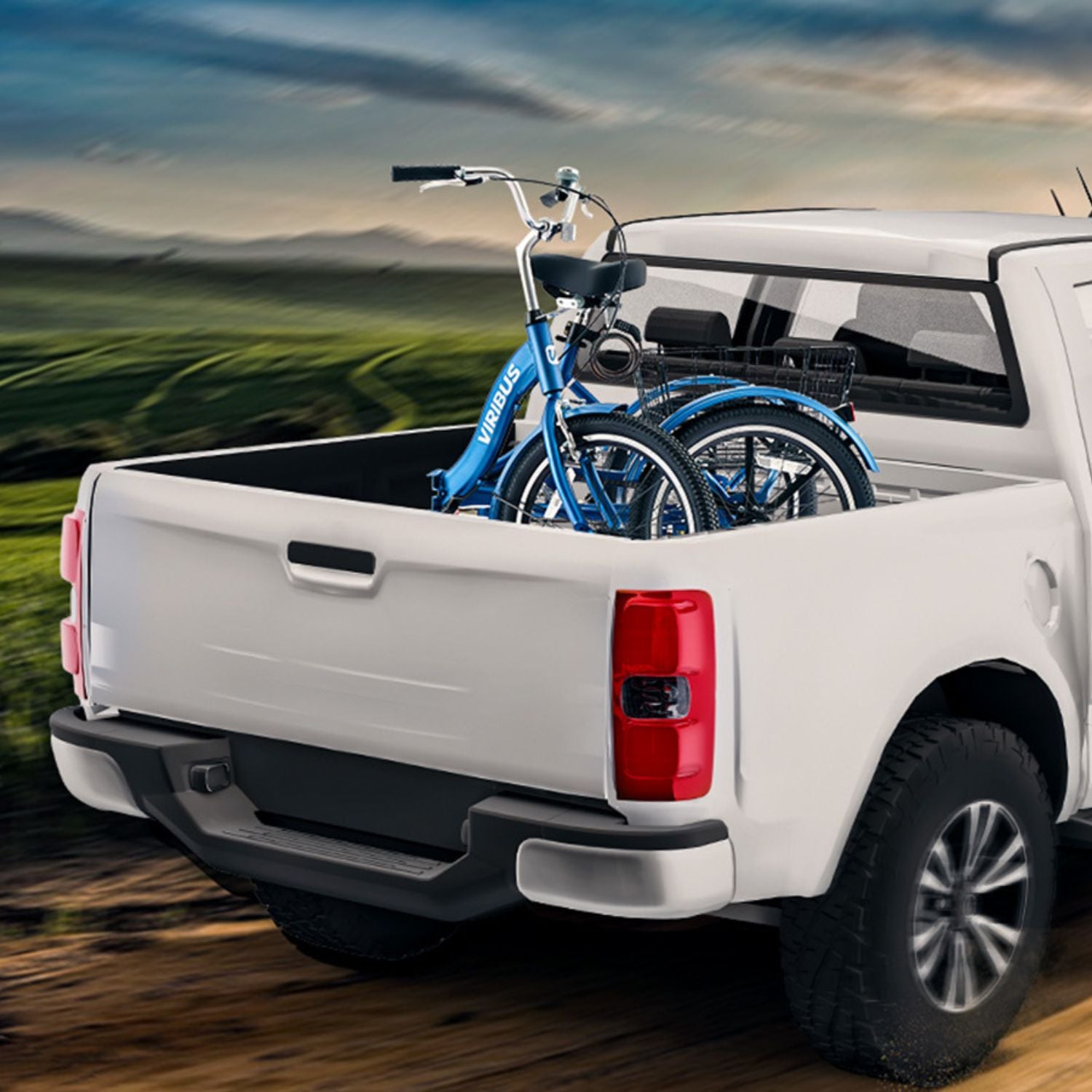
A rapidly growing category, e-trikes integrate a battery-powered electric motor into any of the configurations listed above. They offer pedal-assist or throttle power, allowing riders to climb steep hills, carry incredibly heavy loads, or commute long distances without physical exhaustion.
FAQ
Who created the first tricycle?
The earliest recorded three-wheeled, human-powered vehicle was built in 1680 by a paralyzed German watchmaker named Stephan Farffler. Lacking the use of his legs, he applied his mechanical background to create a device powered by hand cranks and gears, essentially inventing the precursor to both the modern tricycle and the handcycle wheelchair.
Who was the black inventor of the tricycle?
Matthew A. Cherry is celebrated as a key African American inventor who made major improvements to the tricycle framework. On May 8, 1888, he patented an advanced version of a "velocipede" (Patent No. 382,351) that focused on drastically improving the vehicle’s stability, rider posture, and ease of steering.
Where did the tricycle come from?
The tricycle evolved primarily across Europe. While the earliest mechanical prototype emerged in Germany (1680), the concept was formalized and given the name "tricycle" in France in 1789. It then went through a massive industrial and commercial development boom during the late 19th century in Great Britain, where chain-driven models were first mass-produced for the public.
Why don't adults ride tricycles?
Most adults opt for standard bicycles because they are lighter, faster, more nimble, and easier to store. Bicycles allow riders to lean into turns smoothly, whereas traditional adult tricycles can feel rigid and run the risk of tipping over if you try to corner at high speeds. There is also a lingering social perception that three wheels are strictly for young children or seniors, though this mindset is rapidly changing.
Adult Tricycle Pros and Cons, Explained
Should a 70 year old ride a bike?
Absolutely! Cycling is an excellent, low-impact form of cardiovascular exercise that protects the joints while keeping the heart and legs strong. For a 70-year-old, the main focus should be safety: choosing a bike with a low step-through frame for easy mounting, or switching to an adult tricycle or e-bike if balance and reflex times have become a concern.
How much is a vintage tricycle worth?
Most common mid-century metal tricycles (such as 1950s–1970s AMF, Murray, or Roadmaster models) in fair condition are worth between $50 and $250. However, highly preserved pre-WWII models, rare cast-aluminum designs, or Victorian-era wooden and wrought-iron tricycles can easily command $500 to over $2,000 from specialized antique collectors.
What is the best brand of tricycle?
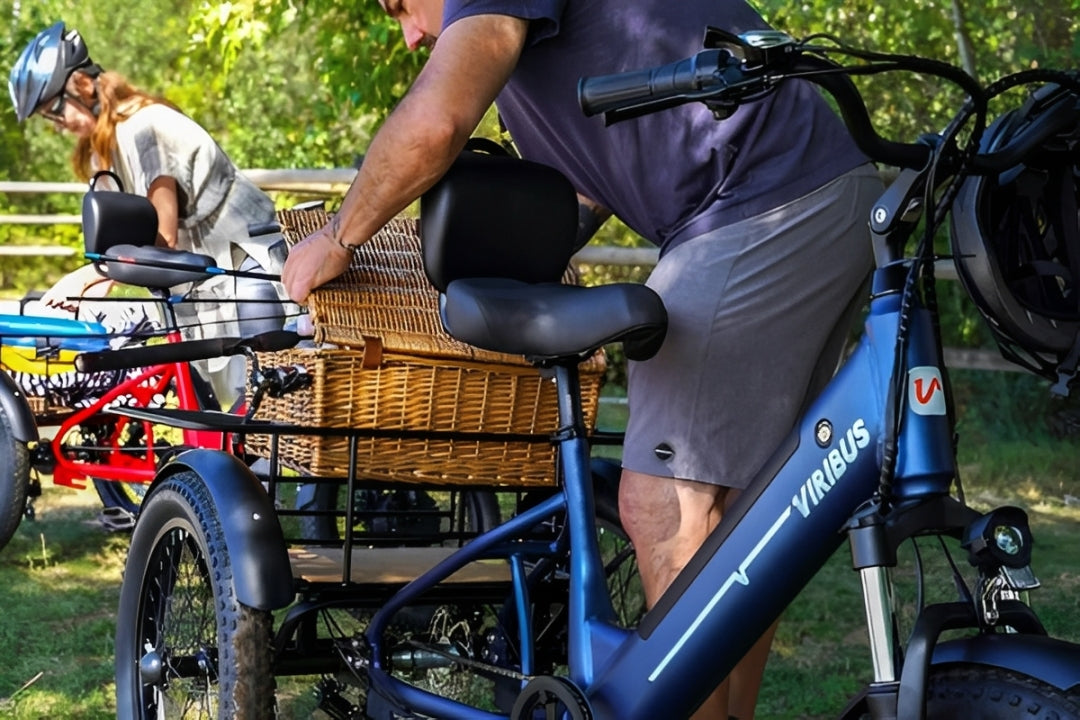
For traditional adult tricycles, Schwinn (especially the Schwinn Meridian) remains a gold-standard favorite for reliability and price. In the booming electric tricycle market, brands like Viribus, Lectric (with the XP Trike), Velotric, and Rad Power Bikes are widely considered the best options because they offer exceptional stability, strong motors, and excellent cargo capacity.
Is cycling good for the prostate?
Yes and no. The cardiovascular exercise from cycling is highly beneficial for overall prostate health and reducing inflammation. However, sitting on a narrow, hard bicycle saddle for long periods can compress the perineum (the area between the scrotum and anus), potentially irritating the prostate or aggravating conditions like prostatitis. This can be easily prevented by using a wider, split-zone ergonomic saddle or riding an upright tricycle.
What is an adult tricycle called?
An adult tricycle is most commonly referred to simply as an adult trike. Depending on the specific design layout, it might also be called a cargo trike (if it has a massive basket), a recumbent trike (if you sit low to the ground with your legs extended forward), or an adaptive trike if it is specially modified for physical therapy and mobility assistance.
What do you call someone who rides a tricycle?
A person who rides a tricycle is called a tricyclist. Alternatively, the broader terms cyclist or rider are also perfectly accurate, as cycling applies to any human-powered, wheel-driven vehicle regardless of the wheel count.
What is a reverse tricycle called?
A reverse tricycle is formally known as a tadpole tricycle or a reverse trike. Unlike a standard "delta" tricycle (which has one wheel in the front and two in the back), a tadpole configuration places two steering wheels up front and a single driving wheel in the back, which provides drastically superior stability and aerodynamics when cornering at higher speeds.













Leave a comment
All comments are moderated before being published.
This site is protected by hCaptcha and the hCaptcha Privacy Policy and Terms of Service apply.