











Do you love cycling but find it difficult due to bad knees and arthritis? Don't let joint pain stop you from enjoying your favorite activity. With a favorably designed adult tricycle or bike, and some tips, you can comfortably pedal a trike without putting strain on your knees and joints.
Cycling is a popular form of exercise and transportation that offers numerous benefits for physical and mental health. However, for individuals with bad knees and arthritis, traditional bikes may cause discomfort and even exacerbate the condition. Thankfully, there are alternatives available, such as trikes, that provide a more comfortable and supportive riding experience.
If you suffer from bad knees and arthritis but still want to enjoy the pleasures of cycling, it's crucial to find the right solution that accommodates your specific needs.
Why Cycling Is Good for Your Knees?
The main reason cycling is great for your knees is that it puts less stress on your joints.
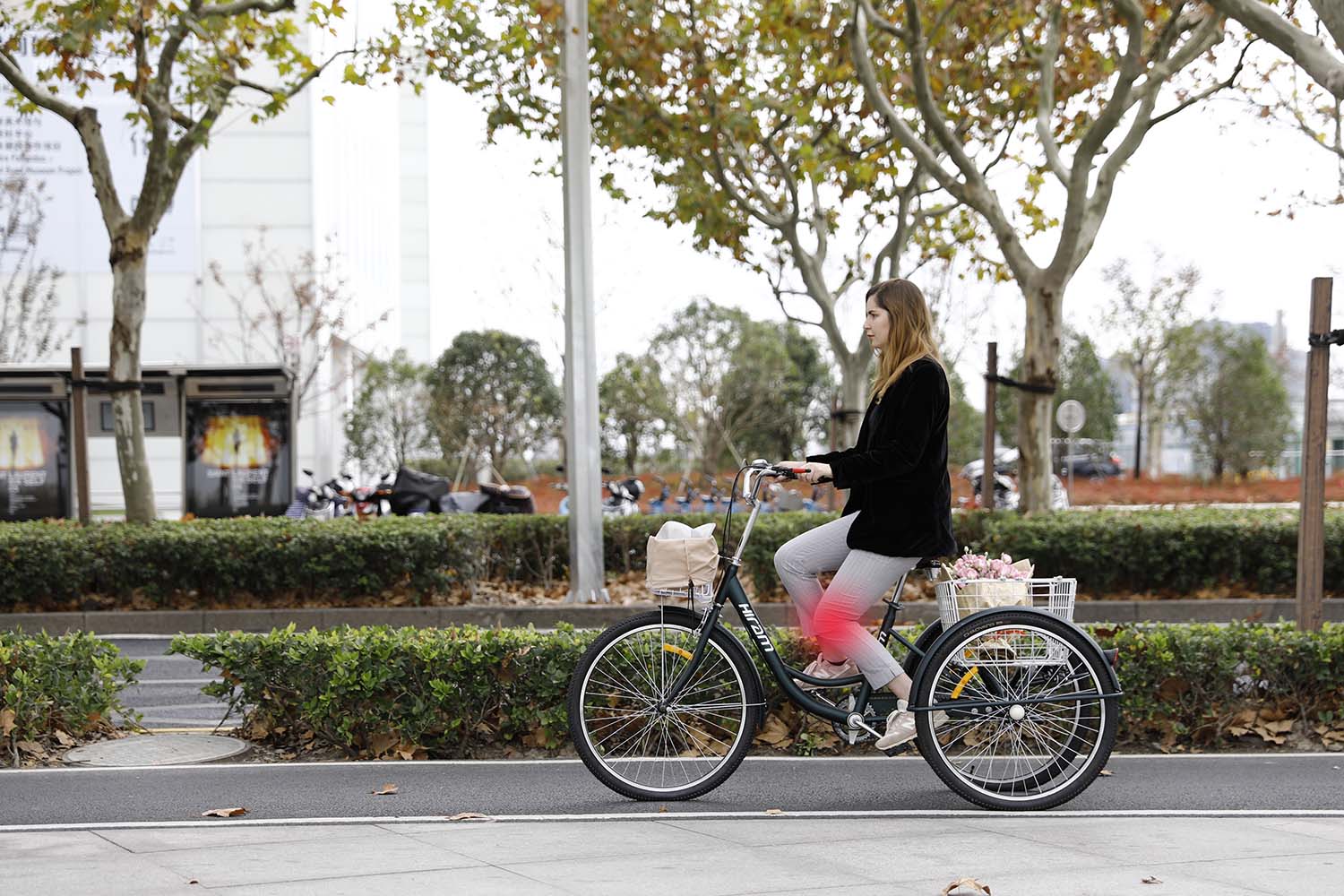
1. Bicycling: A Low-Impact Exercise for Joint Health
For individuals with arthritis and other conditions that affect the knee joint, bicycling can be a great exercise option. Its low-impact nature reduces stress on weight-bearing joints like the knees, making it a suitable choice for those looking to minimize discomfort and pain.
Additionally, the movement involved in pedaling bicycles helps lubricate the joints, resulting in reduced stiffness and improved overall joint function.
2. Variety in Intensity and Pace
One of the key advantages of bicycling is its adaptability to different intensities. Whether you prefer a leisurely ride or a more intense workout, cycling allows you to set your own pace. You can choose to go as fast or slow as you'd like, take breaks to coast, utilize lower gears for an easier ride, or go all out if you're feeling particularly energetic. This versatility makes bicycling suitable for individuals of various fitness levels and preferences.
3. Benefits for Knee Osteoarthritis
Numerous peer-reviewed studies have highlighted the benefits of low-intensity cycling for individuals with knee osteoarthritis. Engaging in this form of exercise can lead to improvements in overall function and gait, ultimately reducing pain and boosting aerobic fitness.
Moreover, moderate pedaling during cycling promotes an increased range of motion in the knee and hip joints, while also strengthening the quadriceps. These benefits extend beyond the knee joint, as cycling also targets the glutes and hamstrings, helping to strengthen the muscles surrounding the knee.
By developing strong supporting muscles, cyclists can effectively protect and support their joints.

Biking for Bad/ Arthritic Knees: Good or Bad?
Compared to other high-impact activities, such as running or jumping, cycling is generally very beneficial for adults with knee issues. The main advantage is that it is low-impact: your feet stay on the pedals, and there’s less joint stress.
Biking also supports bad knees by strengthening the supporting muscles around the knees.
Biking also improves joint mobility in a way that is healthier for bad knees than many intensive activities. The circular movement actually encourages a range of motion without pounding the joint.
Cycling with Bad Knees: Risks and Caveats
Though cycling is overall healthy for bad knees, it can only really benefit( or at least not hurt) your knees if you get the appropriate bike size and pay attention to where, how, and when you ride.
When biking with bad knees, keep the following in mind:
- The proper bike fit matters. If the bike is too big or too small,
- Stick to low resistance and higher cadence for the best results
- Riding on flat terrain or with gentle assistance, like e-bikes or tricycles, may be better
- If the pain persists or worsens, it is best to stop and consult a professional.
- For many adults with knee issues, cycling is one of the safest and most knee-friendly ways to stay active when done correctly.
 How to Incorporate Cycling into Your Routine
To incorporate cycling into your exercise routine, start by finding a comfortable and properly fitted bike. It is crucial to ensure that the seat height, handlebar position, and pedal alignment are all adjusted correctly to prevent unnecessary strain on your joints. Gradually increase the duration and intensity of your rides as you build strength and endurance.
Remember to listen to your body and take breaks whenever necessary.
How to Choose an Outdoor Bike with Arthritis
If you have upper body, neck, or back pain, a hybrid-style bike with high handlebars may be a better choice. This type of bike allows you to sit more upright, which can help ease pain and discomfort.
If your knees hurt, here are some essential features that will help make cycling more comfortable and sustainable, especially when combined with a proper fit and gradual riding progression.
- A low-impact design with smooth pedalling motion that reduces stress on the knees and joints
- Ensure a step-through frame that is easy to get off and on without lifting the legs too high.
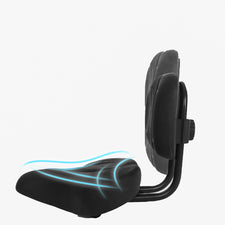
- Make sure the seating is comfortable. A bike saddle with paddles and an upright riding posture lessens the strain on the knees and hips.
- An adjustable fit: Ensure the seat and handlebars are adjustable to ensure proper leg extension.
- Electric assist is optional but also important. It helps maintain cadence with less effort, ideal for painful days or hills.
- Go for wider tires. Extra cushioning from fat tires can smooth rough surfaces.
By reducing strain on your upper body, a hybrid bike with high handlebars can provide a more comfortable riding experience.
Best Bike for Bad Knees
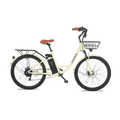
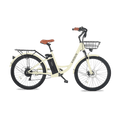
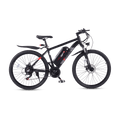
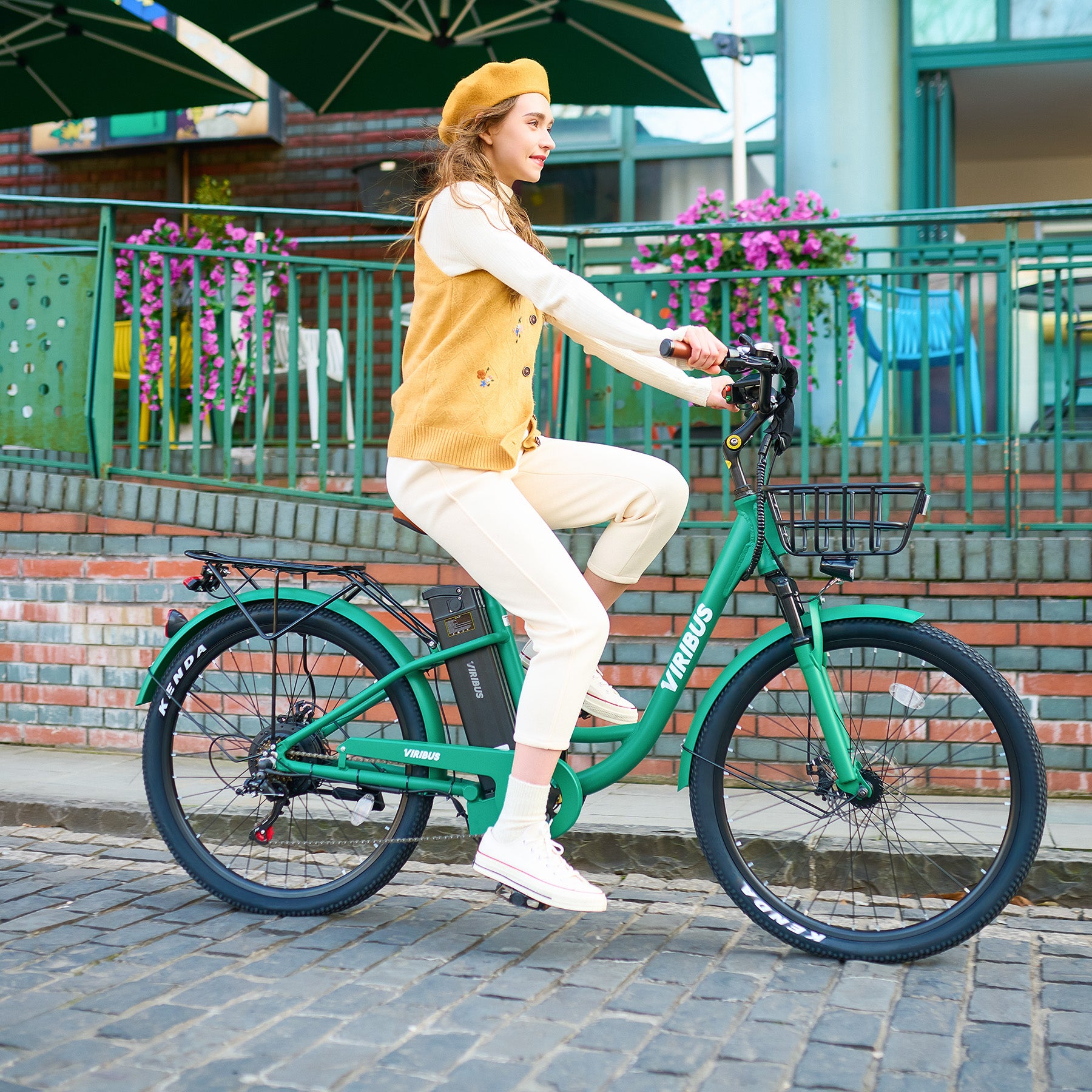
The BZ1 Electric Bike features a low, convenient, and sturdy step-through frame that ensures quick and easy mounting and unmounting. With its higher handlebars, you get to sit in an upright position that minimizes pressure on the knees.
Here's why this bike is great for your knees:
- A 500W motor for reliable and consistent pedal assist
- 5 levels of pedal assist to ease the burden of pedalling on different terrain
- A front suspension system to prevent shocks that may move your knees unexpectedly
- Adjustable handlebar height so you can adjust your sitting position in case of discomfort.
With multiple 7-speed gears for different terrains, sleek road tires for confidence on the highway, 26-inch spoked wheel rims for carrying heavier loads, and a double-mechanical disc brake for added safety, it's equipped for all your explorations.
Best Trike for Bad Knees
1. Viribus FC2 Folding Electric Tricycle
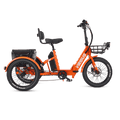
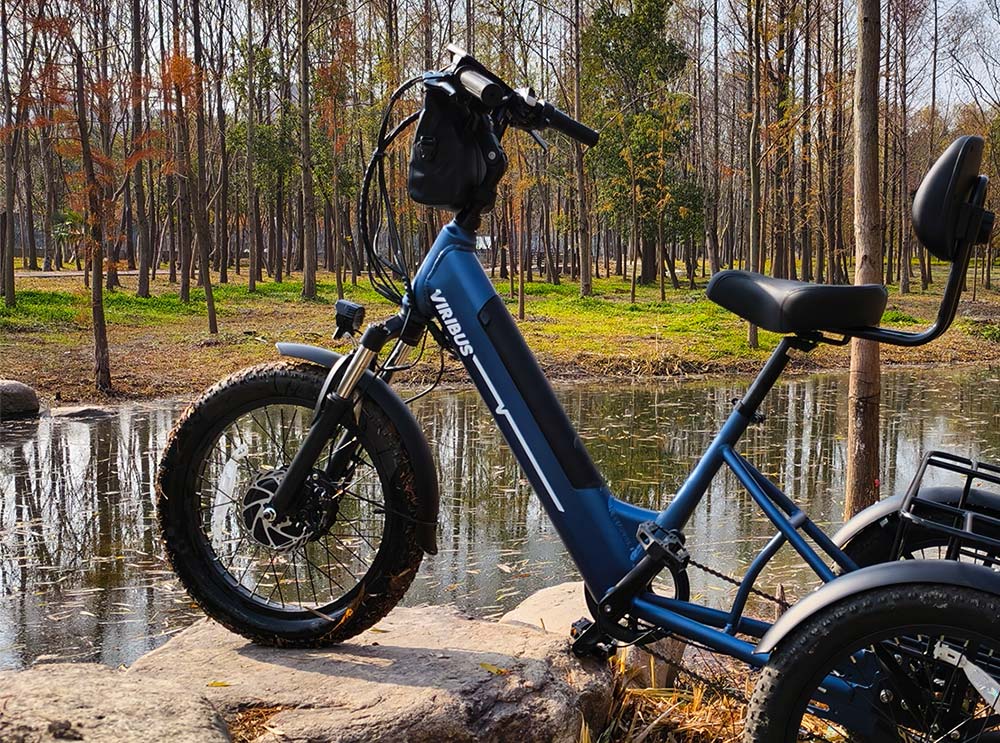
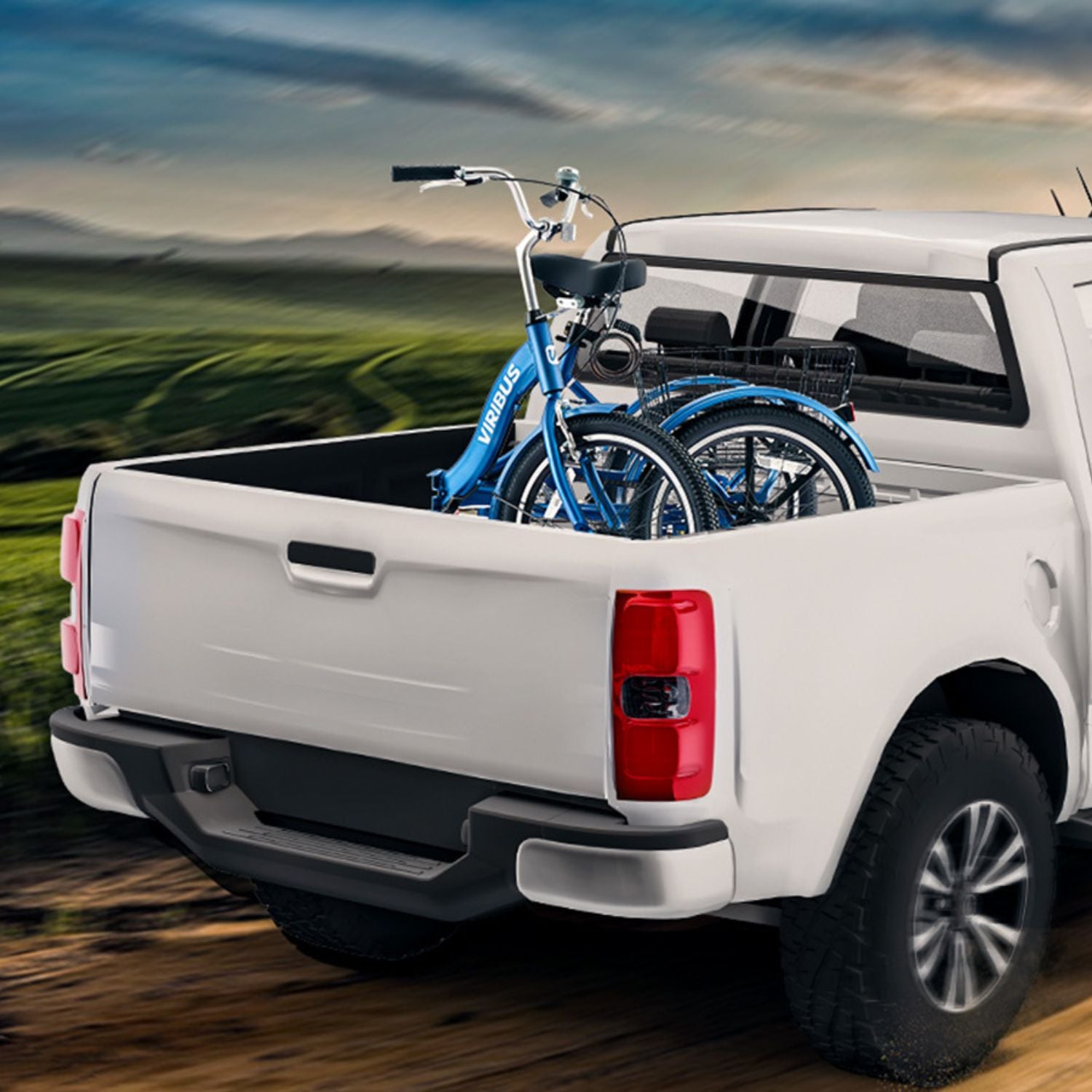
The Viribus FC2 Folding Electric Tricycle is arguably the most high-performing adult tricycle any adult with bad knees can ride in comfort and confidence. That is because it comes with exclusive features for riders who may have bad knees.
- First, the frame is lower to the ground, making it easy to mount/unmount without having to raise the knees too high.
- It also has five levels of pedal assist, giving a rider with bad knees many options when it comes to pedalling effort.
- With a rear suspension system, the shocks to the seat are effectively cushioned, eliminating any unexpected movement that might jerk your knees.
In addition, the FC2 is just a formidable trike all around. With a Samsung battery that can take you up to 35+ miles per charge, a 750W motor that reaches up to 20mph, and a set of dependable hydraulic brakes, this trike delivers everything you need in a modern tricycle to riders with bad knees while minimizing the risks and dangers of cycling with bad knees.
More Affordable Viribus Trikes for Bad Knees
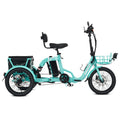
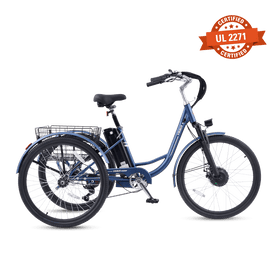
If you are a rider with bad knees, you can also consider the TG1 Electric Tricycle, and other TG trikes like the TG1 Plus Electric Tricycle and the TG1 Pro Electric Tricycle.
These earlier models feature low frames, multiple levels of pedal assist, and some formidable suspension systems, too (Check out the TG1 Pro Electric). Their lower power also makes them more suitable for elderly riders with bad knees, as they are generallymore concerned with comfort and safety than speed and performance

Bicycles vs Adult Tricycles for Bad Knees
| Feature | Bicycle | Adult Tricycle |
| Stability | Moderate needs balance | Excellent, no balance needed |
| Joint impact | Low | Low |
| Ease on knees | Good with proper fit | Excellent, and very forgiving |
| Comfort | Varies by bike style | High, most are low-step through |
| Speed and Efficiency | Higher | Lower |
| Ideal terrain | Smooth roads | Smooth and slightly uneven paths |
| Electric options | Common | Very helpful for hills |
- If knee pain is the primary concern, adult trikes often edge out bicycles because of their stability, comfortable posture, and forgiving ride.
- You don’t have to balance, and you can pedal smoothly without worrying about falls, which reduces stress on painful joints.
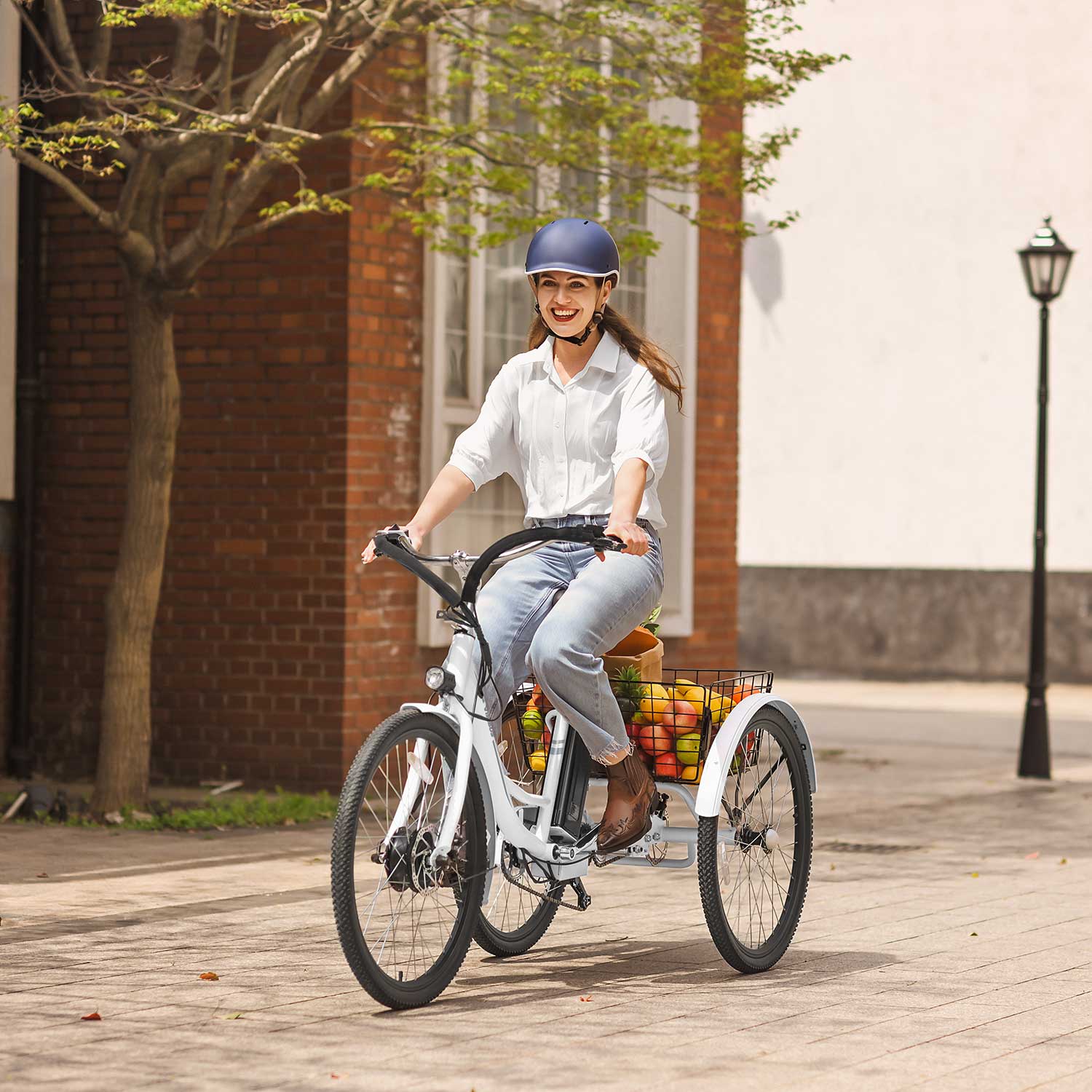
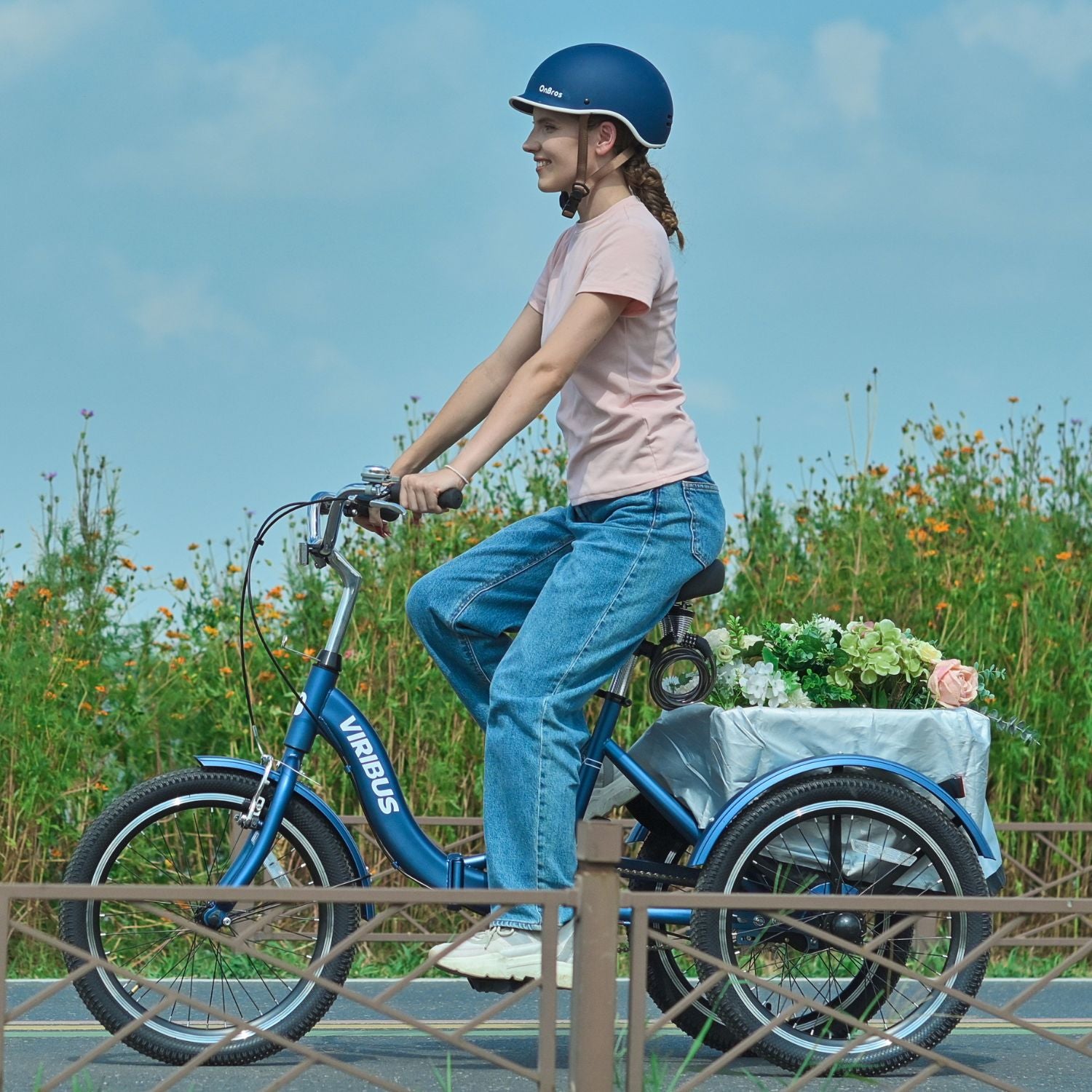
Whether you are seeking a bike to alleviate upper body pain or simply want a stylish and versatile tricycle, a Viribus tricycle with high handlebars is an excellent choice. Its ergonomic design, comfortable ride, and attractive frame details make it a standout option in the market.
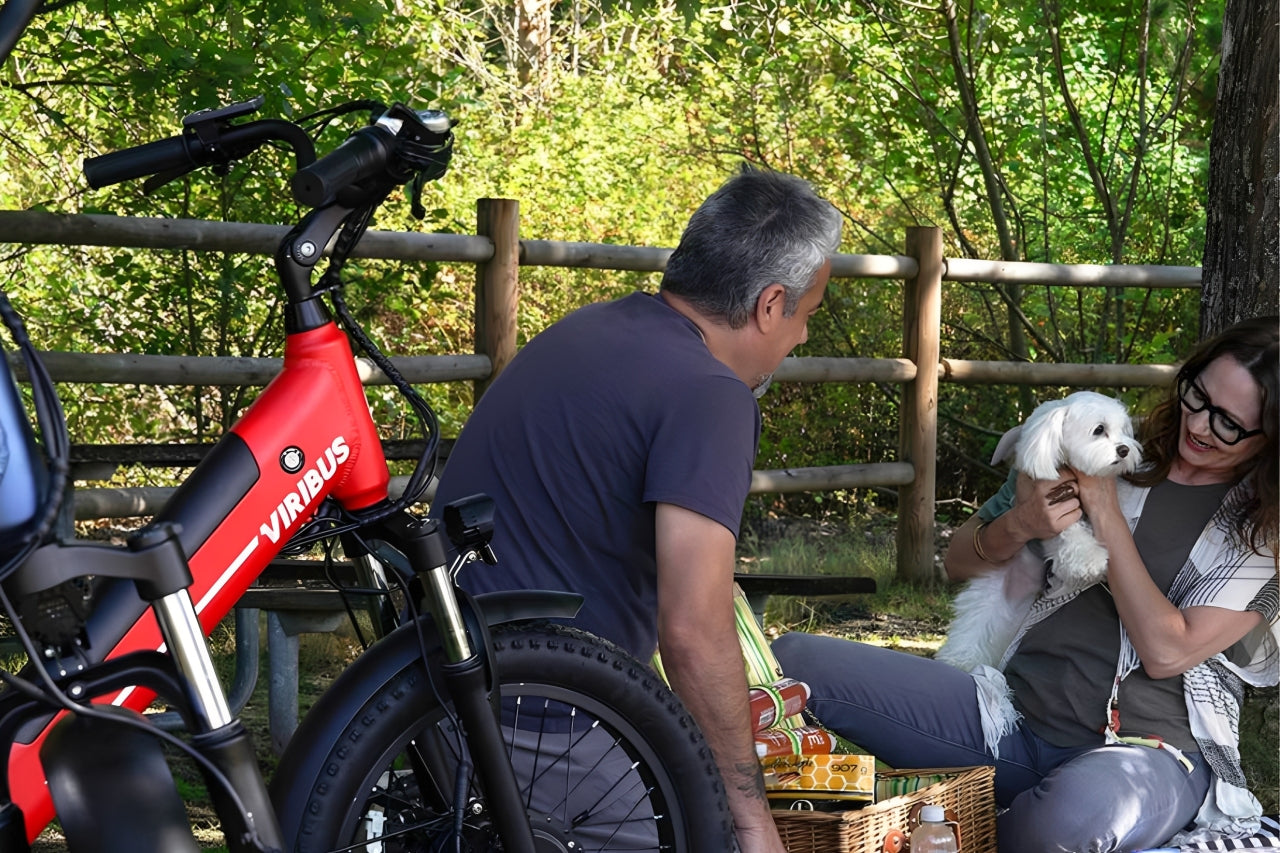
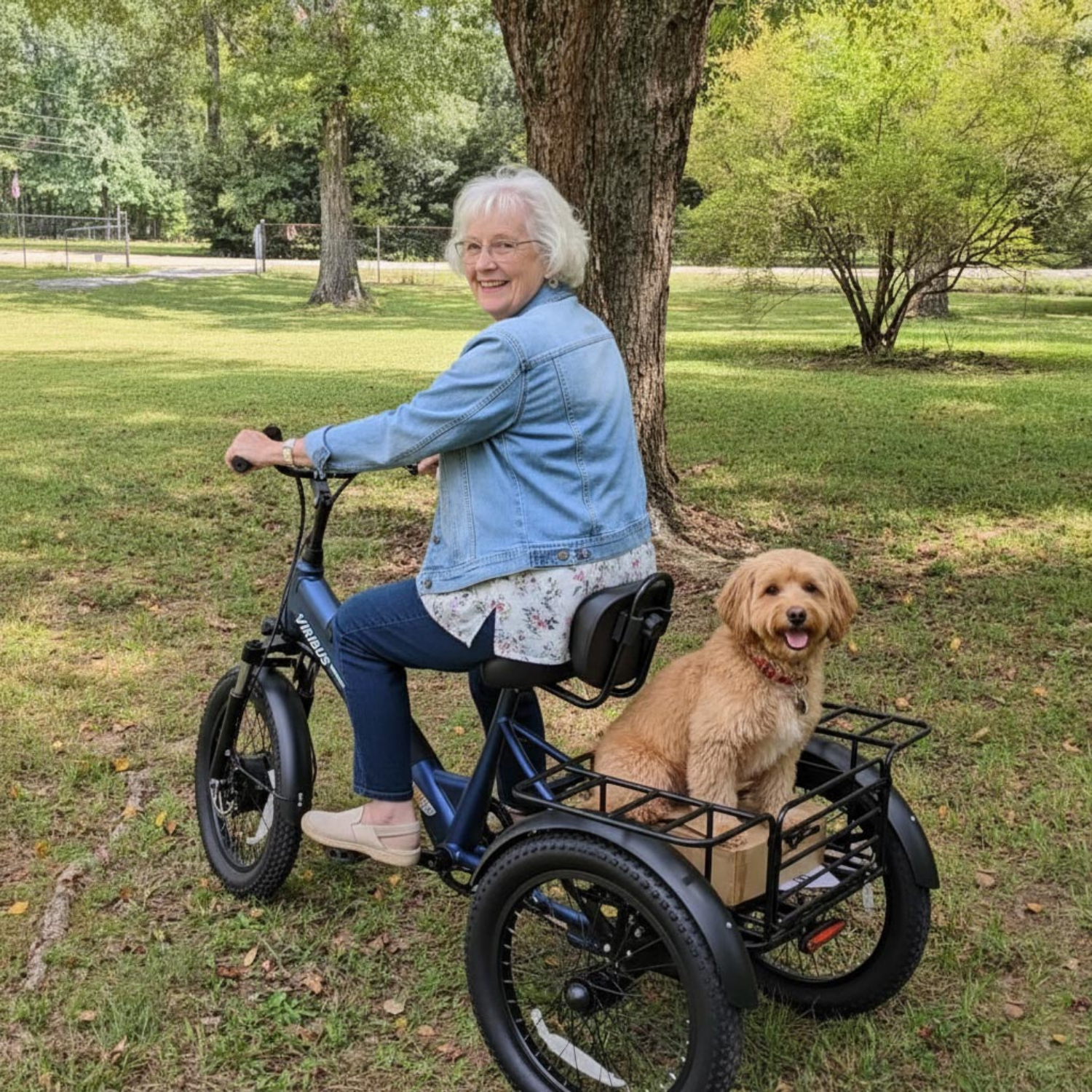
With the added convenience of the Shimano shifter offering multiple speeds, you can customize your rides and make the most of your cycling adventures. Enjoy Viribus tricycles for walking your dog, going grocery shopping, commuting to work, or just enjoying a nice ride on the beach.








Leave a comment
All comments are moderated before being published.
This site is protected by hCaptcha and the hCaptcha Privacy Policy and Terms of Service apply.