


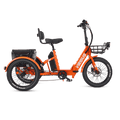


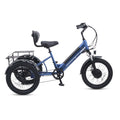

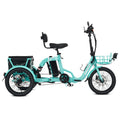

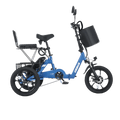









Pedal assist electric bikes continue to grow in popularity across Massachusetts, offering an eco-friendly and convenient way to commute, exercise, and explore. Before riding, however, it is important to understand the state's electric bike regulations. Massachusetts has specific laws governing e-bike classifications, licensing, helmet use, and where riders can legally operate their bikes.
Checklist for Massachusetts Riders
|
Law Category |
Massachusetts Rule |
Details |
|
Legal E-Bike Definition |
Class 1 or Class 2 only |
An electric bicycle must have fully operable pedals and a motor of 750W or less. |
|
Class 1 E-Bike |
Legal |
Pedal-assist only, no throttle, assistance stops at 20 mph maximum. |
|
Class 2 E-Bike |
Legal |
May use throttle or pedal assist, motor assistance limited to 20 mph. |
|
Class 3 E-Bike |
Not recognised as an e-bike |
Massachusetts law currently recognises only Class 1 and Class 2 e-bikes. Higher-speed bikes may fall into other vehicle categories. |
|
Maximum Motor Power |
750 watts |
E-bikes exceeding 750W do not qualify as legal electric bicycles. |
|
Maximum Assisted Speed |
20 mph |
Motor assistance must stop at 20 mph for legal e-bike classification. |
|
Driver's Licence |
Not required |
No licence or learner's permit is required for Class 1 or Class 2 e-bikes. |
|
Registration |
Not required |
Legal e-bikes do not require registration or licence plates. |
|
Insurance |
Not required |
Massachusetts does not require insurance for Class 1 or Class 2 e-bikes. |
|
Helmet Law |
Required for riders 16 and under |
Riders and passengers 16 years old or younger must wear an approved helmet. |
|
Minimum Rider Age |
No statewide minimum for legal e-bikes |
Massachusetts does not currently set a statewide minimum age for Class 1 or 2 e-bike riders, though supervision and local rules may apply. |
|
Road Use |
Allowed |
E-bikes may generally operate on public roads where bicycles are permitted. |
|
Bike Lanes |
Allowed |
Class 1 and 2 e-bikes may use bike lanes like regular bicycles unless local rules prohibit them. |
|
Bike Paths & Shared-Use Trails |
Usually allowed |
E-bikes are generally permitted on paved shared-use paths and trails, subject to local restrictions. |
|
Natural Surface Trails |
Often restricted |
E-bike access on natural or unpaved trails may be restricted unless specifically permitted by local authorities. |
|
Sidewalk Riding |
Prohibited |
Electric bicycles may not be ridden on sidewalks. |
|
Traffic Laws |
Same as bicycles |
E-bike riders must follow standard bicycle and traffic laws, including signals and right-of-way rules. |
|
Night Riding Equipment |
Bicycle equipment laws apply |
Riders must follow Massachusetts bicycle lighting and reflector requirements when riding after dark. |
|
Modified or High-Speed E-Bikes |
May become motor vehicles |
Bikes exceeding Class 1 or 2 limits may be treated as motorized bicycles or other motor vehicles, potentially requiring licensing and registration. |
|
Label Requirement |
Required |
Manufacturers must label e-bikes with classification, top assisted speed, and motor wattage. Modified bikes require updated labels. |
How Massachusetts Defines an Electric Bike
Massachusetts defines an electric bicycle as a bicycle or tricycle equipped with fully operable pedals and an electric motor that produces no more than 750 watts of power. The vehicle must meet the requirements for either a Class 1 or Class 2 electric bike.
Class 1 or Class 2 E-bike? Which Should You Choose?
To qualify as a legal e-bike in Massachusetts, the bike must:
- Have functioning pedals
- Use a motor rated at 750W or less
- Meet Class 1 or Class 2 specifications
- Comply with bicycle traffic laws and operating rules
Any vehicle exceeding these limits may be classified differently under state law.
Massachusetts Electric Bike Classes
Massachusetts currently recognises two e-bike classes, which determine how the motor assists the rider and the maximum assisted speed.
Class 1 Electric Bikes
Class 1 electric bikes use pedal-assist technology, meaning the motor only works while the rider is pedalling. They are the best ebikes for commuting.
Key features of Class 1 e-bikes include:
- Pedal assist only
- No throttle operation
- Motor assistance stops at 20 mph
- Maximum motor power of 750W
Class 1 bikes are commonly used for commuting, fitness riding, and recreational cycling because they closely resemble traditional bicycles in operation.
Class 2 Electric Bikes
Class 2 e-bikes include a throttle, allowing the motor to propel the bike without pedalling.
Typical Class 2 features include:
- Throttle-powered riding
- Optional pedalling
- Motor assistance limited to 20 mph
- Motor power capped at 750W
These bikes are popular among riders who want extra assistance during starts, hills, or longer journeys.
Does Massachusetts Recognise Class 3 E-Bikes?
Unlike many states, Massachusetts does not currently recognise Class 3 electric bikes.
Class 3 e-bikes usually provide pedal assistance up to 28 mph and are widely accepted elsewhere in the United States. However, because Massachusetts law currently only addresses Class 1 and Class 2 models, higher-speed e-bikes may fall into another vehicle category and become subject to different regulations.
Riders should verify local requirements before purchasing a high-speed model.
Where can you ride class 3 e bikes?
Do You Need a Licence for an Electric Bike in Massachusetts?
One of the main benefits of legal e-bikes in Massachusetts is that no driver's licence or vehicle registration is required for Class 1 and Class 2 models.
Licensing and Registration Requirements
If your e-bike meets Massachusetts requirements, you generally do not need:
- A driver's licence
- Vehicle registration
- Licence plates
- Motor vehicle insurance
This makes electric bikes far more accessible than mopeds or motorcycles.
However, bikes exceeding legal e-bike specifications may be treated as motorized bicycles, which can trigger additional legal requirements such as licensing and registration.
Do You Need a License For an Electric Bike? A State-by-State Guide
Helmet Laws for Electric Bike Riders
Helmet requirements in Massachusetts depend largely on rider age. Massachusetts law requires all bicycle riders and passengers aged 16 and under to wear approved helmets.
Although adults over 16 are not legally required to wear helmets when riding a bicycle or e-bike, wearing one is strongly recommended. Electric bikes often travel faster and carry more momentum than traditional bicycles, increasing the importance of head protection. A properly fitted helmet significantly reduces injury risk during accidents.
Where You Can & Can't Ride in Massachusetts?
Understanding where e-bikes may legally operate is essential, particularly as local rules can vary.
Roads and Bike Lanes
In most cases, electric bikes may be ridden wherever traditional bicycles are allowed.
This generally includes:
- Public roads
- Bicycle lanes
- Shared-use paths
- Certain paved recreational trails
Riders must obey traffic signals, lane markings, and standard bicycle laws while operating an e-bike.
Sidewalk
Massachusetts law prohibits riding electric bikes on sidewalks. This restriction helps protect pedestrians and reduce conflicts in crowded areas. Riders should always yield appropriately and remain aware of local signage and municipal regulations.
Local Trail and Path Rules
While state law permits bicycles and many e-bikes on various paths, cities, towns, and park authorities may establish their own restrictions.
Some trails may:
- Limit throttle-powered bikes
- Restrict motorised vehicles entirely
- Allow only certain classes of e-bikes
Checking local trail rules before riding can help avoid fines or access issues.
Natural and Mountain Trails
Mountain electric bike access on natural-surface, off-road, or mountain biking trails is generally prohibited unless expressly permitted by the local landowner or managing authority.
Because trail rules vary by park system and land manager, riders should always verify local policies before using an e-bike on dirt or natural trails.
Rules for Modified and High-Speed Electric Bikes
Not every electric bike sold online qualifies as a legal e-bike in Massachusetts.
When an E-Bike Becomes a Motor Vehicle
Bikes may fall outside Massachusetts e-bike law if they:
- Exceed 750W motor power
- Travel faster than 20 mph under motor assistance
- Lack fully operable pedals
- Function more like electric motorcycles or dirt bikes
These higher-powered vehicles may be classified as motorized bicycles or other motor vehicles and could require:
- Registration
- Licensing
- Additional safety equipment
- Compliance with motor vehicle laws
Before buying or modifying an electric bike, riders should ensure it meets Massachusetts legal standards.
Are Massachusetts Electric Bike Laws Changing?
In May 2026, state officials introduced the proposed Ride Safe Act, aimed at creating updated regulations for e-bikes, scooters, and other micromobility devices. Proposed changes focus on safety and classification rules, but these proposals are not automatically law.
It is officially titled “An Act to enhance the safe use of micromobility devices.” The bill was filed in response to growing concerns about crashes, sidewalk riding, and confusion around how faster electric vehicles should be regulated.
The legislation is not law yet. As of now, it has been referred to the Massachusetts Joint Committee on Transportation for review.
Ride Safe Act vs Current Massachusetts E-Bike Law
One of the biggest proposed changes is moving from Massachusetts' current device-based system to a speed-based classification framework.
|
Proposed Tier |
Speed Range |
Likely Treatment |
|
Tier 0 |
Up to 20 mph |
Similar to current Class 1 and Class 2 e-bikes |
|
Tier 1 |
21–30 mph |
Would include many Class 3-style e-bikes and faster devices |
|
Tier 2 |
31–40 mph |
Stricter regulation and access limits |
|
Tier 3 |
Above 40 mph |
Treated closer to motorcycles or highly regulated vehicles |
The table below shows the main differences between current law and the Ride Safe Act proposal.
|
Category |
Current Massachusetts Law |
Ride Safe Act Proposal |
|
E-bike system |
Class 1 & 2 only |
Speed-based tiers |
|
Class 3 e-bikes |
Not recognised |
Likely recognised |
|
20+ mph devices |
Often treated as motorized bicycles |
Separate speed tiers |
|
Registration |
Not required for Class 1/2 |
Possible for higher tiers |
|
Insurance |
Not required |
Possible for faster devices |
|
Bike lane access |
Generally allowed |
May depend on speed tier |
|
Regulation basis |
Vehicle type |
Speed capability |
Conclusion
Massachusetts currently permits Class 1 and Class 2 electric bikes with motors rated at 750 watts or less and assistance limited to 20 mph. These bikes do not require licences, registration, or insurance and are generally treated similarly to traditional bicycles.
FAQs
Can you ride an electric bike on the sidewalk in Massachusetts?
No. Electric bikes are generally not allowed on sidewalks in Massachusetts.
State law treats legal e-bikes similarly to bicycles for roadway use, but sidewalk riding is prohibited statewide unless a specific local ordinance allows it. This rule is designed to protect pedestrians and reduce conflicts in crowded walking areas.
Is a 20 mph e-bike street legal?
Yes. A 20 mph electric bike is street legal in Massachusetts if it meets the state's e-bike requirements.
Massachusetts recognises Class 1 and Class 2 e-bikes, both of which are limited to 20 mph motor assistance and must use a motor rated at 750 watts or less.
What e-bikes are legal in Massachusetts?
In Massachusetts, only Class 1 and Class 2 electric bikes are currently considered legal e-bikes under state law. To qualify, the bike must have fully operable pedals, a motor rated at 750 watts or less, and motor assistance limited to 20 mph.
If an e-bike exceeds these limits, Massachusetts may classify it as a motorized bicycle or another motor vehicle, which can involve licensing and registration requirements.
Do e-bikes need to be registered in MA?
No. Legal e-bikes in Massachusetts do not need to be registered. Massachusetts law treats these e-bikes as bicycles, not motor vehicles, so they are exempt from RMV registration requirements.
How fast can you legally ride an ebike?
In Massachusetts, the legal speed limit for an e-bike is based on motor assistance, not total riding speed. Only Class 1 and Class 2 e-bikes are allowed, and both are limited to 20 mph of motor assistance, meaning the electric motor will stop helping once you reach that speed.
You can still ride faster than 20 mph by pedalling harder or going downhill, but the motor cannot provide assistance beyond that limit.
Class 3 e-bikes, which assist up to 28 mph, are not recognised under Massachusetts law and may be treated as motorized vehicles instead.





Leave a comment
All comments are moderated before being published.
This site is protected by hCaptcha and the hCaptcha Privacy Policy and Terms of Service apply.