













Electric bikes (e-bikes) have become a popular choice for commuting, fitness, and leisure riding, thanks to their ability to make cycling easier and more accessible. However, one critical factor often overlooked is the weight limit. Understanding e-bike weight limits is essential for choosing the right model, maintaining the bike’s longevity, and ensuring a safe and enjoyable riding experience.
Average Weight of Electric Bike
The average weight of an electric bike (e-bike) typically ranges from about 40 to 70 pounds (18–32 kg), with most standard models falling around 50–60 pounds (23–27 kg).
The exact weight depends on the type of e-bike: lightweight folding models may weigh as little as 35 pounds, while mountain e bikes and cargo e-bikes can be significantly heavier due to stronger frames and larger batteries.
E-bikes are generally heavier than regular bicycles because they include key components such as a motor and a rechargeable battery, along with reinforced frames designed to support the added power and durability requirements.
How Much Do Electric Bikes Weigh
Typical Electric Bike Weight Limit
Not all e-bikes are created equal, and their intended use has a direct impact on both their structure and how much weight they can safely carry. Different categories are engineered with specific riding scenarios in mind, which is why payload capacity can vary significantly.
Folding e-bikes, designed for portability and convenience, typically support 200–300 lbs (90–136 kg) and are ideal for urban commuting or short trips where compact storage matters more than heavy-duty performance. City or commuter e-bikes offer a balance between comfort and strength, usually handling 250–330 lbs (115–150 kg), making them a versatile choice for everyday riding, errands, and longer commutes.
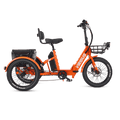
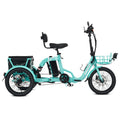
For riders who need more durability, fat tire or all-terrain e-bikes are built with wider tires and sturdier frames, allowing them to support 300–400 lbs (136–180 kg); these are well-suited for heavier riders, rough terrain, and carrying additional gear. At the top end, cargo or utility e-bikes are specifically engineered for maximum load capacity, often exceeding 400 lbs (180+ kg), and are commonly used for deliveries, transporting goods, or even carrying passengers.
How Electric Bike Weight Affects the Performance
The total weight on an e-bike—rider plus cargo—has a significant impact on every aspect of its performance and safety.
Climbing ability is directly influenced by weight, as heavier loads require more force to ascend hills; this is why a high-torque motor, such as the D5 2.0’s 90 Nm, is essential for heavier riders to climb smoothly without overworking the system.
Battery range is also affected, since carrying more weight forces the motor to draw extra power on each pedal stroke, reducing the distance achievable on a single charge.
In terms of braking, an e-bike with a heavier load relies on strong brakes—hydraulic disc brakes are ideal—to maintain safe stopping distances.
Finally, frames can suffer when an e-bike is consistently ridden near or above its weight limit; excessive stress accelerates metal fatigue and wear on key components, potentially shortening the lifespan of the frame, wheels, and drivetrain.
What is the Lightest Weight Electric Bike
A lightweight electric bike is generally considered to weigh under 45 lbs (20 kg), with some premium models even dropping closer to 30–40 lbs (14–18 kg). These lighter e-bikes are typically designed for urban commuting, easy carrying (such as up stairs or onto public transport), and improved maneuverability. They often use smaller batteries, compact motors, and lightweight materials like aluminum or carbon fiber to reduce overall weight. While lightweight e-bikes are more convenient and feel closer to traditional bicycles when riding, they may have slightly less power, range, or load capacity compared to heavier models.
Final Words
Knowing an e-bike’s weight limit is key to riding safely and preserving the bike’s components. By selecting a model that accommodates your weight and any extra cargo, you can enjoy the full benefits of electric cycling—whether commuting, exercising, or exploring trails—without risking damage or injury.
FAQ
Can a 300lb person ride a bike?
Yes, a 300 lb person can ride a bike, but it’s important to choose one that’s built to support that weight. Many standard bicycles and entry‑level e‑bikes are designed for riders up to about 250–275 lbs, so riding at 300 lbs on those can lead to faster wear, poor handling, or even structural issues.
For heavier riders, bikes with reinforced frames, stronger wheels/spokes, and higher payload ratings (300 lbs+)—such as cargo e‑bikes, fat‑tire e‑bikes, or heavy‑duty mountain e bikes like Viribus Panther —provide better stability, durability, and safety.
Can a 400 lb person ride a bike?
Yes, a 400 lb person can ride a bike, but it must be a high-capacity model designed for heavy riders. Standard bikes and most e-bikes typically support 250–300 lbs, so exceeding that can strain the frame, wheels, tires, and brakes, creating safety risks. The best options for a 400 lb rider are cargo e-bikes, fat tire e-bikes, or reinforced heavy-duty bicycles, which are engineered with strong frames, durable wheels, wider tires for better stability, and powerful motors or braking systems.
To ensure safety, comfort, and long-term performance, it’s recommended to choose a bike with a payload rating 10–20% above your weight, meaning a 400 lb rider should look for bikes rated at least 440–480 lbs, allowing room for cargo and reducing wear on components.
Can I ride a bike at 250 pounds?
Yes — you can absolutely ride a bike at 250 pounds, and your specific model, the Viribus BZ1 Step-Thru Electric Bike, is technically capable of supporting you.
The BZ1 has a total payload capacity of 265 lbs, which includes your body weight + any cargo (backpack, groceries, etc.). At 250 lbs, you’re very close to the limit, but still within range — leaving you with only about 15 lbs of extra capacity.
What ebike can carry 400 pounds?
If you need an e-bike that can carry 400 lbs or more, you’re looking at heavy-duty fat tire or cargo e-bikes. These are specifically built with stronger frames, more powerful motors, and reinforced wheels to handle higher loads safely.
What bikes support 300 lbs?
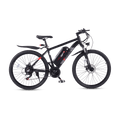
The Viribus Panther Electric Mountain Bike can support 300 lbs+, with a total payload capacity of 330 lbs, which puts it firmly in the “heavy-duty commuter/mountain” category.
Electric mountain bikes (like the Viribus Panther) often support 300–350 lbs thanks to their stronger frames, wider tires, and suspension systems. Similarly, fat tire e-bikes are another excellent option, typically handling 300–400 lbs because their oversized tires improve stability and weight distribution. Commuter e-bikes can sometimes support around 300 lbs, but you need to check specs carefully since many cap out closer to 275 lbs.
How heavy is too heavy for an ebike?
In general, an e-bike is considered overloaded when the combined weight of the rider + cargo exceeds the manufacturer’s limit, which for most standard e-bikes is around 250–300 lbs (113–136 kg).
What is the best electric bike for heavy people?
The Viribus Panther is a decent option, but if you want something better suited specifically for heavier riders or more cargo, a cargo fat‑tire bike offers stronger performance, greater range, and often a higher maximum weight capacity.
Can You Lose Weight on Electric Bike
Yes, you can lose weight riding an electric bike (e-bike). Even though the motor provides assistance, you still pedal and burn calories—especially if you use lower assist levels or ride on varied terrain. In fact, studies have shown that e-bike riders often get consistent, moderate exercise, which is key for sustainable weight loss.













Leave a comment
All comments are moderated before being published.
This site is protected by hCaptcha and the hCaptcha Privacy Policy and Terms of Service apply.