


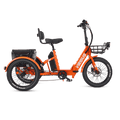


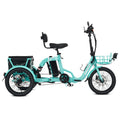





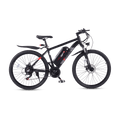




Florida is generally considered an e-bike-friendly state, allowing riders to enjoy electric bicycles, electric tricycles, and adult electric bikes on many public ways without the extensive requirements that apply to motor vehicles. However, before riding, you must understand how Florida law categorizes e-bikes, what equipment and behavior are required, and where you are legally allowed to ride.
Why eBike Laws Matter in Florida
Electric bicycles (often referred to as ebikes, electric bikes, electric tricycles, or adult electric bikes) have grown rapidly in popularity across Florida’s cities, beaches, and counties. Because these vehicles combine human power and electric assistance, state lawmakers have defined clear legal standards to balance safety with accessibility.
The intent of Florida’s ebike laws is to:
- Clarify how electric bicycles are classified under state traffic law.
- Ensure that riders and the public are safe.
- Prevent electric bicycles from being misclassified as motor vehicles without appropriate regulation.
- Provide consistent rules for manufacturers, retailers, and riders.
Florida’s regulatory approach generally treats low-speed electric bicycles as bicycles, not motor vehicles, if they meet specific criteria.
What Is an Electric Bicycle (eBike / Electric Bike / Electric Tricycle)?
Under Florida law, an electric bicycle is essentially a two- or three-wheeled vehicle that:
- Is equipped with fully operable pedals for human propulsion.
- Has an electric motor used to assist propulsion (not the sole means of movement).
- Has a motor that produces power within certain limits (typically 750 watts or less).
- Does not propel the bike above specific speed thresholds under motor power alone.
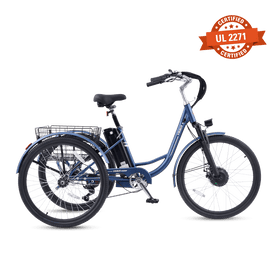
Electric tricycles (three-wheeled electric bicycles) and electric bikes for adults fall under this same definition as long as they meet these criteria.
Vehicles that exceed the power or speed thresholds may be classified differently (for example, as mopeds or motor vehicles) and subject to additional licensing and registration requirements.

Classification and Technical Requirements
Power and Speed Limits
Florida generally classifies electric bicycles based on:
- The rated power of the electric motor (commonly capped at 750 watts or about 1 horsepower).
- The top speed achievable under electric power.
Although Florida does not have a multi-class system as detailed as California’s Class 1/2/3, the functional legal distinction follows similar principles:

- Low-speed electric bicycles / adult electric bikes: Motor assistance up to approximately 20 miles per hour.
- If an electric bicycle is designed to assist above this speed under motor power alone, it may no longer qualify as an ebike and instead be treated as a motor-driven cycle or moped under Florida law.
Pedal Operability
To be legally considered an electric bicycle in Florida:
- The vehicle must have operable pedals.
- If the pedals are removed or non-functional and the vehicle operates solely by motor power, it may be treated as a motorized vehicle.
What Is Not an Electric Bicycle
Under Florida law, the following characteristics would cause a vehicle not to be classified as an electric bicycle:
- The electric motor is capable of propelling the vehicle exclusively above the legal e-bike speed limit.
- The motor power significantly exceeds standard e-bike thresholds (well above 750 watts).
- The vehicle does not provide pedals usable by the rider.
- The vehicle uses a throttle-only system that propels it beyond state speed limits for electric bicycles.
In such cases, the vehicle may be legally classified as a moped, motorized scooter, or motorcycle, each of which has its own set of registration, equipment, and licensing requirements.
Where You Can Ride
In Florida, electric bicycles and electric tricycles generally share the same rights and responsibilities as traditional bicycles:
- You may ride on roadways and in bike lanes just as you would a conventional bicycle.
- You may use multi-use paths and trails unless posted restrictions state otherwise.
- Riding on sidewalks is permitted unless specifically prohibited by local ordinance.
- Electric bicycles are not allowed on roadways or facilities where bicycles are prohibited.
Local governments (cities and counties) may set additional restrictions or guidelines for e-bike operation in parks, on paths, or in pedestrian areas.
Licensing, Registration, and Insurance
Florida’s electric bicycle laws are structured so that legal e-bikes:
- Do not require a driver’s license.
- Do not require vehicle registration.
- Do not require motor vehicle insurance.
This is a major difference from mopeds or motor vehicles, which must be titled, registered, and insured according to state requirements.
However, if you modify an electric bicycle so that it no longer meets the statutory definition (for example, exceeding speed or power limits), it may be treated as a motorized vehicle requiring:
- Registration with the Florida Department of Highway Safety and Motor Vehicles (FLHSMV).
- A valid driver’s license.
- Appropriate insurance coverage.
Helmet, Age, and Safety Equipment
Florida’s ebike laws do not typically include a state-wide helmet requirement for adults on electric bicycles that meet the statutory definition. However:
- Local jurisdictions may impose helmet requirements, especially for riders under a certain age (often under 16).
- Headlights, reflectors, and other visibility equipment may be required during certain hours or conditions for safe operation, consistent with bicycle equipment laws.
Safety best practices strongly recommend helmets, lights, and reflective gear even where not legally mandated.
Traffic Rules and Rider Responsibilities
Electric bicycle riders in Florida must obey the same road rules as traditional bicycle riders:
- Obey traffic signals and signs.
- Use hand signals when turning or stopping.
- Yield to pedestrians where required.
- Ride in the same direction as traffic.
Riders can be cited under general traffic laws if they operate electric bicycles recklessly or violate safety regulations.
Modifications and Compliance
Modifying an electric bicycle to increase motor power or top speed beyond statutory limits may have legal consequences:
- The vehicle may be reclassified out of the ebike category.
- You may lose the ability to ride it as a bicycle.
- You may be required to register it as a motorized device and obtain insurance and a driver’s license.
Always consult the manufacturer’s guidance and verify compliance with Florida’s statutory definitions before altering your electric bike.
Comparison to Conventional Bicycles and Motor Vehicles
|
Feature |
Traditional Bicycle |
Electric Bicycle |
Moped / Motor Vehicle |
|
Pedals required |
Yes |
Yes |
No |
|
Electric motor |
No |
Yes (limited power & speed) |
Yes (higher power) |
|
Max assisted speed |
N/A |
~20 mph |
Above ~20–30 mph |
|
License required |
No |
No |
Yes |
|
Registration required |
No |
No |
Yes |
|
Insurance required |
No |
No |
Yes |
Final Notes and Where to Verify Official Regulations
To ensure compliance with the most recent legal language and any local variations, consult:
- Florida Statutes – Chapter 316 (Motor Vehicles) — look for sections defining bicycles, electric bicycles, and motorized scooters.
- Florida Department of Highway Safety and Motor Vehicles (FLHSMV) official publications on non-motorized and electric bicycles.
- Local city and county codes regarding bicycle and ebike use.
Official state websites to check:
- https://www.flhsmv.gov
- https://www.leg.state.fl.us















Leave a comment
All comments are moderated before being published.
This site is protected by hCaptcha and the hCaptcha Privacy Policy and Terms of Service apply.