


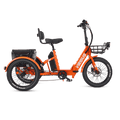


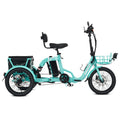











Having a clear understanding of whether or not you need a license for your electric tricycle is more important than many people realize. Getting clear on electric tricycle licensing rules helps you avoid fines, stay safe, and enjoy your ride without surprises.
Also, the answer determines whether you can legally ride your trike on public roads, bike lanes, or just around your neighborhood.

Do You Need a License for an Electric Tricycle?
The short answer for most people in the U.S. is: Probably not. In many states, you are not required to have a license for an electric tricycle. However, it depends on how your tricycle is classified.
That is because, under federal guidelines, low-speed electric bikes and similar vehicles (including many electric tricycles) are often treated like regular bicycles if they meet certain criteria.
Specifically, vehicles with electric motors of 750 watts or less and a top assisted speed of 20 mph or less are generally not considered motor vehicles under federal law, so they don’t require a driver’s license or registration at the national level.
This framework comes from the same rules that apply to electric bikes: when the motor power and speed limits are within certain limits, the electric vehicle is legally more like a bicycle than a motorized vehicle.
Electric Tricycle License Requirements: Important Exceptions
If an electric tricycle exceeds those power or speed limits ( eg, it has a motor much stronger than 750 watts or capable of going faster than 20–28 mph under motor power), it may be legally classified as a moped, motor-driven cycle, or motor vehicle. In those cases, a driver’s license, registration, and insurance could be required.
So, whether you need a license largely comes down to how your specific electric trike is built and how your state defines it.
It always helps to understand when an ebike becomes a motorcycle in the eyes of the law, and how that changes the licensing requirements

E-Bike Laws vs Electric Tricycle License Requirements: Are They the Same?
Since most electric trikes look and function similarly to electric bikes (they have pedals, motors, and similar speed/power ranges), many states treat them under the same rules used for e-bikes. They often follow the three-class system used for electric bicycles:
- Class 1: Pedal-assist up to 20 mph
- Class 2: Throttle-assist up to 20 mph
- Class 3: Pedal-assist up to 28 mph
If your electric tricycle fits within one of these classes, most states won’t require a driver’s license or registration, just like e-bikes. However, watch out for a couple of important points:
- Some states have stricter rules for Class 3 vehicles or those that exceed the standard motors/speed limits.
- If your trike has a motor or speed in excess of these e-bike limits, it could get classified as a more powerful vehicle category (like a moped).
So while the laws for electric bikes and tricycles often overlap, they’re not automatically identical in every situation; it really depends on power, speed, and local legal definitions.
 What to Do If You’re Not Sure What the Law Says in Your State
Laws for electric bikes, and by extension electric tricycles, vary quite a bit from state to state. Even though federal guidelines provide a baseline, state and local laws have the final say on licensing, registration, and where you can ride.
Here’s what you can do to make sure you’re on the right side of the rules:
1. Check your state’s DMV or Department of Transportation website
These official sources usually publish current rules for electric bikes and similar vehicles.
Look up your trike’s specifications.
Knowing the motor power, top assisted speed, and whether it has pedals will help you match it to how your state classifies electric vehicles.
2. Call or email your local DMV.
If the online info is confusing, a direct question to your local authorities is the most reliable way to understand the requirements where you live.
Doing this ahead of time means you won’t be surprised by an unexpected licensing rule or fine once you hit the road.

U.S. States With Specific Licensing Rules
Across the United States, most states treat electric trikes and e-bikes the same way: no driver’s license required for models that fit within the conservative power and speed limits. But there are exceptions worth knowing about:
1. Alaska
Alaska, for example, classifies some electric bikes and trikes as motor-driven cycles, which means an operator’s license is required to ride them legally.
2. Hawaii
Hawaii goes a step further and requires registration for electric bikes, and potentially electric trikes, too. So check local rules before riding.
3. New Mexico and Some Others
Some states require a driver’s license for all electric bikes and trikes, regardless of classification, especially if the vehicle exceeds speed or power thresholds.
4. States With Class-Specific Rules
In places like New Jersey, electric bicycles are regulated differently depending on class. For instance, Class 3 bikes may need licensing or registration even if lower-powered versions do not.

Final Takeaway on Electric Tricycle License Requirements
So, do you need a license for an electric tricycle? Most of the time, no, especially if your tricycle is similar to a standard low-speed e-bike. But your actual requirements depend on:
- Your trike’s power and speed capabilities
- How your state legally defines electric vehicles
- Local rules that might impose additional registration or age requirements
The safest bet is to know your model’s specs and check your state’s official guidelines before you ride. That way, you can enjoy your electric trike with confidence and without surprises.
Explore ebike licensing laws in the U.S for more details, depending on where you are.













Leave a comment
All comments are moderated before being published.
This site is protected by hCaptcha and the hCaptcha Privacy Policy and Terms of Service apply.