







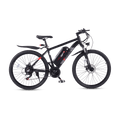




An electric mountain bike (e-MTB) is a modern take on traditional mountain biking that combines pedal power with electric assistance. Equipped with a built-in motor and rechargeable battery, it enables riders to tackle steep climbs, rough trails, and longer distances with less effort, while still maintaining a natural riding experience. Whether you’re exploring technical terrain or simply looking to extend your time on the trails, an e-MTB makes off-road riding more accessible for many riders.
What is an Electric Mountain Bike?
An electric mountain bike (e-MTB) is a mountain bicycle equipped with an integrated electric motor and rechargeable battery that provides pedal assistance while riding off-road. The motor activates only when the rider pedals (in most models), helping to boost power for climbing hills, navigating rough terrain, and extending riding distance with less physical effort.
The Evolution of e-MTBs
|
Period |
Key Development Stage |
What Happened |
|
1980s–1990s |
Early e-bike experiments |
First electric bicycles appeared |
|
Early 2000s |
Technology improvements |
Lithium-ion batteries and brushless motors improved performance |
|
Late 2000s |
First off-road prototypes |
Early e-MTB concepts emerged, but performance was still limited. |
|
Early–mid 2010s |
Birth of modern e-MTBs |
Mid-drive motor systems (Bosch, Shimano, Brose) |
|
Late 2010s |
Rapid market growth |
e-MTBs became mainstream with better performance. |
|
Early 2020s |
Mainstream adoption |
Clear classifications (e.g., Class 1 in the U.S.) |
|
Mid–2020s |
Advanced performance era |
Lightweight frames, high-capacity batteries, and refined motor tuning |
1980s and 1990s
Electric mountain bikes (e-MTBs) trace their roots back to the broader evolution of electric bicycles in the late 20th century. Early prototypes of e-bikes appeared in the 1980s and 1990s, but they were heavy, inefficient, and lacked the power delivery needed for off-road riding. At that stage, mountain biking itself was still developing, and adding motors to rugged trail bikes wasn’t yet practical.
Early 2000s
The real turning point came in the early 2000s, when improvements in lithium-ion batteries, brushless motors, and sensor technology made electric assistance lighter, more responsive, and more reliable. Around this time, manufacturers began experimenting with off-road-capable e-bikes, but early models were still limited in range and struggled on technical terrain.
2010s
By the 2010s, e-MTBs started to emerge as a distinct category. Brands such as Bosch, Shimano, and Brose developed purpose-built mid-drive motor systems that delivered natural pedal assistance and better weight balance—crucial for mountain biking performance. At the same time, frame geometry evolved to handle higher loads and rougher trails, helping e-MTBs move from novelty to serious trail machines.
Late 2010s and early 2020s
In the late 2010s and early 2020s, e-MTBs saw rapid growth in popularity. Battery capacity increased, allowing longer rides and more vertical climbing, while suspension systems and drivetrain components were redesigned specifically for electric torque. This era also saw clearer classification systems (like Class 1 e-bikes in the U.S.), which helped regulate trail access and expand adoption in bike parks and public lands.
Today, e-MTBs are a mainstream segment of mountain biking. They are used for recreation, fitness, and even professional-level trail riding, offering riders the ability to explore more terrain, climb further, and extend their riding range without fundamentally changing the core mountain biking experience.
e-MTB Regulations in the U.S.
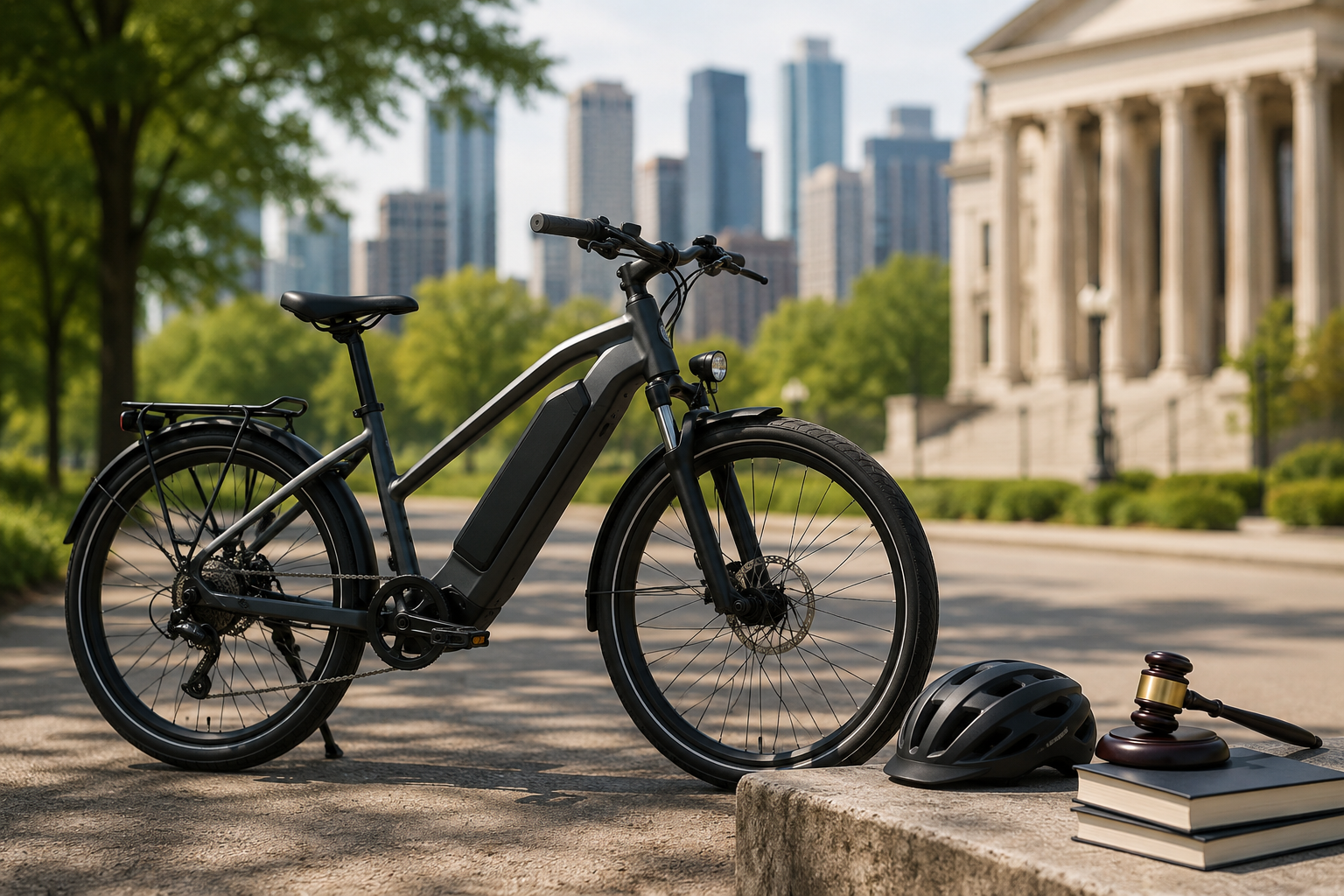
In the U.S., e-MTB regulations mainly depend on the three-class e-bike system and the land manager (federal, state, or local).
- Class 1: Pedal-assist only, max 20 mph → most widely allowed on MTB trails
- Class 2: Throttle-assisted, max 20 mph → often restricted on trails
- Class 3: Pedal-assist up to 28 mph → usually restricted from MTB trails
Types of eMTBs
|
Type |
Description |
Best For |
|
Cross-Country (XC) e-MTBs |
Lightweight and efficient with shorter suspension travel, built for speed and climbing performance |
Long-distance riding, fitness, smooth to moderately technical trails |
|
Trail e-MTBs |
Balanced geometry with moderate suspension, offering versatility across different terrains |
All-around riding: climbs, descents, and mixed trails |
|
All-Mountain / Enduro e-MTBs |
Stronger frames with longer suspension travel for better control on rough and steep terrain |
Aggressive trail riding, technical descents, mountain terrain |
|
Downhill e-MTBs |
Heavy-duty suspension and stable geometry designed almost entirely for descents |
Bike parks, steep downhill tracks (usually shuttle-assisted) |
|
Fat Tire e-MTBs |
Oversized tires for extra grip and stability on loose or soft surfaces |
Snow, sand, rough terrain, and year-round riding conditions |
Full-Suspension vs. Hardtail eMTBs
Full-suspension e-MTBs feature both front and rear suspension, providing better comfort, traction, and control on rough and technical terrain, making them ideal for aggressive trail riding and downhill sections.
In contrast, hardtail e-MTBs have only front suspension with a rigid rear frame, making them lighter, more efficient, and generally better suited for smoother trails, climbing, and riders who prefer a more direct and responsive feel.
|
Type |
What It Means |
Best For |
|
Full-Suspension e-MTB |
Has suspension in both the front fork and rear frame |
Rough trails, downhill riding, technical terrain, maximum comfort and control |
|
Hardtail e-MTB |
Has front suspension only (rigid rear frame) |
Smooth trails, climbing, beginners, lighter weight and lower cost |
Motor Power (Full vs. Mid-Power) eMTBs
Full-power e-MTBs use stronger motors with higher torque and larger batteries, delivering maximum assistance for steep climbs, heavy loads, and long or demanding rides where extra power is a priority.
Mid-power e-MTBs, on the other hand, use lighter motors with lower torque, focusing on a more natural riding feel, better handling, and improved efficiency, making them ideal for riders who want assistance without losing the traditional mountain biking experience.
|
Type |
What It Means |
Best For |
|
Full-Power e-MTB |
Higher torque and larger battery support (stronger assistance) |
Steep climbs, heavy riders, long rides, demanding terrain |
|
Mid-Power e-MTB |
Lower torque, lighter motor and battery system |
Natural riding feel, technical trails, better handling and agility |
Electric Mountain Bike: Pros and Cons
Electric mountain bikes make climbing and long rides much easier thanks to motor assistance, allowing riders to cover more distance with less fatigue. They open up challenging terrain—steep climbs and technical trails become more accessible even for less experienced riders.
e-MTBs also help riders ride more often and longer, since reduced physical strain means faster recovery. In addition, modern e-MTBs offer adjustable assistance levels, so you can still choose how much effort you want to put in and maintain a natural riding feel when desired.
On the downside, e-MTBs are heavier than traditional mountain bikes due to the motor and battery, which can make them harder to maneuver when the battery runs out. They are also more expensive, both in upfront cost and potential maintenance, especially for electrical components.
Battery range can be limited depending on terrain and usage, requiring careful planning for longer rides. Finally, access restrictions exist in some trails and parks, where e-MTBs may be limited or not allowed at all depending on local regulations.
Electric Mountain Bikes: Discovering the Pros and Cons
|
Pros |
Cons |
|
Makes climbing and long rides easier with motor assistance |
Heavier than traditional mountain bikes |
|
Allows riders to cover more distance with less fatigue |
Higher upfront cost and maintenance expenses |
|
Opens access to steeper and more technical terrain |
Limited battery range depending on terrain and usage |
|
Reduces physical strain, enabling longer riding sessions |
Trail access restrictions in some areas and parks |
|
Adjustable assist levels for flexible riding experience |
Electric Mountain Bike vs. Electric Road Bike
Riding Environments
Electric mountain bikes (e-MTBs) and electric road bikes are designed for very different riding environments.
e-MTBs are built for off-road use, such as trails, dirt paths, and mountainous terrain, where durability, traction, and control are essential.
In contrast, electric road bikes are designed for paved surfaces, focusing on speed, efficiency, and long-distance riding on smooth roads.
Design
e-MTBs feature strong, reinforced frames and wide, knobby tires that provide grip and stability on uneven terrain. They often include suspension systems—either front or full suspension—to absorb shocks from rocks, roots, and drops.
Electric road bikes, however, use lightweight, aerodynamic frames with narrow, smooth tires that reduce rolling resistance and maximize speed on asphalt.
Riding Position
Riding position also differs significantly. e-MTBs offer a more upright posture to improve control and balance on technical trails, while electric road bikes use a forward-leaning position to reduce wind resistance and increase efficiency.
Their motor systems are also tuned differently: e-MTB motors prioritize torque for climbing steep hills, while road bike motors focus on smooth, consistent assistance for maintaining speed.
|
Feature |
Electric Mountain Bike (e-MTB) |
Electric Road Bike |
|
Purpose |
Off-road trails, dirt paths, mountains |
Paved roads, commuting, long-distance road cycling |
|
Frame Design |
Strong, durable frame built for impact and rough terrain |
Lightweight, aerodynamic frame for speed and efficiency |
|
Tires |
Wide, knobby tires for grip on uneven surfaces |
Narrow, smooth tires for low rolling resistance |
|
Suspension |
Often includes front or full suspension |
Usually no suspension (rigid fork) |
|
Riding Position |
More upright for control and stability |
More forward-leaning for aerodynamics |
|
Motor Use |
Tuned for torque and climbing power on steep trails |
Tuned for efficiency and steady road speed |
|
Handling |
Stable on rough, technical terrain |
Fast and smooth on paved surfaces |
|
Best For |
Trail riding, off-road adventure, climbing hills |
Commuting, fitness riding, long-distance road cycling |
MTB vs. e-MTB: Which is Better?
A traditional MTB is best if you want a pure, physical riding experience. It relies entirely on your own pedaling power, making it lighter, more affordable, and more responsive on technical terrain. It’s ideal for riders who enjoy fitness-focused rides, skill development, and full control over every climb and descent.
An e-MTB, on the other hand, adds pedal assistance through a motor, making climbs easier and allowing you to ride longer distances with less fatigue. It’s a great option if you want to explore more trails, ride with friends of different fitness levels, or reduce strain on steep or long climbs. However, it is heavier and usually more expensive, and may have some trail access restrictions depending on the area.
Electric Dirt Bikes vs Mountain Bikes? Which is better?
Pros and cons of e-MTBs vs regular MTBs
|
Category |
e-MTB (Electric Mountain Bike) |
Regular MTB (Mountain Bike) |
|
Pros |
Easier climbs with motor assistance |
Lighter and more agile on trails |
|
Longer riding distance with less fatigue |
Cheaper to buy and maintain |
|
|
Great for mixed fitness levels and group rides |
No battery limits or charging needed |
|
|
Helps riders tackle steep and technical terrain |
Full physical workout and skill development |
|
|
Cons |
Heavier due to motor and battery |
Requires more physical effort, especially on climbs |
|
More expensive upfront and for maintenance |
Shorter ride range due to rider fatigue |
|
|
Battery range limits ride duration |
Less support on steep or long climbs |
|
|
May face trail access restrictions in some areas |
Can be more demanding for beginners |
Buyer's Guide for Electric Mountain Bikes
Your Riding Style
Before buying an electric mountain bike, it’s important to understand where and how you plan to ride. Your riding style will directly influence every other decision, from motor power to suspension setup.
- Smooth trails → lightweight, efficient e-MTBs
- Technical terrain → full-suspension trail or enduro e-MTBs
- Long climbs or mixed routes → balanced trail e-MTBs
Motor Type and Power
The motor is one of the most important parts of an e-MTB. Full-power motors provide strong assistance for steep climbs and longer rides, making them ideal for demanding terrain but adding extra weight.
Mid-power motors are lighter and offer a more natural riding feel, which is better for technical trails and riders who want a closer experience to traditional mountain biking. Torque, measured in Newton-meters (Nm), is a key factor to consider for climbing performance.
Battery Capacity and Range
Battery size determines how far you can ride before needing a recharge. Larger batteries offer extended range, which is useful for long rides or hilly terrain, but they also increase overall bike weight.
Smaller batteries make the bike lighter and more agile but reduce ride time. Keep in mind that terrain, rider weight, and assist level all affect real-world battery performance.
Suspension Setup
Suspension plays a major role in comfort and control. Hardtail e-MTBs, with front suspension only, are lighter and more efficient, making them suitable for smoother trails and climbing.
Full-suspension e-MTBs, with both front and rear suspension, provide better traction and shock absorption, especially on rough, technical terrain. More suspension travel generally means better downhill performance but slightly less efficiency.
Frame and Weight
The frame material and overall weight of the bike affect handling and performance. Aluminum frames are durable and more affordable, while carbon frames are lighter but come at a higher cost.
Since e-MTBs are already heavier than traditional mountain bikes, choosing the right frame can significantly impact how easy the bike feels on climbs and tight trails.
Components and Durability
Because e-MTBs generate more torque and carry extra weight, they require stronger components. High-quality brakes, often with four-piston calipers, improve stopping power. Reinforced drivetrains help handle motor torque, and wider tires improve grip and stability on uneven surfaces. These upgrades ensure better safety and longer-lasting performance.
Fit and Comfort
Proper fit is essential for control and comfort on the trail. Frame size should match your height and riding style, and the riding position can vary from more upright for control to more aggressive for speed.
Whenever possible, a test ride helps you understand how the bike feels in real conditions, which is often more important than specs alone.
Electric Mountain Bikes Guide for Beginners
Best Budget Electric Mountain Bikes Under $1000
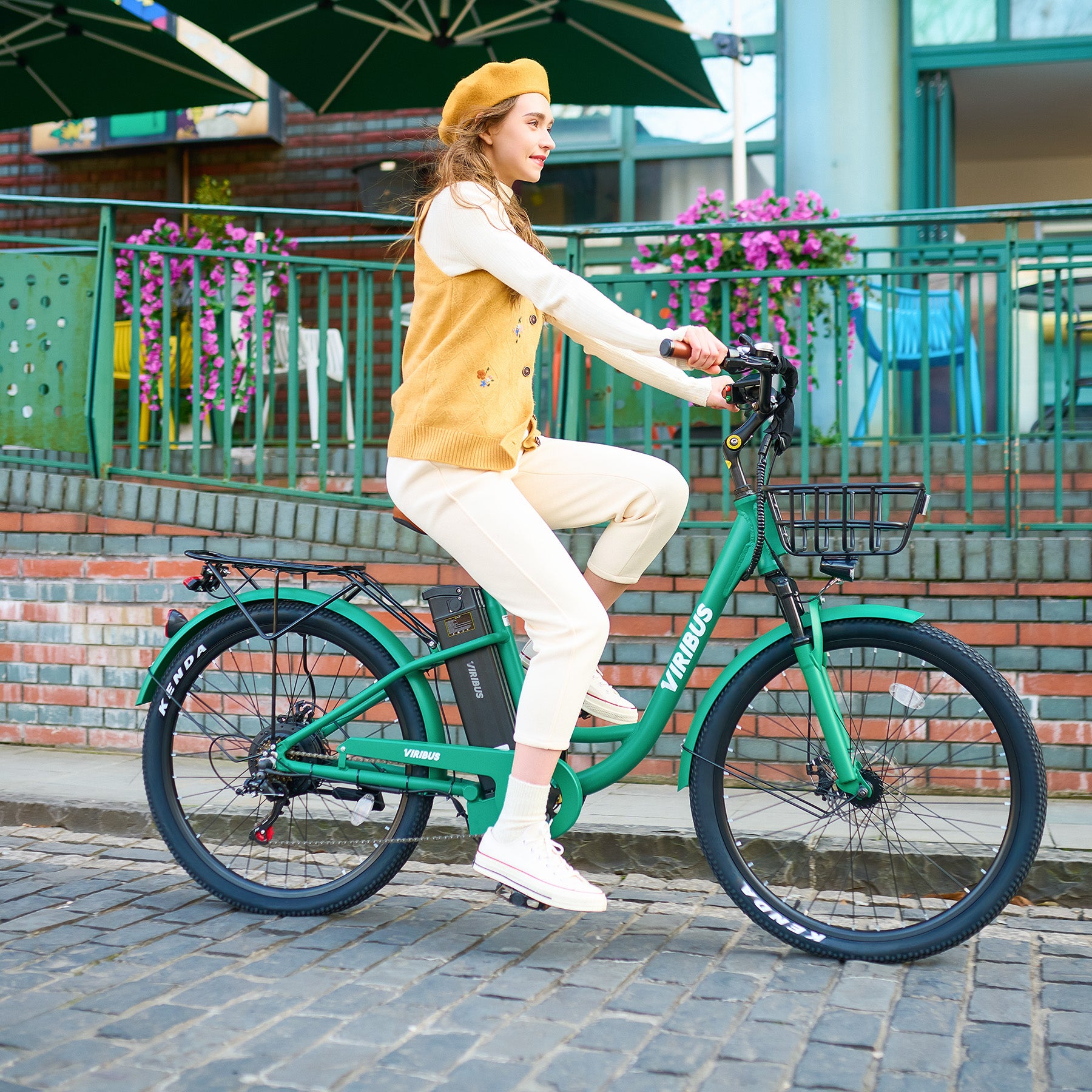
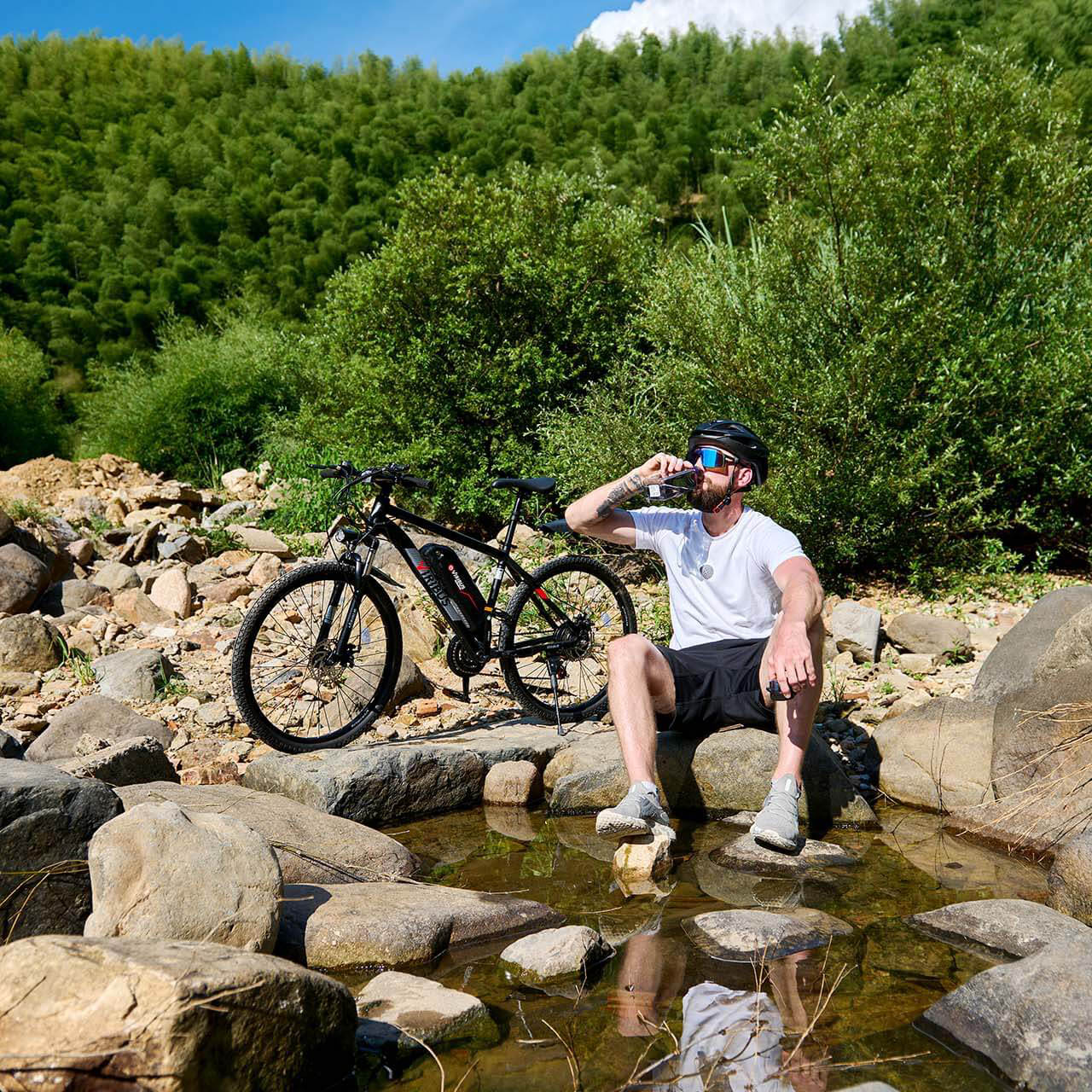
The Viribus Panther Electric Mountain Bike is a budget-friendly e-MTB designed for beginners and casual riders who want an easy entry into electric mountain biking without a high price tag. Priced around $599, it offers a 350W motor (with higher peak output), a 48V battery, and pedal-assist support that helps riders climb hills and ride longer distances with less effort.

Viribus Panther Electric Mountain Bike
★ 4.85 (423 Reviews)
Sale Price: $599.00
Buy Now- Motor: 350W brushless gear motor
- Battery: 48V 10.4Ah lithium battery
- Battery Weight: 8.51 lb
- Top Speed: 20 mph (throttle), 24 mph (PAS)
- Range: 20–40 miles (PAS estimate)
- Charger: 2.0A / 3.0A smart charger
- Controller: 48V / 15A
- Tires: 26" x 2" pneumatic tires
Read More: The best budget electric mountain bikes under $1000
FAQ
Do you have to pedal an electric mountain bike?
Yes—in most cases, you do have to pedal an electric mountain bike (e-MTB), but how much effort you put in depends on the bike type and assist mode.
Most e-MTBs in the U.S. are pedal-assist (Class 1), meaning the motor only activates when you pedal. The harder you pedal, the more assistance you get, which makes climbing hills and covering long trails much easier while still keeping a natural riding feel.
Some e-MTBs have a throttle (Class 2), where you can move without pedaling, but these are less common for mountain biking and are often restricted on trails.
What is the difference between an electric mountain bike and an electric bike?
An electric mountain bike (e-MTB) is actually a type of electric bike (e-bike), but it’s built specifically for off-road riding, while a general electric bike is a broader category designed for everyday use like commuting or leisure riding.
What is an electric mountain bike worth?
An electric mountain bike (e-MTB) is generally worth anywhere from about $500 to over $10,000, depending on quality, motor system, battery size, and frame materials.
Are electric mountain bikes worth it? I think so
How to ride an E mountain bike?
Riding an e-MTB means pedaling as usual while the motor provides extra assistance. Start with a low assist level, shift gears properly, and increase power only when needed for climbs or tough terrain. Control your speed on descents since the bike is heavier than a regular MTB, and use good body positioning for balance.
Can I convert my regular mountain bike to an e-MTB?
Yes, you can convert a regular mountain bike into an e-MTB, but it depends on your bike’s frame, components, and the type of conversion kit you choose.
Most conversions are done using an e-bike conversion kit, which typically includes a motor (hub motor or mid-drive), battery, controller, and display. A mid-drive kit is usually better for mountain biking because it works through the bike’s gears and performs better on climbs and rough terrain, while a hub motor is simpler but less effective off-road.







Leave a comment
All comments are moderated before being published.
This site is protected by hCaptcha and the hCaptcha Privacy Policy and Terms of Service apply.