


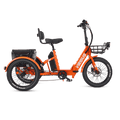


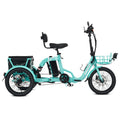

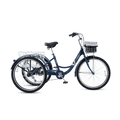







Does riding a three-wheel bike feel the same as riding a standard two-wheel bicycle? Not really.
If you've spent years riding a regular bicycle, your first ride on a three-wheel bike, or adult tricycle, can feel surprisingly different. You may already know how to judge distance, make a turn, and move through familiar spaces. But some of those habits don't work exactly the same way on three wheels.
A path that looks wide enough from the front may leave less room for the rear wheels. A turn that feels easy on a bicycle may require a wider path on a trike. Even starting and stopping at low speeds can take a little practice.
That doesn't necessarily make a three-wheel bike harder to ride. It's simply a different riding experience. Once you understand how the bike responds to steering, speed, and turns, it becomes much easier to ride naturally.
Here are six things that may feel different when you make the switch.

1 You Don't Lean Into Turns Like You Do on a Two-Wheel Bike
This is one of the first differences experienced cyclists notice.
On a two-wheel bicycle, you naturally lean your body and the bike into a turn. That movement is part of how you maintain balance while changing direction.
Traditional 2-Wheel Bike
Body and frame lean together naturally into corners to balance centrifugal force.
3-Wheel Adult Tricycle
Frame remains upright. Steering is done entirely with the handlebars while keeping body centered.
A conventional three-wheel bike handles differently. On an adult tricycle with two rear wheels, the frame generally stays upright rather than leaning into the corner like a bicycle.
That means your attention shifts toward steering and speed control.
A useful habit is to slow down before the turn, rather than waiting until you're already in the corner. Keep your upper body centered and make smooth steering movements instead of suddenly turning the handlebars.
If you enter a turn too quickly, the bike can feel like it wants to continue outward rather than following the path you're used to on a bicycle.
For your first few rides, practice somewhere open and away from traffic or pedestrians. Try a few wide turns and pay attention to:
- How much space the turn actually requires
- How quickly the bike changes direction when you turn the handlebars
- Where the rear wheels travel during the turn
- When you need to slow down
This becomes especially useful in parking lots, narrow driveways, and tight entrances. Don't wait until you're already in the turn to make a sharp steering adjustment. Slow down first and give yourself enough room to complete the turn comfortably.
2 Starting and Riding at Low Speed Can Feel Different
Another adjustment comes at low speeds. You may notice it when starting from a stop, riding slowly near a sidewalk, or pulling into a parking space. The steering and overall feel aren't quite the same as they are on a two-wheel bicycle.
The easiest way to get comfortable is to start slowly.
Start smoothly → Ride straight → Slow down gradually → Come to a complete stop.
Once that feels comfortable, add some gentle turns. You're not trying to ride quickly. You're giving yourself time to understand how the bike responds to your steering and speed.
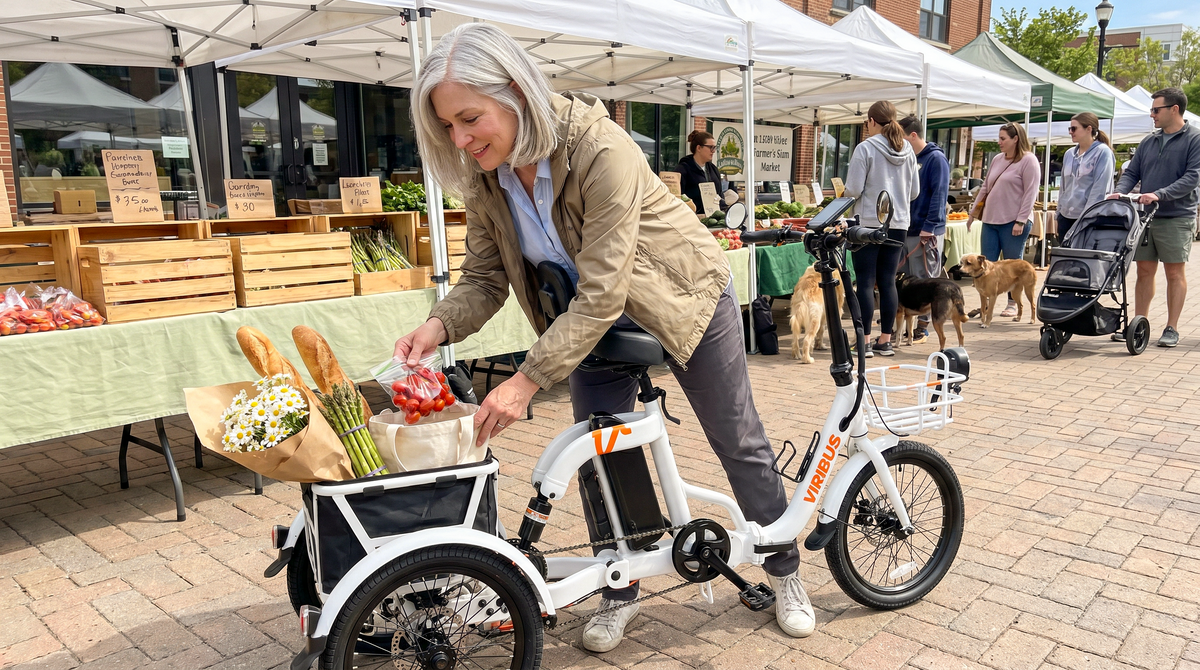
If you're riding an electric tricycle, motor assistance adds another variable. Depending on the model and assist setting, the bike may respond differently when you start moving from a stop. If your e-trike has multiple assist levels, beginning with a lower setting can give you more time to get familiar with the acceleration.
Take a few rides to understand how the motor responds before increasing your speed or using a higher assist level. The goal isn't to avoid motor assistance—it's simply to become familiar with how the bike responds when that assistance is added.
3 The Bike's Width Matters Before You Even Start Riding
A standard bicycle is relatively narrow, which makes it easier to move through narrow doorways, garden paths, and other confined spaces. A three-wheel bike has a wider footprint, particularly across the rear axle.
This is easy to overlook when you're comparing bikes online. You may spend time looking at battery capacity, tire size, or basket space without checking whether the bike will actually fit through the places where you plan to use it.
Before buying a 3 wheel bike, measure the spaces that matter in your everyday routine. For example:
- Garage doors and gates: Check the clear opening rather than just the advertised width.
- Storage areas: Make sure there is enough room to park and reposition the bike.
- Elevators and hallways: Consider both the bike's width and overall length if you plan to store it indoors.
- Narrow paths: Think about the routes you regularly use around your home or neighborhood.
And don't stop at the entrance. A bike may fit through your garage door but still be difficult to turn once you're inside. Leave enough room to maneuver the bike into its storage position without having to move everything around it.
In everyday use, being able to get the bike into your garage and move it around easily can matter just as much as a specification on the product page.

4 The Rear Wheels Don't Follow the Same Path as the Front
Width tells you how much space the bike occupies when you're moving straight. Turning introduces another consideration.
When you turn a three-wheel bike, the rear wheels can follow a different path from the front wheel. The inside rear wheel may track closer to a curb, post, or other obstacle than you expect.
This is easy to miss at first because you're naturally watching the front wheel. For example, your front wheel may clear the corner of a driveway while the inside rear wheel is much closer to the edge than you realized.
Pay particular attention in:
- Narrow driveways
- Parking lots & street curbs
- Tight gates & garage entrances
- Narrow multi-use paths
When you're first riding an adult tricycle, slow down and look beyond the front wheel. Try to develop a sense of where the rear wheels are traveling as you turn.
One useful exercise is to practice wide turns around visible markers such as cones or painted lines. Start with plenty of clearance and gradually learn how much space the entire bike needs.
This is different from simply knowing the bike's width. The important question isn't only "Will the bike fit?" It's also "Where will the bike travel when I turn?"
5 Parking and Storing a Trike Takes More Planning
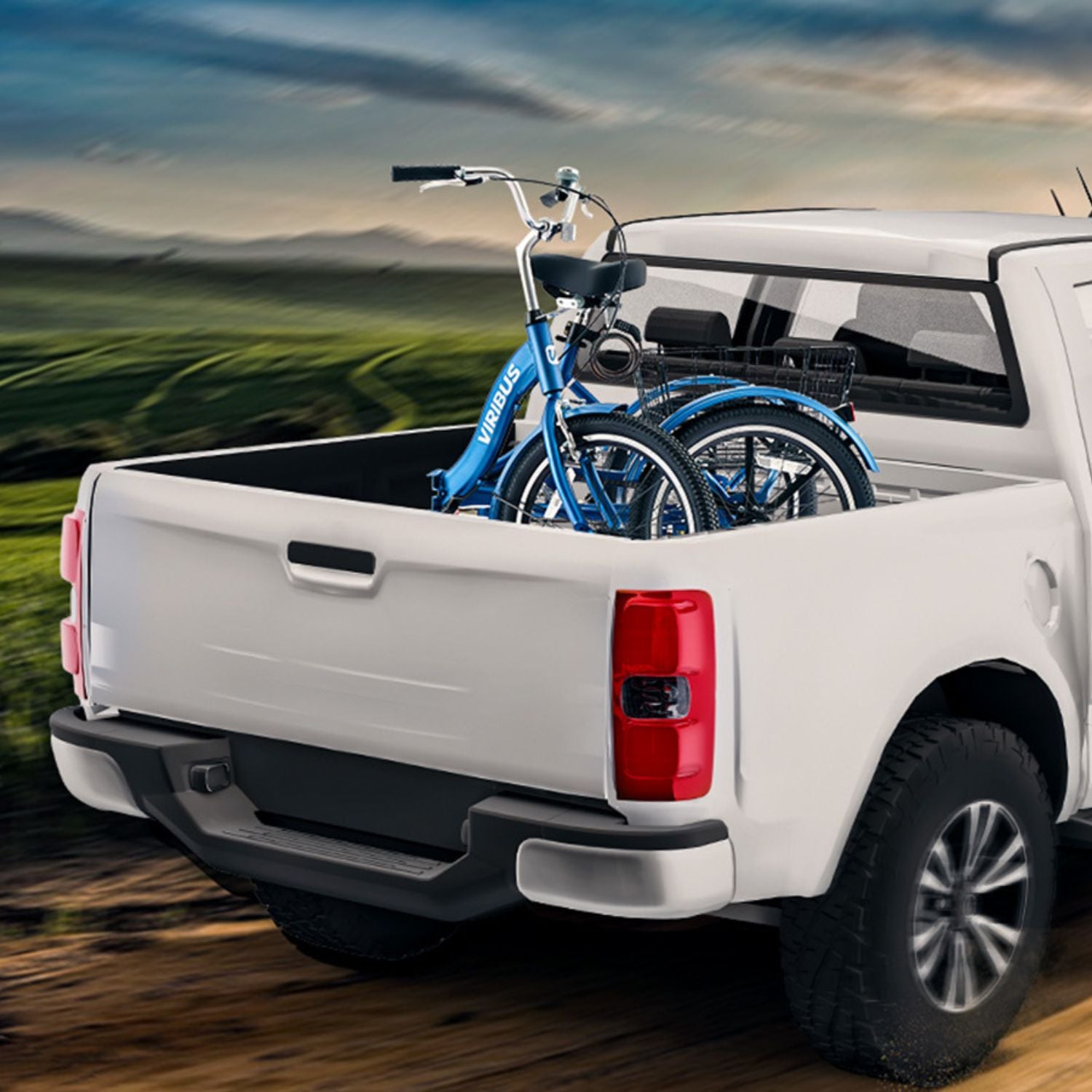
A bicycle can often be parked with a kickstand, placed in a rack, or leaned against a suitable surface. A three-wheel bike has a different shape and usually occupies more floor space, so parking and storage are worth thinking about before you buy.
📍 In Public
Be aware of where the rear wheels and cargo area sit when you park. Avoid blocking pedestrian walkways, entrances, or accessible ramps.
📐 On a Slope
If your trike is equipped with a parking brake, use it when stopping on an incline. Don't assume the bike will stay exactly where you leave it simply because it remains upright.
🏠 At Home
Choose a regular storage spot in your garage, shed, or another suitable area. Ideally, the space should be relatively flat and leave enough room for you to pull the bike in, turn it when necessary, and take it back out without moving other things every time.

6 Your First Ride Should Be About Control, Not Distance
If your first ride feels clunky or awkward, that doesn't necessarily mean a three-wheel bike isn't right for you.
You're adjusting habits that may have developed over years of riding a two-wheel bicycle: leaning into turns, judging the bike's width, steering at low speeds, and estimating how much space you need.
Instead of trying to cover a long distance on your first ride, give yourself a short practice session following these steps:
Step 1: Start in an Open Area
Practice starting, riding in a straight line, slowing down, and stopping smoothly.
Step 2: Practice Wide Turns
Try large, sweeping turns or figure-eight patterns at low speeds. Focus on how much space the entire bike needs.
Step 3: Practice Around Visible Markers
Use cones, painted lines, or markers to practice navigating around obstacles. Pay attention to the rear wheels, not just the front.
Step 4: Try a Quiet Route
Once the basic movements feel comfortable, take a calm neighborhood route before moving on to heavier traffic or crowded bike paths.
The goal isn't to master everything in one ride. It's simply to understand how the bike responds before adding more speed, distance, or complicated riding conditions.
📋 A Quick Checklist for Your First Ride
- Slow down before turns rather than waiting until you're already in the corner.
- Keep your body centered and steer smoothly with your hands.
- Start with a lower assist level if you're riding an e-trike with multiple assist settings.
- Give curbs, posts, and tight corners extra clearance until you're comfortable judging the rear wheels.
- Use the parking brake if your trike has one and you're stopping on an incline.
- Measure your storage and entry spaces before bringing a three-wheel bike home.
- Think about turning clearance, not just whether the bike can fit through an opening.
What to Consider Before Choosing a Three-Wheel Bike
Switching from a bicycle to a three-wheel bike isn't simply about getting used to an extra wheel.
The bike's width, turning path, storage space, motor assistance, and the places you plan to ride all affect how it will fit into your daily routine. So when comparing 3 wheel bikes, don't look only at motor power, battery capacity, tire size, or basket capacity.
Think about where you'll ride, where you'll store the bike, how much room you have to turn, and how the bike will fit into the spaces you use most often.

Ready to Experience the Viribus Difference?
If you're switching from a two-wheel bicycle to an adult tricycle, your first goal doesn't need to be speed or distance. It's simply to get comfortable with how the bike responds.
Explore Viribus Adult Tricycles






Leave a comment
All comments are moderated before being published.
This site is protected by hCaptcha and the hCaptcha Privacy Policy and Terms of Service apply.