


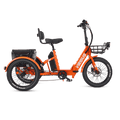


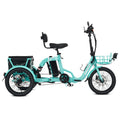

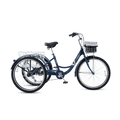







Riding an adult electric tricycle can feel surprisingly different from riding a traditional bicycle. The three-wheel design provides a stable platform when you are stopped or riding straight, but steering, turning, braking, and controlling motor assistance require a little practice.
The good news? Most beginners can get comfortable with an electric trike quickly once they understand how it responds to steering and motor power.
Whether you are using an e-trike for commuting, grocery runs, recreational rides, or everyday transportation, this beginner's guide will walk you through the basics of how to ride an electric tricycle safely and confidently.
1. Start by Getting Familiar With Your Electric Trike
Before your first ride, take a few minutes to familiarize yourself with the controls on the handlebars and dashboard. Depending on the model, your electric tricycle may feature:
- A Throttle: Provides instant motor-assisted acceleration without pedaling.
- Pedal Assist (PAS): Delivers proportional electric power from a 500W–750W motor as you pedal.
- Mechanical Gears: Typically a Shimano 7-speed drivetrain for tackling varied terrain.
- Brake Levers: Controls front and rear disc brakes (often with motor cut-off sensors for safety).
- Smart Display: Shows real-time speed, battery level, mileage, and active PAS levels.
Before turning on the electric system, ensure that:
- Tires are properly inflated to the recommended PSI.
- Front and rear brakes respond smoothly.
- Handlebars and seat height are securely clamped.
- The battery is locked in place and fully charged.
- The throttle springs back smoothly to its resting position.
- Cargo is secured tightly and does not block rear wheel motion.
2. Practice Motor Control at Low Speed
One of the biggest differences between a traditional bicycle and a 3-wheel electric bike is the instant motor torque. Even a gentle twist of the throttle or a high pedal-assist setting can produce more acceleration than a new rider expects.
For your first practice session, choose a flat, open area like an empty parking lot.
Delivers direct power on demand. For beginners, apply the throttle slowly to avoid sudden jerks.
The motor kicks in only when you turn the pedals. Always start in PAS Level 1 for a predictable, smooth acceleration.
3. The Biggest Adjustment: How to Turn an Electric Tricycle
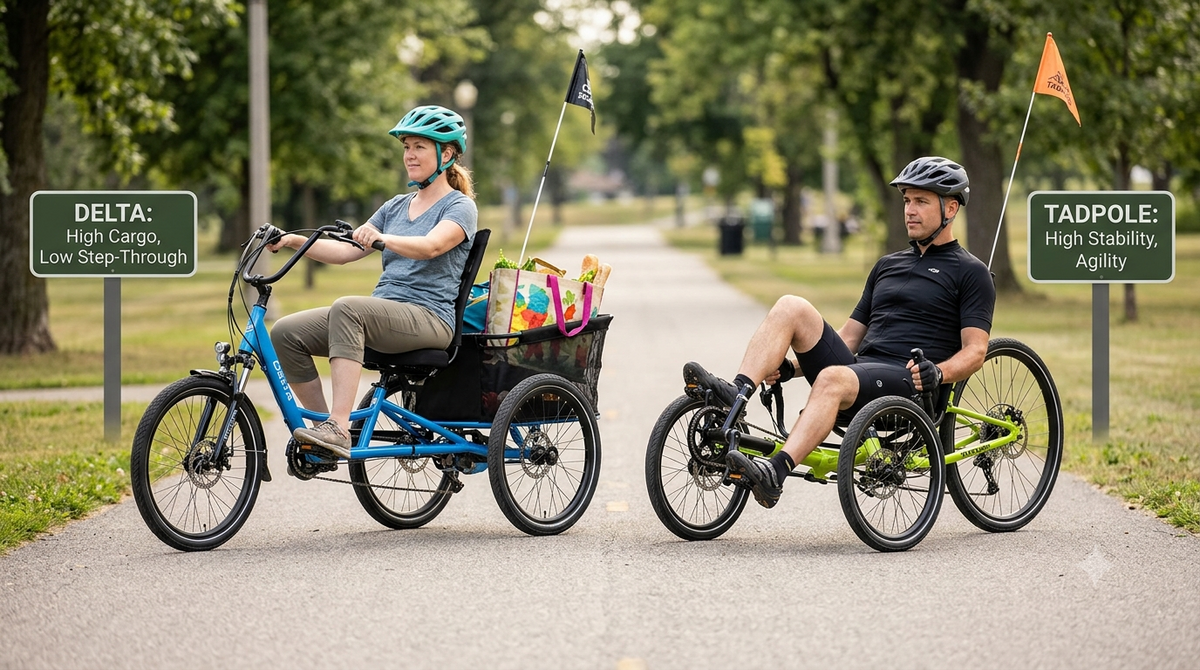
Turning is usually the part that requires the most adjustment for cyclists transitioning to a three-wheeler. On a standard 2-wheel bike, you lean your body into a turn. On a 3-wheel frame, leaning your body can make the ride feel unstable.
- Keep Your Upper Body Upright: Focus on steering smoothly using the handlebars rather than leaning your weight into the corner.
- Slow Down Before the Turn: Reduce your speed before entering a curve. Avoid making sharp steering inputs or heavy braking mid-turn.
- Give Rear Wheels Extra Clearance: Remember that the rear wheels span wider than the handlebars. Allow extra room when passing curbs, posts, or parked vehicles.

4. How to Shift Gears on an Electric Tricycle
Combining mechanical gears with electric assist keeps your motor running efficiently and extends battery life. A simple rule of thumb: Use lower gears for starting and climbing, and higher gears for flat cruising.
| Riding Situation | Mechanical Gear (7-Speed) | Motor Assistance (PAS) |
|---|---|---|
| Starting from a Stop | Lower Gear (Gear 1–2) | Low PAS (Level 1) or Light Throttle |
| Flat City Cruising | Medium to Higher Gear (Gear 4–6) | Moderate PAS (Level 2–3) |
| Uphill Climbing | Lower Gear (Gear 1–2) | High PAS (Level 4–5) |
| Tight Cornering | Lower Gear (Gear 2–3) | Low PAS / Throttle Off |
| Descending Hills | Higher Gear (Gear 6–7) | Motor Off (Brake Control) |
5. Brake Smoothly, Especially With Cargo
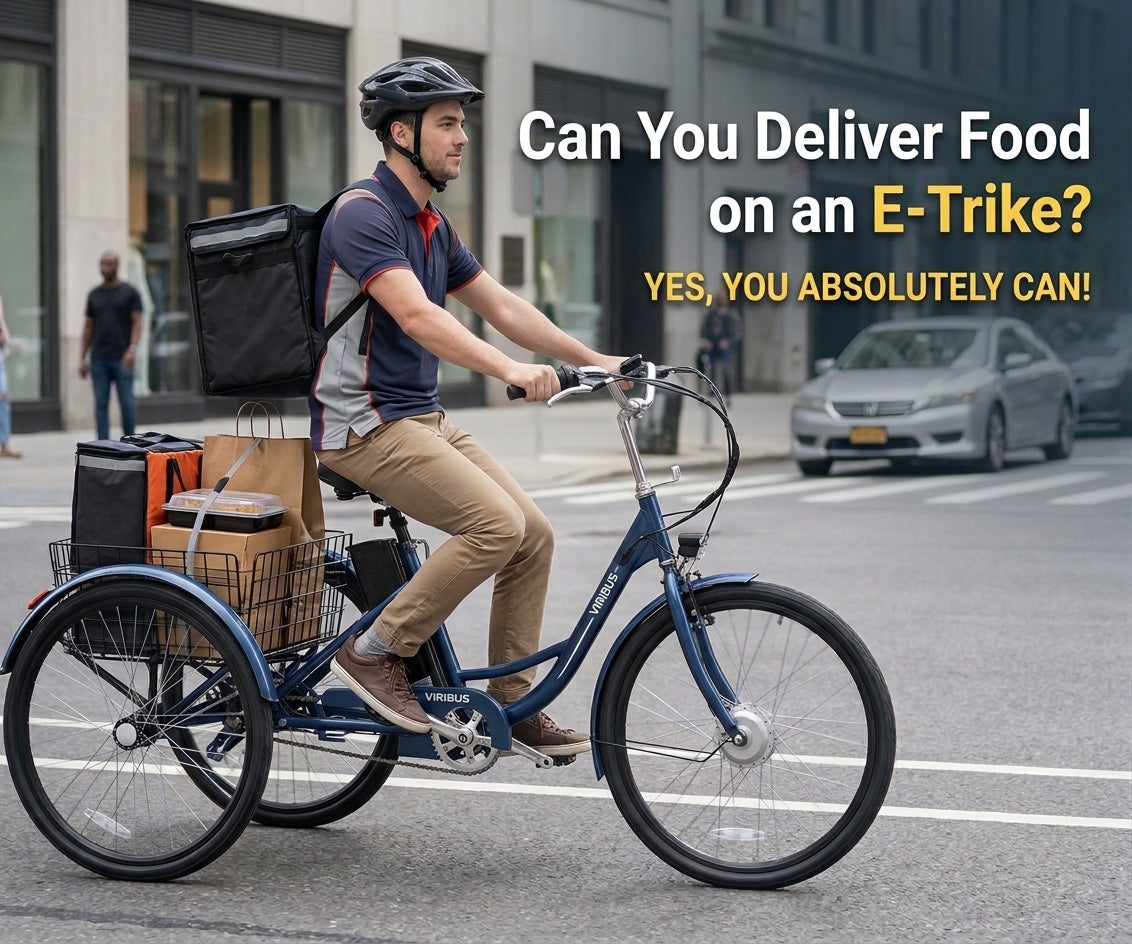
Electric tricycles are engineered for heavy hauling, with many models offering up to a 400 lb payload capacity. However, carrying extra weight increases your stopping distance.
- Use Both Brakes Progressively: Engage both front and rear brake levers simultaneously to distribute stopping power across all three wheels evenly.
- Brake Before Cornering: Complete your braking on a straight line before entering tight turns.
- Upgrade to Hydraulic Brakes: If you frequently haul heavy loads or ride down steep hills, models equipped with 180mm hydraulic disc brakes offer superior stopping power with minimal hand effort.
6. Hills and Descents
- Going Uphill: Downshift into Gear 1 or 2 before the climb starts, and increase your PAS level.
- Going Downhill: Never coast freely at high speeds. Use gentle, intermittent braking to regulate your descent speed below 12–15 mph.
7. Keep Cargo Low and Secure
- Keep heavy items at the bottom of the rear basket for a low center of gravity.
- Balance weight evenly between left and right sides.
- Secure loose items with bungee cords so they cannot shift during turns.

8. Choose a Frame That Matches Your Riding Needs
Frame geometry plays a massive role in your daily comfort and handling confidence:
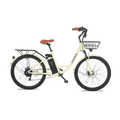
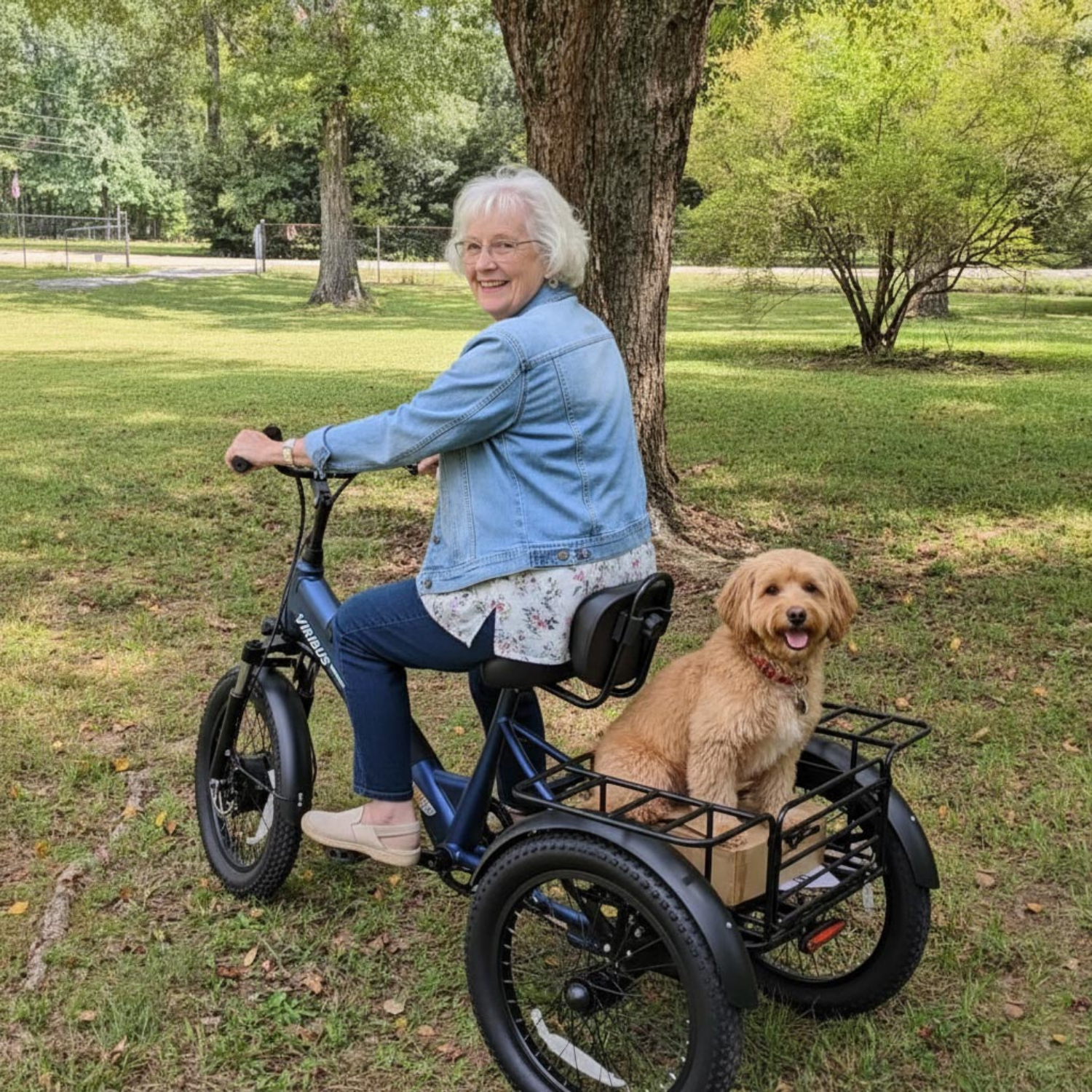
- Step-Through Frames: Feature a low-sweeping frame that lets you mount and dismount without lifting your leg over a high top-tube—ideal for seniors or riders with limited mobility.
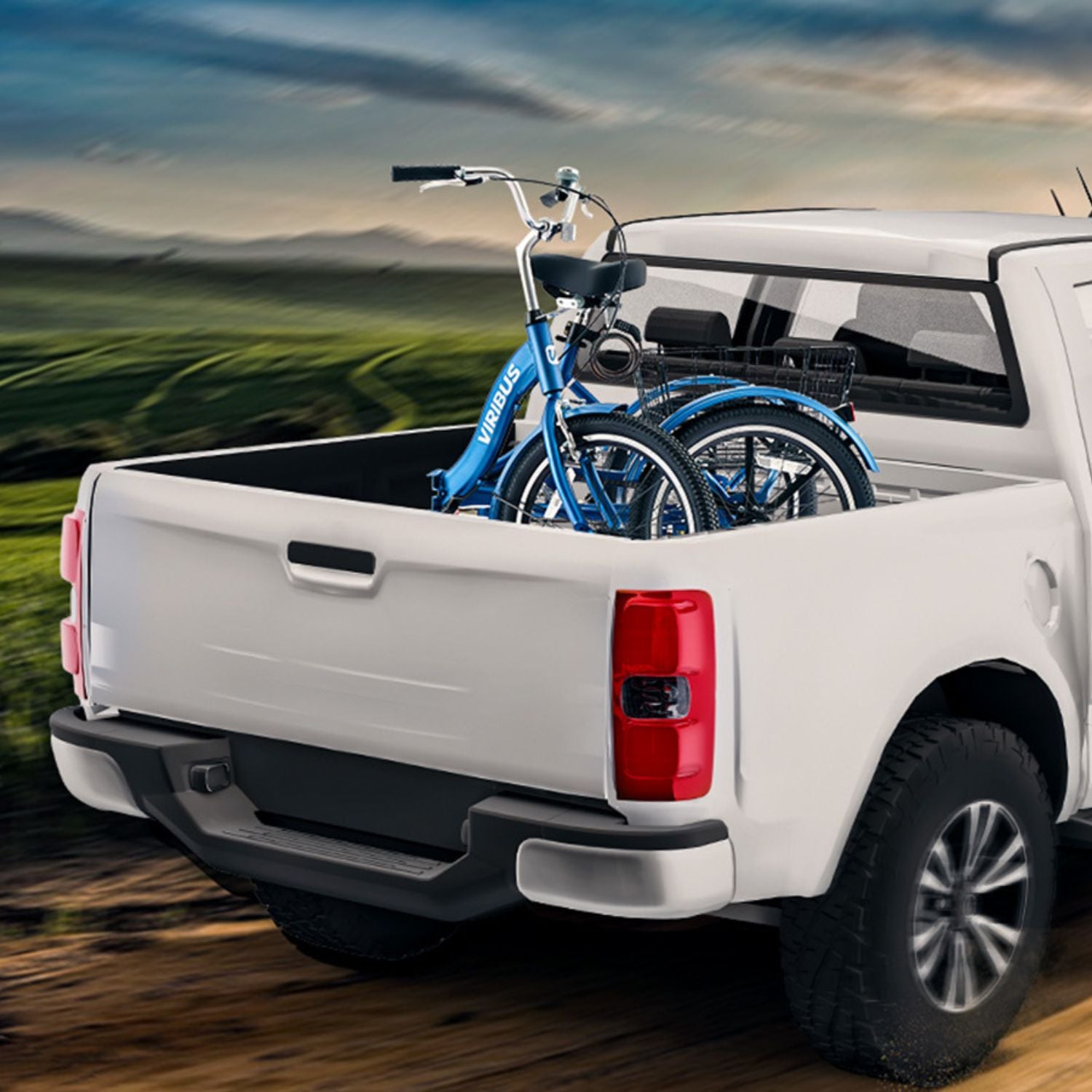
- Folding Frame Designs: If you live in an apartment or need to haul your trike in an SUV, exploring an adult folding electric tricycle gives you maximum full-size stability with compact storage convenience.
9. Common Beginner Mistakes to Avoid
- Taking Corners Too Fast: Always slow down before turning; three wheels behave differently than two.
- Starting in High Assist/High Gear: Puts unnecessary strain on the motor and can cause unexpected surges.
- Waiting Too Long to Downshift: Always downshift into easier gears before hitting an incline.
- Carrying Unbalanced Loads: Heavy weight on one side affects handlebar steering and balance.
Frequently Asked Questions (FAQ)
A: Yes. Most riders get comfortable after 10–15 minutes of practice in an open space. The key is learning to steer with the handlebars rather than leaning your body.
A: Slow down before the turn, stay relatively upright, steer smoothly with the handlebars, and give rear wheels wider berth around curbs.
A: Always start in Gear 1 or 2 with PAS Level 1. This prevents jerky movement and protects your drivetrain from excessive torque.

Learning how to ride an electric tricycle is straightforward once you master these basic handling habits. With proper gear shifting, smooth braking, and relaxed steering, an e-trike is one of the most reliable ways to travel.
Explore Adult Electric Tricycles →











Leave a comment
All comments are moderated before being published.
This site is protected by hCaptcha and the hCaptcha Privacy Policy and Terms of Service apply.