


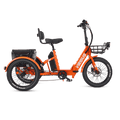


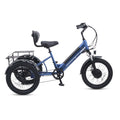
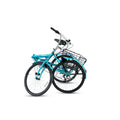
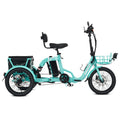




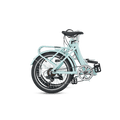




Just like an electric tricycle, a folding bicycle must be folded in a particular order. Certain parts must be folded first to ensure the rest of the bike collapses smoothly without parts getting in the way. Once you understand the correct steps, folding a bike becomes a quick, simple routine that takes just a few seconds.
So, how do you fold a bike? What are the steps involved in it?

How to Fold a Folding Bike (Step-by-Step)
There is no one way to fold a bike: folding mechanisms vary slightly between models. However, most folding bikes follow a very similar sequence, from folding in the pedals to securing the folded bike (usually using hoop and loop fasteners).
1. Push the Pedals Inward and Flip Them Upward
The first step to folding a bike is usually to fold the pedals inward and flip them upward.
Many folding bikes use foldable pedals so they don’t stick out when the bike is collapsed. When you fold them first, you reduce the bike’s width and prevent the pedals from hitting the frame or other components later in the folding process.
This step also makes the bike easier to handle as you continue folding it. If the pedals remain extended, they can interfere with the frame as it folds or catch on clothing while you’re working.
Because the pedals are one of the widest parts of the bike, reducing their footprint early makes the rest of the folding process smoother.
 2. Push the Locking Latch Upward and Hold It in Place
Next, locate the locking latch on the handlebar post.
- Push the locking latch upward and hold it in place so you can unlock the quick-release lever.
- Once the latch is disengaged, open the lever.
This step must come before folding the handlebars because the quick-release lever is what keeps the handlebar post securely locked in place during riding. Releasing it allows the post to move freely.
Opening this lever first ensures that the handlebar assembly can safely collapse without forcing the hinge or damaging the locking mechanism.

3. Fold the Handlebar Post
Once the lever is open, fold the handlebar post downward.
This step reduces the overall height of the bike and prepares it for the main frame to fold. Folding the handlebars early in the process ensures they won’t interfere with the frame hinge later on.
If you attempt to fold the main frame while the handlebars are still upright, they can get in the way or make the folded bike awkward to handle. Lowering the handlebar post now keeps everything compact and controlled.
4. Unlock the Quick Release Lever on the Main Frame.
- After the handlebar post has been folded, move to the main frame hinge.
- Flip the locking tab upward to unlock the quick-release lever, then open the lever completely.
The main frame hinge is the central folding point of the bike, so this mechanism must be unlocked before the frame can collapse.
This step is performed after folding the handlebars so that the upper portion of the bike doesn’t obstruct the frame hinge during the folding process.

5. Retract the Kickstand, Then Fold the Main Frame Until the Magnets Snap Together
Before folding the frame completely, retract the kickstand.
Leaving the kickstand extended can cause it to catch on the frame or the ground as the bike folds. Retracting it ensures the bike can close smoothly without interference.
Once the kickstand is up, fold the main frame inward until the magnets snap together.
Many folding bikes use small magnets to hold the folded halves together. These magnets help keep the bike compact and prevent it from unfolding while being carried or stored.
6. Use a Hook-and-Loop Fastener to Further Secure the Folded Bike as Necessary
After the magnets snap together, some bikes may still benefit from an additional securing method.
A hook-and-loop fastener (such as a Velcro strap) can be wrapped around the folded frame to keep the bike tightly closed during transport or storage.
This extra step is particularly helpful if you plan to carry the bike, store it in a vehicle, or move it frequently.
Note:
If you plan to move the folded bike more conveniently, it is often helpful to leave the handlebar post unfolded. This can act like a handle, making it easier to guide or roll the bike while it is folded.

How to Carry a Folding Bike
Knowing how to fold a bicycle is just as important as knowing how it should be folded. One of the biggest advantages of folding bikes is their portability, but knowing how to carry them properly makes transportation much easier.
When it comes to carrying a folded bike, there are four important things to keep in mind:
- Use the frame as a carrying point
- Keep the bike secure when carrying
- Consider rolling it instead of carrying it
- Use a carry bag if you can.
1. Use the Frame as a Carrying Point
Most folding bikes can be lifted by holding the main frame tube.
The frame is usually the strongest and most balanced place to grip the bike. When you carry it by the frame, you distribute the weight more evenly and prevent the folded sections from shifting.
3. Keep the Bike Secure While Carrying
Before lifting the bike, make sure the folded sections are fully secured. The magnets, latches, or straps should be properly fastened to prevent the bike from opening unexpectedly while you are carrying it.
4. Consider Rolling Instead of Carrying
Some folding bikes are designed so they can be rolled while folded.
Leaving the handlebar post extended can make it easier to guide the bike like a small cart. This can save a lot of effort, especially if the bike is heavy or needs to be moved over longer distances.
5. Use a Carry Bag for Travel
If you plan to transport the bike frequently, a folding bike carry bag can be a useful accessory.
Carry bags protect the bike from scratches, keep grease away from clothing, and make the bike easier to bring onto trains, buses, or into buildings.
 How to Choose the Best Folding Bike
If you’re buying a folding bike, there are five factors that (for the most part) determine how convenient and enjoyable it will be to use:
- The strength/durability of the frame,
- The nature of the folding mechanism,
- The size of the wheels
- The weight of the bike
- The gear system.
1. Frame Strength and Build Quality
The frame is the backbone of the bike, and a strong frame is essential for a folding bicycle.
Folding bikes rely on hinges and locking mechanisms, so a well-built frame will feel solid during rides and will hold up well after repeated folding.
The best folding bikes have frames made from durable materials like aluminum alloy, which offer a good balance between strength and weight.
2. The Nature of the Folding Mechanism
Not all folding systems are the same. While most folding bicycles fold quickly with simple quick-release levers, others require multiple steps.
A good folding bike should have a mechanism that feels secure but also easy to operate.
The best folding bikes can usually be folded in under a minute once you become familiar with the process.
3. Wheel Size
Folding bikes typically use smaller wheels than standard bicycles. Common sizes include 16-inch and 20-inch wheels. Smaller wheels allow the bike to fold into a more compact size, which is ideal for storage and transport.
However, slightly larger wheels often provide a smoother and more stable ride. Choosing the right size depends on whether you prioritize portability or ride comfort.
4. Weight
Because folding bikes are designed to be portable, how much they weigh matters a lot. A lighter bike will be much easier to carry upstairs, load into a car, or take onto public transportation.
If you expect to carry the bike frequently, look for models that prioritize lightweight construction.
5. Gear System
A good gear system can make a big difference in riding comfort. Ideally, for a folding bicycle, you want a 7-speed gear system, which allows you to adapt to different terrain, especially if you ride in areas with hills.
However, even a simple 3-speed multi-speed system can greatly improve efficiency and make rides more enjoyable.
 Final Thoughts on How to Fold a Bike
Learning how to fold and carry your folding bike properly makes owning one far more convenient. Once you get used to the process, folding your bike becomes quick, simple, and second nature, allowing you to enjoy the full portability that folding bikes are designed to offer.
You might be interested in our guide on choosing the best bike for women.



Leave a comment
All comments are moderated before being published.
This site is protected by hCaptcha and the hCaptcha Privacy Policy and Terms of Service apply.