


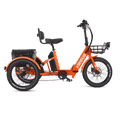


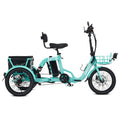

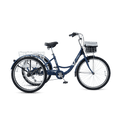


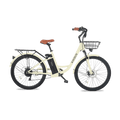

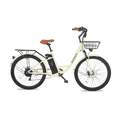
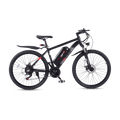




Here are the essential features that the best electric tricycle for adults must include, whether you're riding for fun, running errands, or commuting seriously. If an adult tricycle hits most or all of these features, it can reasonably be classified as one of the best electric tricycles for adults—and any investment you make in it is more likely to hold up.
This is the buying guide we wish every first-time buyer read before comparing spec sheets. Each section below states the threshold, explains what it means in practice, and tells you what to check when you are standing next to the trike.
1. A Strong Motor
The practical motor range for adult electric tricycles is 350W to 750W. Below 350W, a loaded trike struggles on inclines; above 750W, you are paying for speed the frame and brakes may not be rated for. Within that range, the number that matters is not just rated watts but peak watts and where the motor drives—front hub, rear hub, or mid-drive.
A 350W front hub (peak 500W) is enough for flat errands and moderate inclines, but it can lose traction on wet leaves or loose gravel under full throttle. A 500W front hub (peak 750W, around 85 Nm) holds speed more predictably under load—Electrek's test of the SC5 recorded comfortable cruising at 20 mph on throttle and up to 24 mph with light pedal assist. If you ride in wet conditions or on unpaved paths, a rear-drive or differential-equipped trike is worth the price difference.
- For a younger or more adventurous rider, 450W–500W is a sensible floor—enough to climb without bogging down.
- For an older rider prioritizing easy flat-ground riding, 350W is sufficient; the trade-off is slower climbing under load.
- Ask whether the quoted figure is rated or peak. Both numbers should be on the spec sheet; if only one is shown, ask for the other.

2. Good Battery Life
The usable range floor for an adult electric tricycle is 30–40 miles on pedal assist; 40–60 miles is better if you plan longer rides. But the published range figure hides two variables you need to separate: PAS range vs throttle-only range, and test conditions vs your conditions.
The SC5's 48V 15Ah (720 Wh) battery is rated at 65 miles pedal-assist and 38 miles throttle-only. The TG1 Plus uses a 36V 13Ah (468 Wh) battery with a PAS range around 37 miles. That gap is not marketing—throttle-only riding drains the battery faster because the motor is doing all the work. A 15–25% drop from the advertised figure on a flat route at mid-PAS is normal; a drop larger than 30%, confirmed across two rides, is worth a conversation with support.
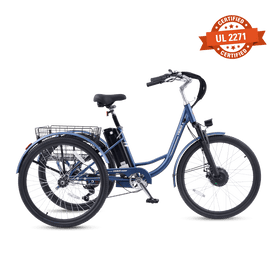
- Prefer lithium-ion, and confirm UL certification on the battery and charger. Viribus's TG1 and TG1 Folding carry UL certification; the SC5 uses a 720 Wh lithium-ion pack.
- A removable battery matters more than most buyers expect—it lets you charge indoors without moving the trike.
- Check whether the advertised range is throttle-only, PAS, or combined. On the same battery, the difference can be 25 miles or more.
3. Stability & Comfort
A low step-through frame is close to mandatory for adult riders with knee or hip limitations—it is the difference between mounting the trike confidently and needing a curb to lean on. But step-through is an access feature, not a stability feature. Stability comes from track width, center of gravity, and how you ride it.
Every three-wheeled vehicle has a speed and radius at which the inside wheel starts to lift. Wider track and lower seat push that threshold higher; narrower track and taller seat push it lower. Even at 15–20 mph, a trike does not lean into a turn the way a bike does—slow down before turning, keep your body centered, and be careful on sloped pavement. BikeRide's FC1 test recorded one reviewer feeling the trike start to tip at just 6 mph in a turn, which is a reminder that "three wheels" does not mean "can corner like a car."
- Fat tires (2"–4") improve grip and comfort on bumpy roads, but they do not change the tipping threshold—they change how much road vibration reaches the seat.
- Before buying, ride at walking pace in a small circle and feel when the trike starts to lean outward. You are not looking for "no lean"; you are looking for whether the lean begins at a speed you can manage.
- Suspension forks and a suspension seatpost smooth rough pavement, but check that the seatpost is rated for your weight—BikeRide's FC1 test found a 200 lb rider bottoming out the post even at its stiffest setting.
4. Large Weight Capacity
The usable payload floor is 300 lb total—rider plus cargo. Viribus's TG1 Plus and TG1 Pro are rated at 330 lb; the TG1 Folding and SC5 at 395 lb. But the number on the product page and the number in the manual can differ, and when they do, the manual figure for your actual configuration is the one to plan around.
BikeRide's FC1 review found exactly this: Viribus advertises a 400 lb payload, but the owner's manual lists 330 lb. This is not unique to Viribus, but it is the kind of gap a buyer should ask about explicitly. The manual figure typically reflects the safe recommended load with the factory-installed tires, rack, and seat—not the frame's absolute design limit.

- Ask to see the manual before purchase and find the payload section. Ask which figure applies with the standard tires, installed rack, and seat as shipped.
- If you plan to carry heavy cargo, check the rear rack's separate rating—the frame's total payload does not automatically mean the rack can carry it all.
- After delivery, ride at roughly 80% of the manual's figure using cargo (not a person) on a route with a gentle climb and a turn. Listen for creaks, seat post slippage, and rack movement.
5. Good Disc Brakes
Mechanical disc brakes are the minimum for a loaded adult trike; hydraulic discs are better if the budget allows. Disc brakes grip harder than rim brakes, perform better in rain and mud, and require less lever force to stop a heavy three-wheel bike. Viribus's current line uses mechanical disc brakes across TG1 Plus, TG1 Pro, TG1 Folding, and SC5, with 160 mm rotors on the SC5.
The brake specification that matters most on an electric trike is not the caliper type—it is whether the motor cuts off when you squeeze the lever. This is the safety function that separates a well-sorted e-trike from a risky one.
- Before buying: turn the trike on but do not ride it. Squeeze the brake lever firmly and turn the pedals by hand. The motor should not engage at all. If it does, the cutoff switch is not doing its job.
- After delivery: repeat this check monthly and after any brake adjustment.
- BikeRide's FC1 test found the motor took three to four seconds to re-engage after braking. A delay on re-engagement is different from a failure to cut off, but both are controller behaviors worth testing on a demo ride.
6. A Big Rear (And Front) Basket
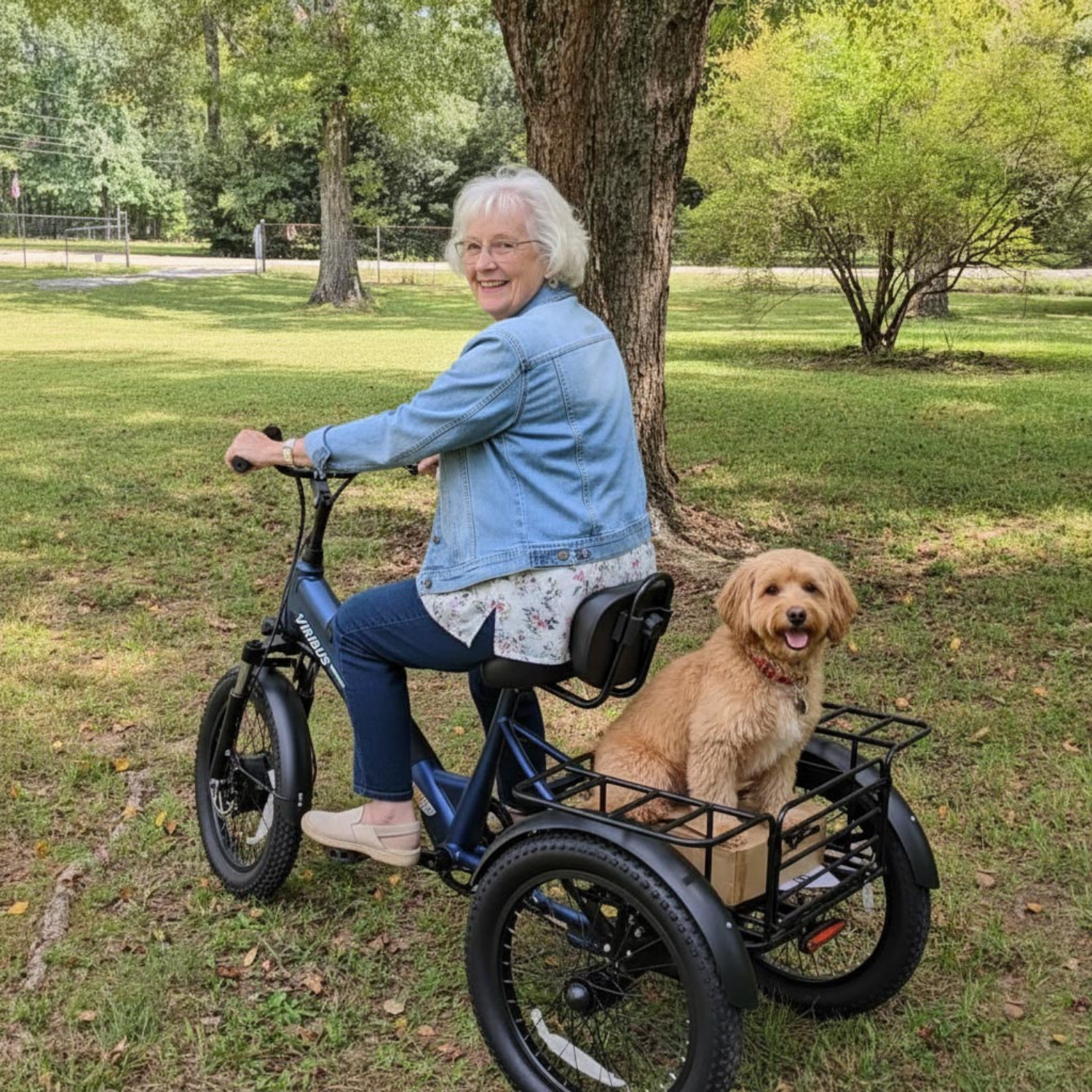
A rear basket rated for at least 100 lb is the practical floor for grocery runs, pet carriers, or beach gear. Viribus's TG1 Plus, TG1 Pro, TG1 Folding, and SC5 all list a 110 lb rear basket. But the basket's claimed capacity is only meaningful if the rack beneath it is rated separately and the mounting points are secure.
- Check whether the basket capacity is stated separately from the total payload, or whether it is assumed to be part of it.
- Grip the basket and rock it side to side. If the mounting points flex visibly with an empty basket, they will flex more under load.
- Some trikes ship with both a rear and a front basket. A front basket changes steering feel when loaded—test it with weight before relying on it for heavy items.
7. Adjustable Seating
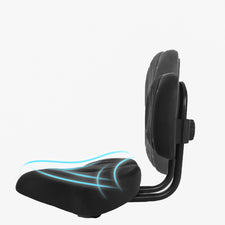
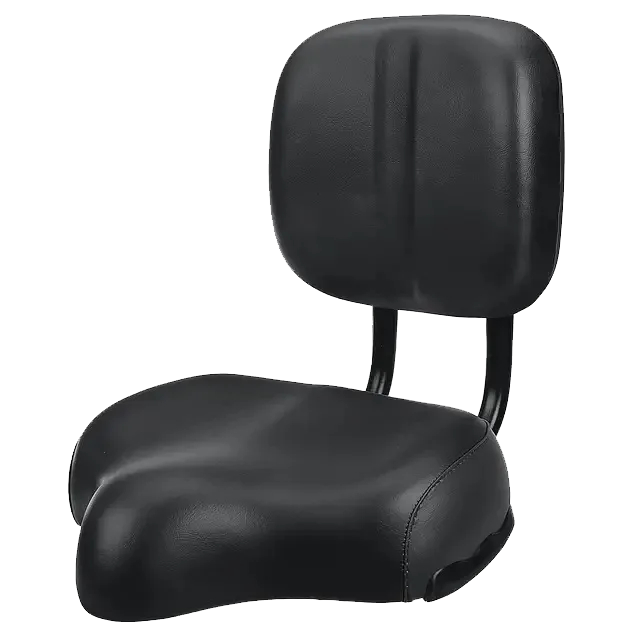
A wide, padded seat with an optional backrest is comfortable on the showroom floor. What matters over a 30-minute ride is whether the seat height and handlebar reach put your knee in a sustainable position at the bottom of the pedal stroke—and whether the adjustments stay where you set them.
- Sit on the trike with one pedal at the bottom of its stroke. Your foot should rest flat on the pedal with a slight bend in the knee—not locked straight, not sharply bent.
- Adjust the seat post and handlebar, then ride for at least five minutes and check whether the backrest stays where you set it. BikeRide's FC1 testers found the backrest comfortable but noted it slipped—adjustability without secure locking is not useful adjustability.
- If you are near the upper end of the payload range, ask specifically whether the suspension seatpost is rated for your weight.
8. Easy Controls
The best adult electric tricycles have both throttle and pedal assist. Pedal Assist (PAS) helps when you want to pedal but not overwork yourself—flat trails, light exercise, or saving battery. Throttle Assist lets you ride without pedaling at all—useful when you are tired, going uphill, or just want a relaxed cruise. Viribus's TG1 Plus, TG1 Pro, TG1 Folding, and SC5 all include both.
What the control specification does not tell you is how the PAS behaves when you stop pedaling. Most adult e-trikes in this price range use a cadence sensor, not a torque sensor. At higher PAS levels, the controller is allowed to add more power—and the transition when you stop pedaling can feel different from lower levels. Some residual push at PAS 3–5 is a calibration characteristic, not a failure. Erratic behavior—different every time, or appearing at PAS 1—is worth documenting and asking about.
- On a flat, empty stretch, ride at PAS 1, then 3, then 5, and note what happens when you stop pedaling. At PAS 1, power should drop off quickly. At PAS 3–5, a brief continued push is expected.
- Repeat each level twice. Consistency is the spec that matters—does PAS 3 behave the same way every time?
- For a full step-by-step PAS exit test, see the 10-check framework.
A Display Screen
A simple display showing speed, battery level, mileage, and assist level keeps the rider informed without taking attention off the road. Check that the display is readable in direct sunlight—some budget displays wash out at midday.
9. Foldability (Optional)
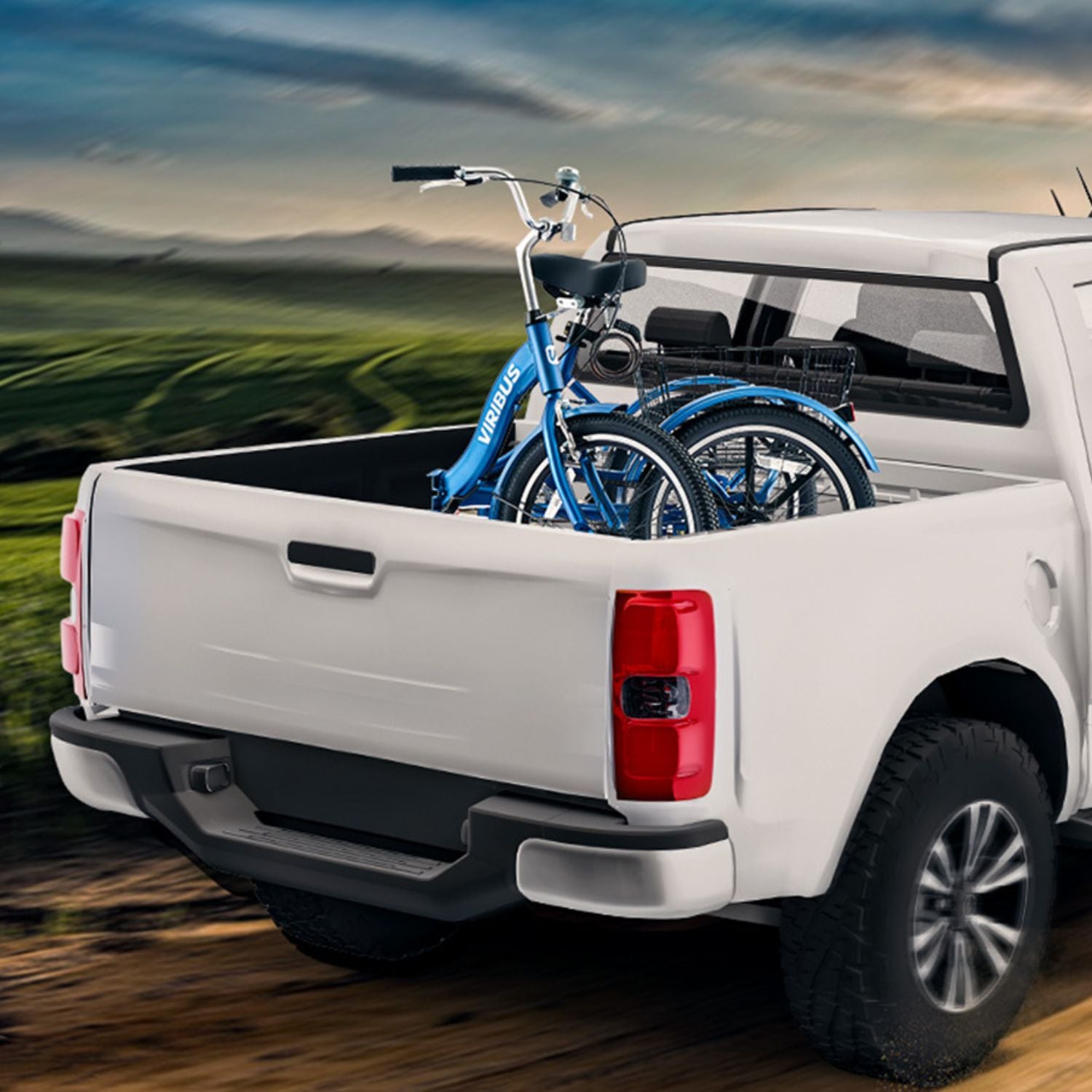
A folding electric tricycle solves a real problem for apartment dwellers, RV owners, and anyone with limited storage. It does not solve the weight problem. BikeRide's FC1 review notes that the weight makes folding difficult and the folded trike is still bulky—so "folding" is only useful if the folded dimensions and weight fit your actual stairwell, doorway, and car trunk.

- Ask for the folded length, width, and height, and the total weight. Compare those numbers to the space where the trike will live.
- If the folded width is wider than your doorway, or the weight is more than you can lift comfortably, folding will not deliver the portability you are buying it for.
- The folding tricycle collection lists folded dimensions on each product page.
Bonus Features for The Best Electric Tricycles for Adults
- Suspension forks for a smoother ride—BikeRide's FC1 testers confirmed the rear shocks and suspension seatpost worked as intended.
- Integrated front and rear lights for visibility in low light.
- Fenders to keep you clean on rainy days.
- A parking brake so the trike does not roll away on a slope. On a heavy trike, this is not a luxury.
Recommended Best Electric Tricycles for Adults
Here is how Viribus's current line maps to the checks above, from the most accessible TG1 Plus to the fat-tire SC5. Published specifications are shown as-is; where a third-party test has qualified a figure, that note follows the table.
- TG1 Plus Electric Tricycle — 350W (peak 500W), 36V 13Ah, 37-mile PAS range, 330 lb payload
- TG1 Pro Electric Tricycle — 350W (peak 500W), 48V 13Ah UL-certified, 53-mile PAS range, 330 lb payload
- TG1 Folding Electric Tricycle — 350W (peak 500W), 36V 13Ah, 47-mile PAS range, 395 lb payload, folds
- SC5 Fat Tire Electric Tricycle — 500W (peak 750W, 85 Nm), 48V 15Ah (720 Wh), 65-mile PAS range, 395 lb payload
| Features | TG1 Plus | TG1 Pro | TG1 Folding | SC5 |
|---|---|---|---|---|
| Motor | 350W (peak 500W) | 350W (peak 500W) | 350W (peak 500W) | 500W (peak 750W), 85 Nm |
| Top Speed | 15.5 mph | 15.5 mph | 15.5 mph | 20 mph throttle / 24 mph PAS |
| Battery | 36V 13Ah, 468Wh SGS | 48V 13Ah, UL certified | 36V 13Ah ternary lithium | 48V 15Ah, 720Wh lithium-ion |
| Pedal Assist Range | 37 miles | 53 miles | 47 miles | 65 miles |
| Throttle Range | 31 miles | 38.5 miles | 31 miles | 38 miles |
| Tire size | 24" / 26" | 24" / 26" x 1.95 | 24" x 1.95 | 20" x 3.0" fat tire |
| Frame | Low step-thru, carbon steel | Low step-thru, carbon steel | Low step-thru, carbon steel | Low step-thru, aluminum |
| Total Weight Capacity | 330 lb | 330 lb | 395 lb | 395 lb |
| Brakes | Double mechanical disc | Double mechanical disc | Double mechanical disc | Mechanical disc, 160 mm rotors |
| Basket(s) | Rear basket (110 lb) | Rear basket (110 lb) | Rear basket (110 lb) | Rear basket (100 lb) |
| Throttle + Pedal Assist | Both | Both | Both | Both |
| Foldable | No | No | Yes | No |
| Fenders | Front and back | Front and back | Front and back | Front and back |
Third-party test notes: BikeRide's FC1 review recorded top speed between 15 and 18 mph against a 20 mph claim, a manual payload of 330 lb against a 400 lb advertisement, motor re-engagement of three to four seconds after braking, and ghost pedaling from PAS 3. Electrek's SC5 test confirmed 20 mph on throttle and up to 24 mph with pedal assist, with front-wheel slip under full throttle on loose or wet surfaces.
Whichever model you choose, run the checks in Electric Tricycle Specs vs Reality: 10 Real-World Checks before you buy and in the first 30 days after delivery. A trike that passes them is not a guarantee of perfection—it is a guarantee that you know where your specific unit stands.
You Might Also Be Interested In:
- Adult tricycles — the full collection, filtered by use case.
- Folding tricycles — folded dimensions on each product page.
- Specs vs reality — the 10 checks to run before and after buying.
Compare the line
Which trike fits your checks?
See the full adult tricycle collection, or go straight to the TG1 Plus, TG1 Pro, TG1 Folding, or SC5.
Browse Adult Tricycles →











Leave a comment
All comments are moderated before being published.
This site is protected by hCaptcha and the hCaptcha Privacy Policy and Terms of Service apply.